When uploading files to a cloud storage service, users probably don’t think about the massive humming infrastructure working remotely behind the scenes to keep their digital lives intact and secure. It also doesn’t take into account the advanced cooling methods and sheer number of GPUs needed to handle AI chatbot requests. People expect photos, documents, and requests to be available and sent instantly when they click a digital button or open an app on their smartphone. The rapid evolution (or inflation, some see it) of artificial intelligence is completely changing the way computational engine rooms are built and maintained around the world.
Are you trying to understand how modern remote computing works or what is the difference between AI and cloud data centers? Next, it is important to understand that cloud servers primarily rely on storage, while AI data centers rely on GPUs, CPUs, and RAM to efficiently process requests and algorithms. When shifting the focus of a remote computer farm beyond the hardware, another big factor to look at is how complex workloads are handled in these physical remote facilities.
While cloud data centers focus on standard operations such as seamlessly delivering information to consumers, modern, durable, large-scale language learning models and neural networks require completely different architectural processes. So what are the key differences between AI and cloud data centers?
What is an AI data center?
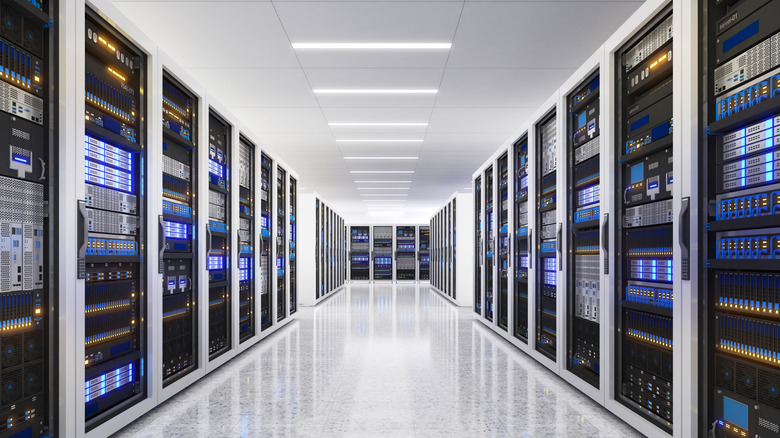
Unlike environments suitable for hosting general data and applications, servers designed for machine learning are optimized for running deep learning models and performing complex training tasks. These advanced infrastructures do not rely solely on central processing units (CPUs), but rely heavily on graphics processing units (GPUs) and tensor processing units. These specialized accelerators can handle thousands of computational processes simultaneously, making them ideal for rapid data processing and real-time requests from users.
The way data is stored is also very different compared to cloud storage, moving from organized databases to large amounts of unstructured information such as video streams, high-resolution images, and sensor outputs. Managing such large-scale workloads requires high-performance storage solutions such as advanced solid-state drives with non-volatile memory express protocols and parallel file systems. This enables rapid data ingestion and algorithm training without severe hardware bottlenecks.
The massive data and neural processing demands of dense GPU arrays also create significant cooling challenges within AI data centers that cannot be solved by standard air cooling. This means extensive liquid cooling directly to the CPU and GPU to prevent overheating and maintain peak structural efficiency. To further increase overall operational complexity, AI data centers require high-speed networking and low-latency interconnects that support rapid data movement between processors. Leading technology companies operating these data centers at global hyperscale are turning to automated and intelligent energy optimization software to efficiently manage these intense workloads. This is a trend that’s happening across all industries leveraging modern machine learning platforms.
What is a cloud storage datacenter?
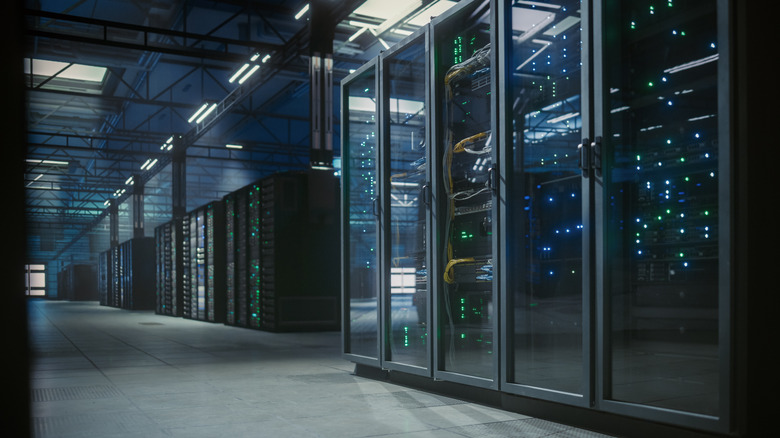
Cloud data centers are built to handle a wide range of traditional computing tasks, including web hosting, corporate databases, and subscription-based software/data delivery. When services like Google Drive and Office 365 deliver their services in the cloud through internet browsers and apps, they typically utilize physical facilities designed to cost-effectively centralize processes, storage, and equipment to ensure consistent uptime. These environments and server racks primarily handle structured data stored in block or file systems and focus on reliable data replication across multiple machines to protect against unexpected outages.
To keep cloud servers running smoothly, these data centers rely on central processing units to manage standard data transfers across the network architecture. Power consumption is balanced throughout, utilizing standard air cooling, ventilation, and air conditioning systems to maintain a stable overall temperature. Efficiency remains a priority. Average power usage is typically evenly distributed and balanced across different workloads.
Cloud data centers typically have built-in on-demand scalability in case you need to scale your workloads. This allows you to seamlessly migrate workloads based on cost, compliance, or raw performance needs. For standard archiving needs or simple mobile app backups, relying on traditional cloud storage options is still the most cost-effective option, but cloud servers don’t output a lot of code on ChatGPT.