Once confined to laboratories and speculative sciences, brain-computer interfaces are now emerging as powerful tools in healthcare, rehabilitation, and assistive technology, with the potential to transform human-machine interactions.
Technology continues to advance at a pace that was unimaginable just a few decades ago. One of the most important developments in this evolution is the brain-computer interface (BCI), a system that allows direct communication between the human brain and external devices. What was once considered futuristic is becoming a practical field of research with real-world medical and technological applications.
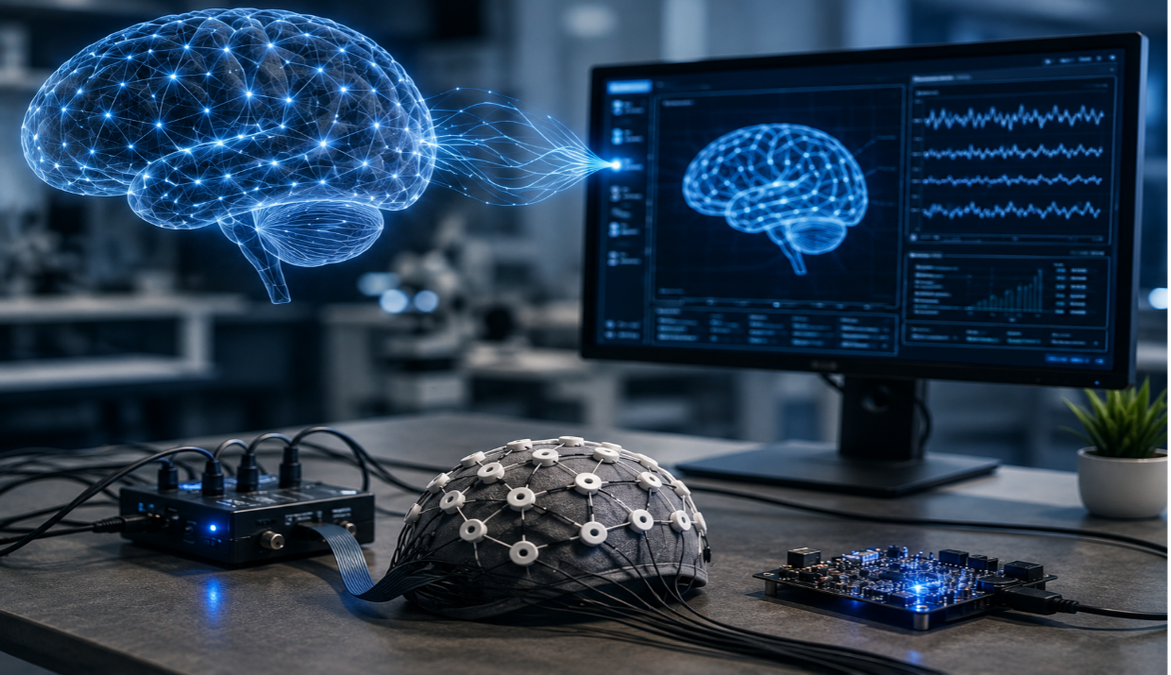
At its core, a brain-computer interface works by detecting brain activity, analyzing neural signals, and translating them into commands that machines can understand. Simply put, it allows you to turn intentions into actions without requiring traditional physical movements. This makes BCI one of the most promising fields in modern neuroscience and assistive technology.
The importance of this field is most evident in the medical field. For patients suffering from paralysis, stroke, spinal cord injury, amyotrophic lateral sclerosis, or other severe neurological conditions, the ability to communicate or control devices via brain signals could be transformative. For many of these patients, the issue is not just mobility, but independence, dignity, and the ability to participate in daily life.
BCI technology’s roots go back to electroencephalography (EEG), which records electrical activity in the brain through sensors placed on the scalp. These signals are weak, complex, and often difficult to interpret. But over time, advances in electronics, signal processing, machine learning, and artificial intelligence have made it possible to extract meaningful patterns from brain activity and use them in real-world control systems.
BCI is currently being actively researched in rehabilitation. For example, in stroke recovery, brain signals can be used to support movement training and strengthen the connection between intention and physical response. In some systems, when a patient attempts to move a hand or arm, an interface detects that intention and triggers feedback through a robotic device or assistive mechanism. Such systems are not a substitute for treatment. Rather, it complements it and improves the recovery process.
BCI also shows promise in communication support. Even basic communication can be a challenge for people who are unable to speak or move due to severe disabilities. Brain-based interfaces could potentially allow such users to select characters, issue commands, and interact with digital systems using only neural activity. In this sense, this technology does not just provide an innovation, but also a path back to expression.
Artificial intelligence has significantly accelerated the development of this field. Previous BCI systems were often limited by slow processing speeds, noisy signals, and inconsistent performance. The latest AI and machine learning techniques improve signal decoding, making the system more responsive and better suited for real-world applications. The integration of neuroscience and AI is forming a new generation of adaptive and user-friendly interfaces.
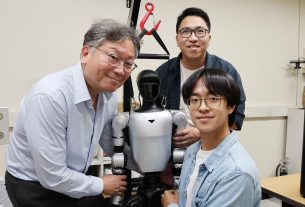
Beyond healthcare, BCI is also beginning to impact robotics, mobility aids, and smart systems. Brain-controlled wheelchairs, prosthetics, and robotic assistants are no longer theoretical concepts. Many of these applications are still in development, but they point to a future where technology responds more directly to human intent than ever before.
At the same time, the growth of BCI technology is raising ethical and legal questions. Neural data is one of the most sensitive forms of personal information. When systems can interpret attention, intent, and brain patterns, privacy, data security, Ethics then becomes a central concern. Before this technology becomes widespread, ownership, security, and use of brain data must be carefully addressed.
There are also technical limitations. Non-invasive systems, such as EEG-based BCIs, are safer and easier to deploy, but are generally less accurate. Invasive systems may offer greater precision but come with surgical risks, higher costs, and greater complexity. The challenge now is to make this technology reliable, affordable, and practical for wider use.
India has great potential in this field. With increased activity in artificial intelligence, electronics, biomedical engineering, and innovation-driven entrepreneurship, the country is well-positioned to contribute to advances in BCI research and development. This need is particularly relevant in the context of accessible healthcare, where affordable assistive technology can make a tangible difference.
Local innovation is important here as well. In Jammu and Kashmir, young researchers and innovators are increasingly working on robotics, embedded systems, and healthcare technologies, and BCI research provides meaningful directions for future research. As an innovator working in the field of brain-computer interfaces, I have been exploring practical applications of this technology for rehabilitation and disability support.
One area of focus is brain-controlled soft robotic gloves designed to assist with hand movements through EEG-based signals. Another concept in development is a brain-controlled intelligent wheelchair aimed at supporting people with severe motor disabilities. Such efforts reflect a shift from theory to application, and from research to real-world impact.
The importance of such efforts lies not in the technology itself, but in the problem the technology is trying to solve. Innovation has lasting value only if it responds to human needs. In that sense, BCI represents a field where science, engineering, and empathy can work together to create meaningful and lasting impact.
The future of brain-computer interfaces depends on how responsibly they are developed. Better clinical validation, stronger ethical safeguards, improved hardware, and more intelligent software will all be needed. When these factors come together, BCI could become one of the defining technologies of the coming decades.
More importantly, they have the potential to change the very concept of access, offering people who have lost their mobility or language new ways to interact with the world around them. Therein lies the true significance of this technology.
After all, brain-computer interfaces are more than just machines learning to respond to your brain. They are ultimately about learning technology to serve human needs more closely, more intelligently, and more compassionately. And that may be their biggest revolution yet.
(The author is MSME PPDC EC Srinagar, Department of Robotics and Automation, Ministry of MSME/Japan Top 50 Global Innovators 2024 Submitted)