
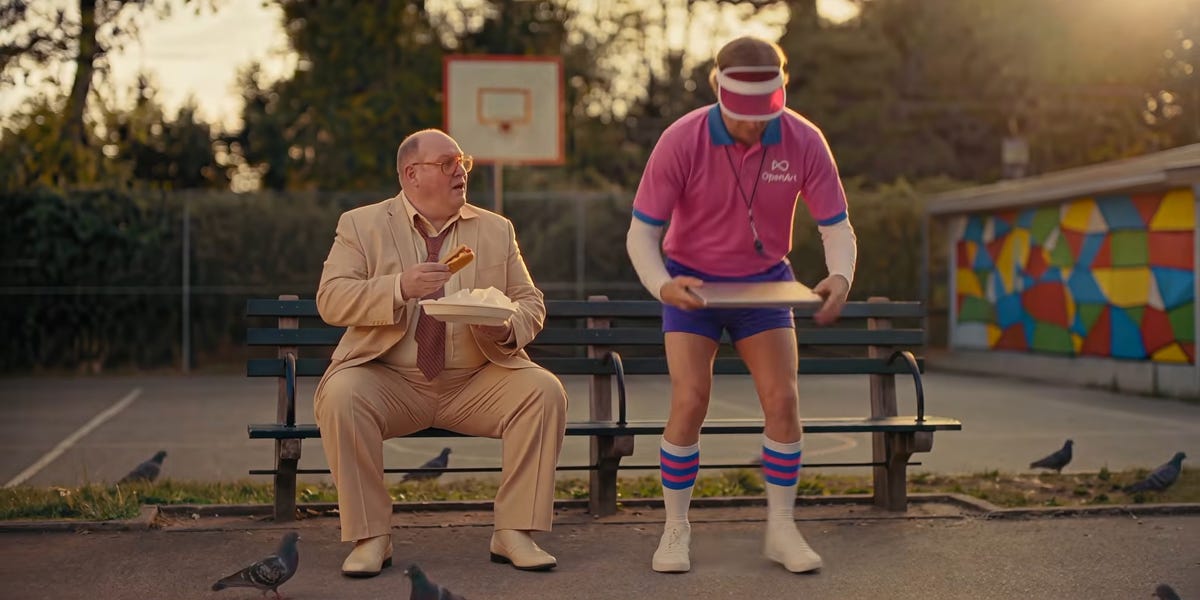
An AI ad campaign is coming that could disrupt Hollywood.
AI text-to-video conversion platform OpenArt AI will begin advertising in AMC movie theaters in Los Angeles, San Francisco, and New York this week to promote its Director product, the company exclusively tells CMO Insider. This push will also include billboards and digital and social placements in these cities.
Director allows users to describe their ideas, visual style, and narrative flow in conversational language and generate videos up to 5 minutes long.
The company said it hopes the campaign, created entirely in-house using its Director tool, will spark a wave of “vibe direction” that echoes the rise of “vibe coding” and inspire newcomers to create microdramas, music videos or advertisements.
“I don’t think we’re trying to be provocative, we just think it’s a really good audience fit,” Stella Guan, head of growth and operations at OpenArt AI, told me when I asked if targeting the campaign to moviegoers was to peck a hornet’s nest.
AI has sparked a backlash within Hollywood’s creative community over the technology’s potential to destroy jobs and the prevalence of low-quality “AI slop.” But a growing segment of the industry, including Ben Affleck and Martin Scorsese, has embraced it to streamline and enhance technical work.
OpenArt AI, founded in 2022 by two former Google employees, has grown to 8 million monthly active users. In January, the company raised $30 million in a Series A round led by Canaan Partners.
The company’s in-house studio of six creative directors spent four days coming up with advertising ideas using the Director product. The company held a “Movie Night” screening marathon before choosing the final spots.
The ad depicts a man eating a hot dog on a bench next to a basketball court. A “coach” character then approaches him, blowing a whistle and brandishing a laptop. The man told his coach that he had always wanted to make a movie about desert penguins.
The coach explained that he could enter it into OpenArt and create any video he wanted, “even microdramas.”
The man protested, saying, “I don’t watch microdramas.”
OpenArt AI said the budget for the director’s marketing campaign is “in the low hundreds of thousands of dollars.”
countering criticism of AI
Some consumers are averse to AI-generated ads. A study released in January by the IAB and Sonata Insights found that 30% of Gen Z respondents said brands that use AI in advertising are “inauthentic,” 26% said they feel “isolated,” and 24% said it’s “unethical.”
Moral panic about AI aside, James Poulter, CEO of AI consultancy Three Point Labs, said AI companies need to be careful about overselling the capabilities of their platforms to regular users.
“Every model overhypes how easy it is to produce the top 1%,” Poulter said. “No matter how capable a model is of producing something cinematic out of the box, if you don’t have the language of film or aren’t the director, you can’t manipulate the model to deliver something similar to someone who has that language.”
Guan said much of the criticism of the use of AI in advertising and other creative works can stem from people not realizing how far this technology has come since its earliest versions.
She hopes the ad will show that AI produces high-quality output suitable for big movie theater screens.
“I think this in itself is a great showcase of the capabilities and technology of our products,” Guan said.