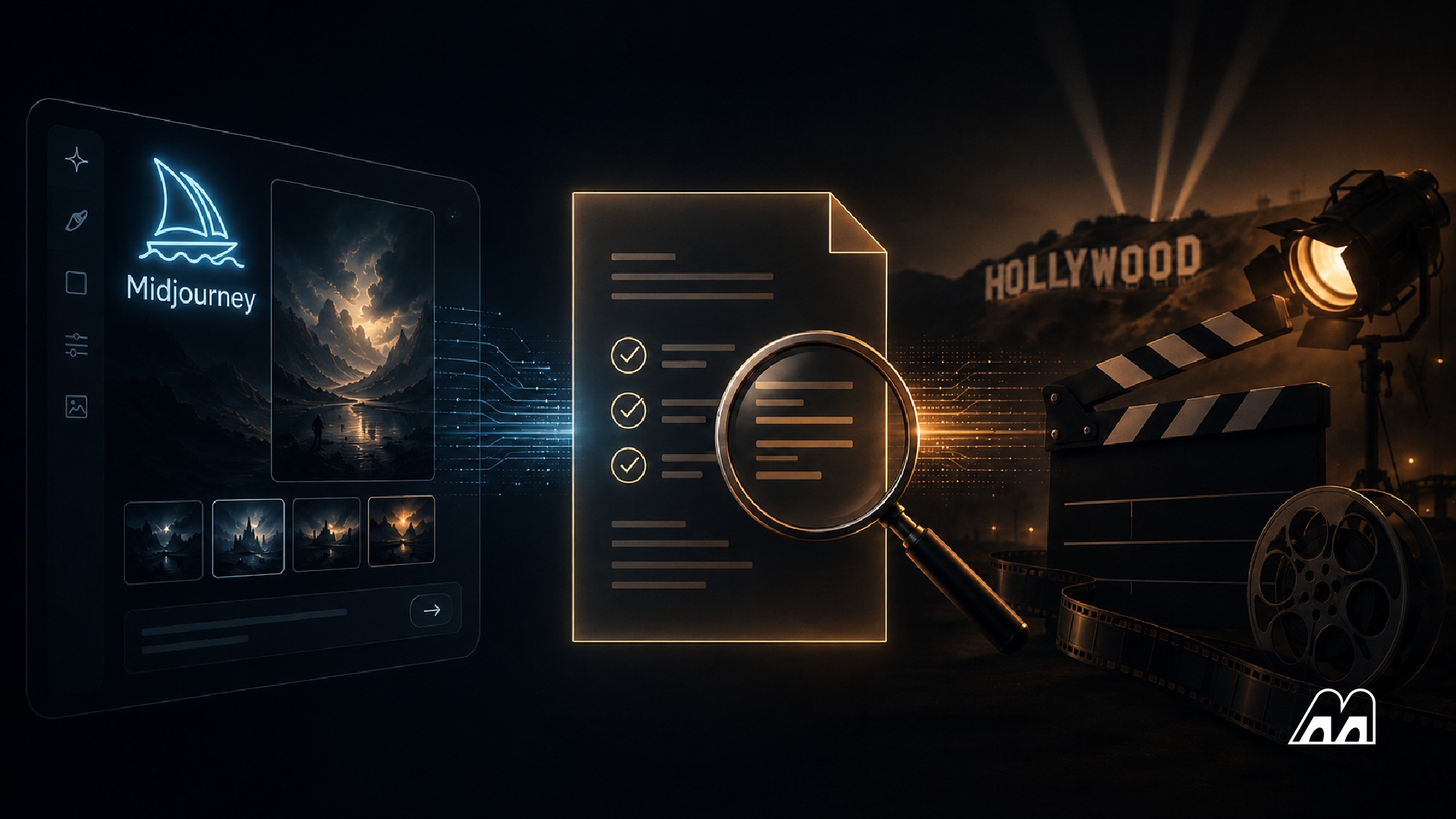
Midjourney doesn’t just want to protect itself from Hollywood. The company now wants studios to open their own AI cabinets.
AI video company Seeking broader discoveries in copyright struggles It has partnerships with major film studios such as Disney, Universal, and Warner Bros. The studio has accused Midjourney of using protected characters and content without permission. Midjourney argues that if studios claim that AI will have a negative impact on the market, then the studio’s own use of AI is also at issue.
‘Midjourney’ puts Hollywood back in the spotlight
The central battle sounds simple: Hollywood claims that Midjourney copied its work. Midjourney said courts should also consider how Hollywood uses similar technology.
According to recent reports, a judge had already ordered studios to share information about their use of AI; Consumer images and videos. Midjourney is now calling for that restriction to be expanded, arguing that studios should no longer be able to select only the documents that support their claims.

That’s where it gets interesting.
The case began as a typical rights holder versus tech company conflict. But it’s becoming something bigger, and that’s a fight over transparency. If your studio is using AI internally for concept art, marketing, pre-visualization, pitch decks, production workflows, etc., Midjourney wants to document those details.
We believe the real story here is not just whether Midjourney trained on protected content. The key question is whether Hollywood can attack AI in court while also quietly using it in its own creative pipelines.
Why the studio sued Midjourney
Disney and Universal filed suit In June 2025, Midjourney was accused of copyright infringement related to training data and AI-generated output. The attack targeted images purportedly resembling well-known characters and worlds owned by the studio.
Warner Bros. later filed its own lawsuit.alleging that Midjourney created unauthorized images and videos featuring characters such as Superman, Bugs Bunny, Scooby-Doo, and Wonder Woman.
The studio claims Midjourney is benefiting from valuable entertainment IP without paying for it. Midjourney, like many AI companies, is expected to rely heavily on discussions around transformation, user prompts, and fair use.
The outcome of the battle is as follows.
| side | what they want | why is it important |
| hollywood studios | More control over protected character and visual IP | AI companies could be forced into licensing agreements |
| in the middle of a journey | Broad access to Studio AI usage records | It could undermine the argument that AI only hurts studios |
| creator | Clearer rules for training data and output | May impact artists, agencies and production teams |
| court | Evidence on market damage and AI workflows | It could shape future copyright litigation |
Why are AI discoveries important?
Discovery is a legal process in which both parties request documents, records, and evidence. It may sound boring. it’s not.
In the case of AI, discoveries can illuminate how companies train models, test output, handle copyrighted material, and deploy tools internally. That’s why mid-journey requirements are so important.

If the court allows Midjourney to go deeper, Hollywood studios may have to reveal more about their generative AI experiments. This could include internal tools, vendor contracts, workflow documentation, or examples of AI-assisted creative work.
What we are looking at now is whether the courts will treat Studio AI’s use as related to harm to the market. If studios argue that midjourney threatens their business, midjourney is likely to argue that Hollywood’s own AI adoption tells a more complex story.
This is also a question of power
Hollywood has spent decades creating some of the most valuable characters in the world. Disney, Universal, and Warner Bros. don’t consider these characters part of Internet culture. They consider them multi-billion dollar assets.
Mid-journey is the other side of the new creative economy. This allows users to generate images quickly and at low cost. This makes you powerful, but it also leaves you legally exposed.
The tension is palpable.
Studios want AI companies to pay for the raw materials that helped make their tools more valuable. AI companies want the flexibility to build and compete without having to clear the rights to every image collected or referenced on the internet.
That’s why this lawsuit could push the industry toward licensing. We’ve already seen AI companies and content owners move toward paid partnerships that include image and media licensing deals. Recent news coverage Getty Images and OpenAI partnership This shows how quickly the market is moving from scraping battles to commercial agreements.
What it means for South African creators
For South African readers, a more practical question is: What happens when AI tools become commonplace in creative work, but copyright rules remain unclear?
Local agencies, filmmakers, designers, and content teams are already using AI tools to speed up production. A small studio in Cape Town can now create pitch visuals that once required much larger budgets. Marketers in Johannesburg can test campaign concepts in minutes.

That’s exciting. It’s also dangerous.
If courts around the world demand greater transparency around AI training and use, South African businesses may also need cleaner AI policies. It means:
- Record which tools your team uses.
- Avoid prompts to copy protected characters.
- Review commercial terms of use before publishing.
- Build internal rules around AI-generated visuals.
- Ask your vendor if they use licensed training data.
This is important because South African creators often rely on global platforms. U.S. court rulings could quickly shape the tools available here, the terms attached to them, and the risks that clients seek from their agencies.
The bigger battle between AI and Hollywood is just beginning
Hollywood is not anti-AI in the simplest sense. Studios want the speed, cost savings, and creative flexibility of AI. They just don’t want outside AI companies profiting from their characters without their permission.
That’s why mid-journey movements feel so sharp. This puts Hollywood’s own use of AI under the microscope.
If studios are making heavy use of AI behind the scenes, Midjourney might argue that AI is more than just a threat to the market. It’s also part of their market. However, if discovery reveals limited or discreetly licensed use, the studio may strengthen its case.
The court has not yet decided the full extent of the copyright issue. For now, the battle is in the evidentiary phase, with both sides trying to define what will be known in court.
We think this case could be one of the clearest windows into how major entertainment companies are actually leveraging AI. And once that window opens, the next question becomes uncomfortable. Who can use culture as training material, and who receives the rewards when it is used.
FAQ
Why is Midjourney asking studios to disclose their AI usage?
Midjourney seeks evidence on how studios are using Generation AI Internally. It said the information could be important if a studio claims that an AI tool would have a negative impact on the market.
Which studios are involved in the Midjourney lawsuit?
This battle involves major players in Hollywood. Disney, Universal, Warner Bros. The lawsuit centers on claims of copyright infringement involving protected characters and visual content.
Why should South African creators care?
This incident could shape the next rules AI-generated images, licenses, and copyright risks. Local creators using global AI tools may feel impacts through platform policies, client agreements, and legal expectations.