
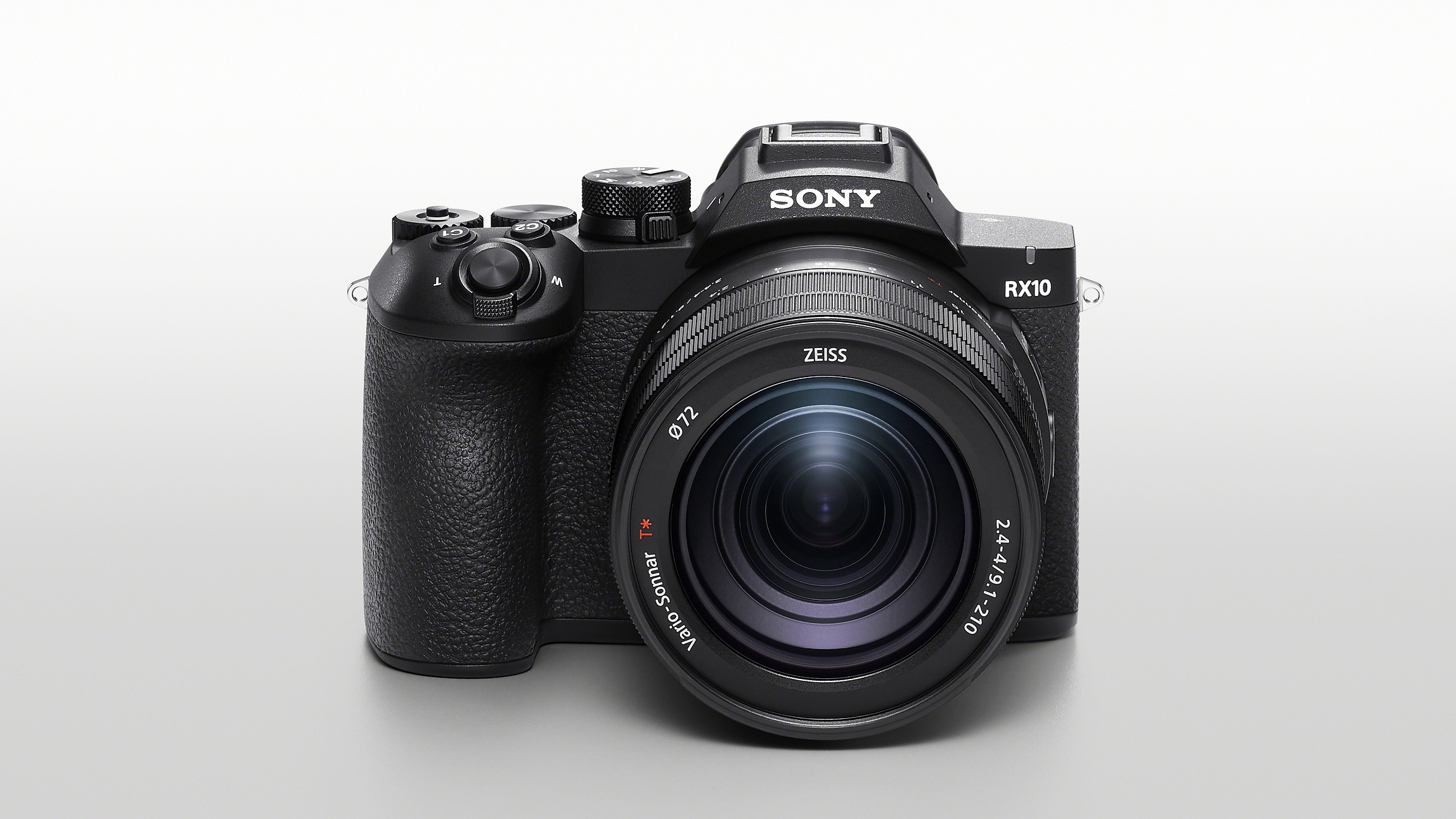

After nearly nine years, Sony has finally given its RX10 bridge camera line a proper update, and the fifth generation RX10 V combines the familiar 20.1MP 1.0-type stacked Exmor RS sensor and ZEISS 24-600mm f/2.4-4.0 zoom with the AI-powered BIONZ XR processor found in Sony’s latest Alpha body. The result is a single-body superzoom that adds real-time recognition AF, 30 fps blackout-free continuous stills, and up to 4K 120p video for an MSRP of $2,299.99.
The RX10 series has always occupied an unusual niche. Positioned between a pocketable compact and an interchangeable lens system, it features a large 1-inch sensor for its category behind a long, bright fixed zoom. This combination has made the RX10 IV popular among wildlife shooters, event photographers, and run-and-gun video journalists looking for the ability to reach large areas without changing glass. We first covered this line with the original RX10, but when Sony went silent after 2017’s RX10 IV, the category thinned out considerably, as we noted in our recent RX10 V teaser coverage. This new model is Sony’s answer to a segment that has had few fresh options for years.
A familiar sensor and a new brain behind it
At the heart of the RX10 V is a 20.1-megapixel (approximately effective) 1.0-inch stacked Exmor RS CMOS sensor. In theory, this is the same class of chip as the one in the RX10 IV, so the resolution and sensor size story remains the same. What’s new is processing. Sony has powered it with the BIONZ XR Engine, the same generation of processor found in recent Alpha cameras such as the α7 V and α7R VI, with a dedicated AI processing unit.

Sony says the new processor keeps noise low throughout the mid-to-high ISO range and maintains accurate colors and textures for skin tones, skies, and greens. 12 customizable Creative Look presets handle in-camera color, and an updated D-Range Optimizer reaches level 8 to balance highlights and shadows even in strong backlight. As with other manufacturers’ image quality claims, we’d like to see the actual dynamic range and performance at high ISO in our own tests before drawing any conclusions, especially since our lab tests on the A7 V showed Sony’s nominal values to exceed the measured video dynamic range.

Real-time recognition AF using AI is now available
The most important upgrade associated with the BIONZ XR processor is autofocus. RX10 V gains real-time recognition AF driven by an AI processing unit, which can identify and track people, animals, birds, insects, cars, trains, and planes. Auto mode attempts to independently detect the type of subject, and human pose estimation keeps the focus fixed on the person, even if the person turns away or wears a helmet or sunglasses. With touch tracking, you can tap your subject to start real-time tracking while still focusing on framing.
This system covers a large area of the frame. Sony’s specs prioritize focus performance alongside Alpha cameras, and independent testing shows the RX10 V uses 575 autofocus points spanning approximately 71% of the image area, with a full complement of area modes including multiple spot sizes, custom framing, and full-area AF. This is a big step up from the RX10 IV’s 315-point, 65% coverage phase-detection array. Whether subject recognition algorithms work as reliably in cluttered, low-light wildlife scenarios as they do with cooperative subjects is exactly the kind of question we need to answer in our practice tests.

High-speed still images and shutter issues
For still photographers looking for action, the most exciting number is 30 fps blackout-free continuous shooting with an electronic shutter backed by up to 60 AF/AE calculations per second. The continuous shooting speed boost function allows you to increase the continuous shooting speed during shooting. The fast readout of the stacked sensor suppresses rolling shutter. This is important for cameras aimed at birds in flight or high-speed sports, and also applies to video capture.
There are trade-offs when working with still images that are worth flagging. 30 fps mode requires an electronic shutter, and if you really need RAW, you’ll need a lossy RAW file. This camera also has a mechanical leaf shutter, which allows for fast flash sync speeds but imposes aperture constraints. At shutter speeds faster than 1/1000 seconds with a mechanical shutter, the aperture drops to f/8. To reach faster speeds with wider apertures, you must switch to an electronic shutter, and there is no automatic handoff between the two shutter types. One notable omission is Pre-Capture, the pre-press buffer feature found on Sony’s other BIONZ XR bodies. This was a natural fit for unpredictable wildlife.

Best-in-class video toolkit
It’s in the video that the RX10 V looks most powerful on paper. This camera records up to 4K 120p with 4:2:2 10-bit capture, including up to 5x 4K slow motion. Sony’s color science is well expressed through S-Cinetone for an out-of-the-box cinematic look, and S-Log3 for maximum grading freedom, allowing you to import up to 16 user LUTs and monitor the graded look while recording in Log.
Active mode stabilization stabilizes handheld footage, and AI subject recognition powers an auto-framing feature that keeps your subject centered during recording. The multi-interface shoe supports digital audio signals with compatible microphones for cleaner sound, and USB Type-C handles 4K 30p live streaming and high-speed transfers. Time-lapse and still image extraction using Shot Mark enhances the suite of features. This all-in-one body has such a reach, and it has really deep video specifications.
Viewfinder, screen, and long-awaited battery upgrades
There is a welcome improvement in handling. The electronic viewfinder has moved to a 0.5-inch Quad-VGA OLED panel with approximately 3.68 million dots and 0.78x magnification, a clear step up from the RX10 IV’s smaller, lower-resolution unit. The rear 3.0-inch LCD has increased to approximately 1.62 million dots. Sony has adopted the button layout and grip design from its Alpha mirrorless series, and the 8-way multi-selector joystick makes selecting focus points more intuitive.
Perhaps the most practical change is power. The RX10 V uses the Z series battery NP-FZ100 and can take approximately 630 shots per charge (approximately 570 when using the viewfinder), an improvement of approximately 50% over the previous model. This replacement will equip the camera with the same widely available cell used in much of Sony’s latest lineup. This is a true convenience that we covered in our camera battery compatibility guide. A dust- and moisture-proof design, dual-band Wi-Fi, and Creator App connectivity for cloud transfer and remote control complete the package.

Comparison with alternatives
The closest competitors to the RX10 V come primarily from the history of the RX10 V itself. While the 5th generation’s body, autofocus, and battery are clearly improved, a used RX10 IV is still a viable option for those who simply want the versatile 24-600mm formula. For those who prioritize raw range above all else, the Nikon COOLPIX P1100 offers an impressive 24-3000mm equivalent range at a low price, while featuring a much smaller sensor. In terms of sensor size, zoom range, feature set, and balance of video performance, the RX10 V has few real rivals at the moment, and that’s exactly why this segment has been waiting for it for so long.
Pricing and availability: sony rx10 V will be available from August 2026 at an RRP of $2,299.99 / €2,500 / £2,200. For more information, please visit the Sony product page. CineD may earn commissions through affiliate links when you purchase through selected retail partners.
A new processor in a proven body: Is the RX10 V the do-it-all superzoom you’ve been waiting for? Or has the world of interchangeable lenses moved forward? Feel free to let us know in the comments below.
Source link


