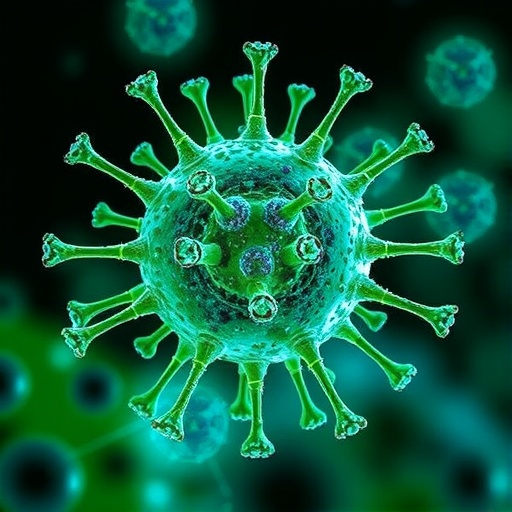
Plant viruses: revolutionizing biotechnology with AI, machine learning, and nanotechnology
Recent studies are revealing the profound potential of plant viruses as versatile tools in biotechnology, especially when integrated with cutting-edge technologies such as artificial intelligence (AI), machine learning (ML), and nanotechnology. This new multidisciplinary approach promises to transform applications ranging from crop improvement to therapeutic drug delivery.
Plant viruses have traditionally been studied for their pathogenic effects on crops, but due to their robust structural features, they are now being reused. Their nanoscale size, uniform morphology, and programmable genetic material make them ideal scaffolds for engineering new biomaterials. Researchers are harnessing these viral particles to develop precision delivery systems and nanosensors, allowing unprecedented control at the molecular level.
Artificial intelligence and machine learning algorithms enhance this process by enabling rapid analysis and prediction of virus-host interactions and structural properties of viral capsids. AI-driven models accelerate the design of viral vectors for specific functions, optimizing stability, targeting ability, and biocompatibility. This synergy accelerates the development cycle and enables the synthesis of custom viruses with intended functionality.
Nanotechnology complements these advances by allowing researchers to manipulate virus particles with extreme precision at the nanoscale. Surface modification techniques can be used to functionalize plant viruses with biomolecules, drugs, or contrast agents. This feature transforms viral capsids into multifunctional nanocarriers capable of delivering payloads to specific cells or tissues, improving the efficacy and safety of biotechnological interventions.
The integration of these technologies also opens new avenues for agriculture. Genetically engineered plant viruses can be used as nanofertilizers and biopesticides, providing an environmentally friendly alternative to traditional chemicals. Additionally, AI-guided monitoring of virus applications can help minimize environmental impact and maximize crop yields in line with sustainable agricultural practices.
Beyond agriculture, the therapeutic potential of plant viruses is being investigated in vaccine development and targeted drug delivery. Their ability to elicit an immune response without being pathogenic makes them promising candidates for novel vaccines. Additionally, machine learning can optimize virus design to improve immunogenicity and minimize side effects, an important step in personalized medicine.
Despite these promising advances, challenges remain in ensuring biological safety, managing off-target effects, and scaling up production. Regulatory frameworks need to evolve to address the complexities created by combining biological agents with AI and nanotechnology. Nevertheless, the rapid pace of interdisciplinary research points to a future where plant viruses will be at the heart of innovative biotechnological solutions.
The convergence of plant virology, AI, machine learning, and nanotechnology exemplifies how traditional biological systems can be transformed through computational and engineering techniques. This interdisciplinary paradigm has transformative potential in agriculture, medicine, and materials science, and heralds a new era of virus-based biotechnology innovation.
Research theme: Application of plant viruses to biotechnology using artificial intelligence, machine learning, and nanotechnology
Article title: Applications of plant viruses in biotechnology related to artificial intelligence, machine learning and nanotechnology
Article reference:
Jain, K., Saini, A., Marwal, A. et al. Applications of plant viruses in biotechnology related to artificial intelligence, machine learning, and nanotechnology.
npj virus (2026). https://doi.org/10.1038/s44298-026-00193-6
Image credit: AI generated
Tags: AIAI-driven virus design in agriculture Interdisciplinary plant virus applications Machine learning in virus research Nanomaterials for therapeutic delivery Nanomaterials for therapeutic delivery Plant viruses Biotechnology Precision nanotechnology in biotechnology Programmable viral scaffolds Viral vectors Virus-based nanomaterials for crop improvement Virus-host interaction prediction