
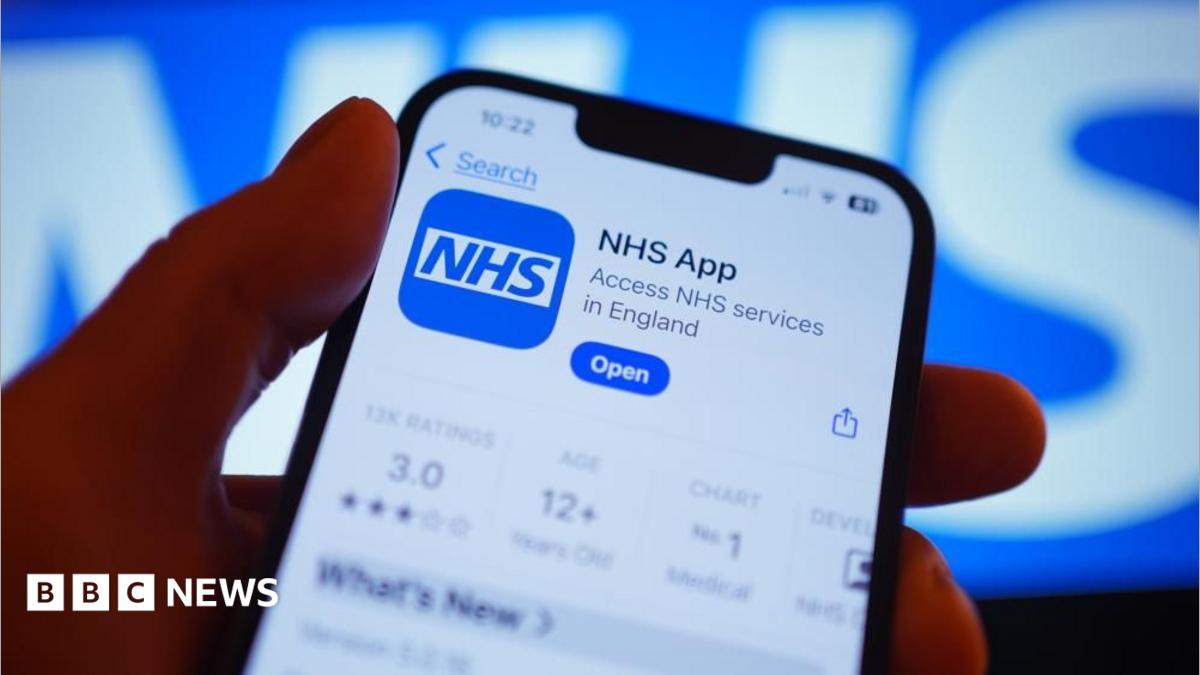
Artificial intelligence will be used in the NHS app to decide which services are most appropriate for patients in England, the Health Service has announced.
The new triage tool asks patients a series of questions and uses their answers to direct them to GP appointments, pharmacies, A&E and community services, as well as provide self-care advice.
NHS England said the update will be rolled out to more than 200,000 patients over the next 12 months and will be available to all app users by April 2028 as part of a “major overhaul” of the technology.
The development has been widely welcomed, but some healthcare organizations are calling for the NHS to prioritize patient safety, confidentiality and inclusivity as it becomes increasingly reliant on AI.
The tool was first trialled at Wealden Ridge Medical Partnership in Sussex and saw a 29% reduction in the number of people queuing to the phone for an appointment.
Dr. Raghu Rajan, who works at the practice, said integrating this tool “means patients can tell us what they need, when they need it, and guide them to the right care from the beginning.”
“It didn’t replace our judgment. It gave us back time to use it.”
Sir Jim McKee, chief executive of NHS England, said the tool would “help ensure patients receive the best service tailored to their needs the first time, and clinicians can ensure those who need GP appointments the most get them sooner.”
This comes as part of a £10bn investment allocated by the Government in 2025 to overhaul the NHS’s technology, digital and data systems.
AI tools that record conversations between patients and NHS staff and generate real-time transcriptions and clinical summaries will also be rolled out across the UK.
The rollout will begin with a non-hospital hospital booking at four NHS Trusts in and around London: St George’s, Epsom & St Helier, Croydon and Kingston & Richmond.
Alder Hey Children’s NHS Foundation Trust in Liverpool and Manchester University NHS Foundation Trust are also expanding their AI note-taking programmes.
A trial led by Great Ormond Street Children’s Hospital and carried out across nine NHS sites in London found that NHS staff spent nearly 25% more time interacting with patients when using note-taking techniques.
Professor Lynn Woolsey, chief nursing officer at the Royal College of Nursing, said the rollout was “an important step in improving the skills of the NHS” and could “reduce the administrative burden on nursing staff”.
But she also stressed that patient safety and confidentiality must be protected at all times. “It is at the heart of the AI triage system, ensuring that medical professionals make decisions at critical points in the process.”
Pritesh Mistry, a fellow at the King’s Fund think tank, said the announcement “could help accelerate methodological improvements”. [the] The NHS uses the latest technology to provide better care for patients. ”
“It should be easier for people to get support, digitally or physically, at the right time and in the way that works best for them,” she added.
“This means that as clinical services become increasingly reliant on technology, the NHS must continue to focus on ensuring people are not digitally excluded.”
Stuart Andrew, the Conservative shadow health secretary, said: “Any innovation that improves patient care and helps the NHS work more effectively should be welcomed. But new technology must be introduced in fully-funded plans that deliver value for taxpayers.”


