
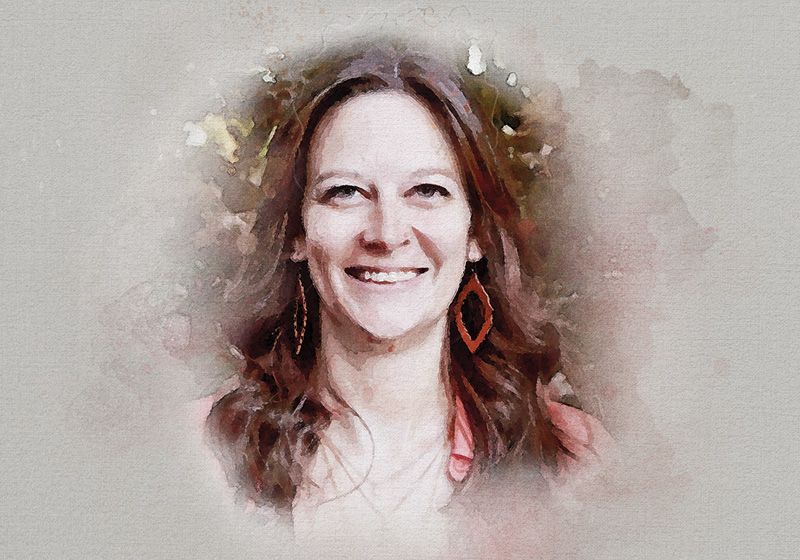
Mary Cundiff is a postdoctoral fellow at the University of Pittsburgh. She uses machine learning and single-cell genomics to discover biological mechanisms common to different organs and improve multi-organ therapeutic strategies. In this Postdoctoral Portrait interview, she shares the nuances that influence her research at the organ, tissue, and genetic level.
Decoding multi-organ pathology using machine learning
Q | What attracted you to machine learning in biology?
I was first drawn to research by the realization that there are still fundamental questions that remain unanswered in biology. The feeling of standing on the edge of the known and making endless discoveries has remained with me throughout my career.
My path into this particular field came from a combination of neuroscience, immunology, and data science. I became increasingly interested in how complex biological systems break down in disease and how computational tools can be used to understand that complexity. What specifically motivated me was the gap between the amount of data that can be generated and the ability to interpret it in a meaningful way.
This led me to focus on interpretable machine learning in biology. Rather than treating the model as a black box, we wanted to build an approach that reveals the underlying biological structure. Studying disease across organizations felt like a natural extension of that goal. Because we need to ask not just what changes, but also what patterns are truly fundamental.
Q | What scientific problem are you trying to solve?
I study how diseases such as fibrosis develop in different organs and whether the same underlying biological programs cause diseases such as the heart, lungs and kidneys. Although many studies have focused on a single tissue, patients often experience systemic disease, and commonalities and tissue-specific aspects are still not clearly understood.
To address this, I am developing an interpretable machine learning approach that combines single cell genomics with modern AI models. My goal is not only to identify genes that change in disease, but also to understand whether those genes are involved in the same biological programs across tissues. Quantifying this “commonality” allows us to begin mapping conserved disease mechanisms rather than individual observations.
Ultimately, we aim to move beyond descriptive biology to a more unified view of disease that reveals common pathways that can be targeted across multiple organs. This could improve the way we study complex diseases and identify broadly effective treatment strategies rather than tissue-specific ones.
The future of systemic biology and target discovery
Q | What’s one unexpected thing you learned from a systemic approach?
One unexpected lesson was how difficult it is to define what it means for biology to be “shared” between systems. Intuitively, it seems easy. If the same gene changes in multiple tissues, they should be related. But in reality, the situation is more nuanced.
Genes rarely function alone. They work within a tailored program. I discovered that although two tissues exhibit similar gene-level changes, their genes may be organized into very different biological structures. Conversely, tissues can use different genes to achieve similar functional outcomes.
This changed my perspective from focusing on individual genes to focusing on patterns and relationships between genes. The importance of building models that capture not only signals but also structures was also emphasized.
More broadly, it taught us that biological similarity is about more than just overlap. It’s about how the system is organized. That realization shaped how I designed both my computational methods and biological questions.
Q | If your research is successful, what will change in science and society?
This research has the potential to change the way complex diseases are studied by shifting the focus from analysis of single tissues to biological mechanisms shared throughout the body. Instead of developing treatments that target one organ at a time, we may be able to identify conserved disease programs that are related across multiple tissues. This could lead to more efficient drug discovery, prioritization of therapeutic targets, and a deeper understanding of systemic diseases such as fibrosis, cardiovascular disease, and chronic inflammation. More broadly, it could help bridge the gap between large-scale data generation and actionable biological insights, making modern genomics more useful in both basic science and clinical applications.
Q | What question do you want to answer next?
I am most excited about understanding whether conservative disease programs can predict treatment response across tissues. For example, if a biological program is shared between the heart and lungs, can targeting that program improve outcomes in both organs? This question moves beyond identifying patterns to testing whether those patterns are functionally meaningful.
Answers have been edited for length and clarity.
Are you a researcher who would like to be featured in the “Postdoc Portraits” series? Submit your application here.


