
Main points
-
Terms and conditions. Adobe plans to acquire Topaz Labs in the second half of 2026, pending regulatory approval.
-
Technology integration. Topaz’s Neurostream technology runs large-scale AI models locally within Firefly and Creative Cloud.
-
Standalone continuity. Topaz products will continue to be available separately, and CEO Eric Yang will continue to lead the team.
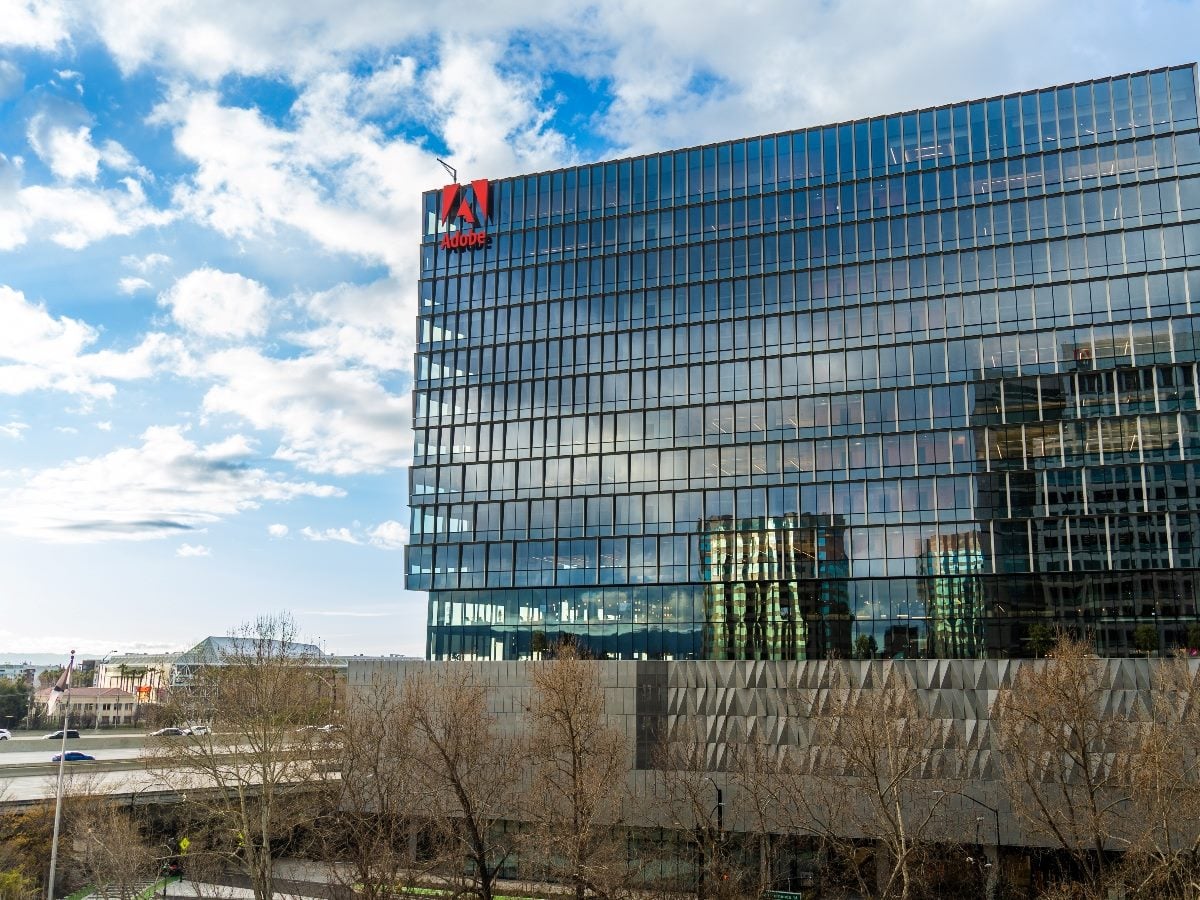
Adobe announced on June 25 that it has entered into a definitive agreement to acquire Topaz Labs, an AI company specializing in video and image enhancement models. The transaction is expected to close in the second half of 2026, subject to regulatory approval.
Topaz Labs develops AI models used by creative professionals and businesses for upscaling, sharpening, stabilization, frame interpolation, denoising, and video restoration. Adobe says the deal will expand its offering of video and image models across Adobe Firefly, Firefly Services, and Creative Cloud applications.
The company says Topaz’s proprietary Neurostream technology, which runs large-scale AI models locally on consumer devices, allows Adobe to deliver faster creative experiences and make advanced AI more cost-effective. Topaz CEO Eric Yang will continue to lead the team after the transaction closes, and Topaz products will continue to be offered as standalone products.
“We’ve always believed that technology should contribute to human creativity, not replace it, and Adobe is no different. Together, we believe we can dramatically expand the possibilities for filmmakers and creators everywhere,” said Eric Yang, CEO of Topaz Labs.
Adobe-Topaz Laps feature breakdown
Adobe officials said the acquisition will add the following capabilities to the company’s creative portfolio:
|
ability |
explanation |
|---|---|
|
AI enhanced model |
Video and image upscaling, sharpening, denoising and restoration |
|
neurostream technology |
Run large-scale AI models locally on consumer devices |
|
frame interpolation |
AI-powered frame generation for smoother video output |
|
stable |
AI-based video stabilization for professional video workflows |
|
video restoration |
Remastering archive content using AI models |
Adobe doubles down on AI workflows with Firefly Graph
The acquisition of Topaz comes as Adobe accelerates the buildout of its broader AI infrastructure. On June 17, Adobe announced Firefly Graph, a node-based visual canvas that enables enterprise creative teams to build, manage, and reuse AI-powered workflows at scale. Firefly Graph, available now as part of Creative Cloud for Enterprise Edition 5, connects the power of Photoshop, Illustrator, and Premiere with AI models from Adobe, OpenAI, and Google to create configurable and repeatable production sequences.
The platform is designed to turn one-off creative processes into assets for your organization. Build your workflow once, package it with a custom interface, and distribute it to your entire team. Adobe will also release a private beta version for individuals. This announcement shows that Adobe is not just adding more AI models. Build workflow layers, manage and extend them. This is exactly the infrastructure that Topaz’s Neurostream local processing technology is designed to power.
Recent Adobe News
Adobe is navigating leadership change while announcing record financial results and accelerating its AI product strategy. CEO Shantanu Narayan announced in March 2026 that he will step down after an 18-year tenure in which he grew Adobe from less than $1 billion in annual revenue to more than $25 billion, and will become chairman of the board while lead director Frank Calderoni leads the search for his successor.
CFO Dan Dern then left the company on June 15 to join Marvell Technologies, and three Wall Street analysts downgraded the company, even though Adobe reported first-quarter 2026 revenue of $6.4 billion (up 12% year-over-year) and second-quarter revenue of $6.62 billion. SVP Steve Day is serving as interim CFO.
On the AI front, Adobe’s Agent CX suite saw 13x trial growth in Q1, followed by the June 2026 release of CX Enterprise Coworker Agent, which automates campaigns, analytics, and journey orchestration. Firefly’s AI-driven ARR exceeded $250 million, and by the end of Q4 FY25, AI-driven ARR accounted for over one-third of total bookings.
The Semrush acquisition (completed on April 28, 2026) is already delivering product results. At Cannes, Adobe announced brand visibility by combining LLM Optimizer with Semrush data extracted from over 289 million AI search prompts, allowing brands to monitor their presence across ChatGPT, Google AI Mode, Microsoft Copilot, and Perplexity. The next CEO will also inherit headwinds. Optimizely displaces Adobe from No. 1 spot in Gartner’s DXP Magic Quadrant, with failed $20 billion deal with Figma leaving persistent gap in design-to-experience pipeline.
AI creative tools trump governance
Corporate creative teams are deploying AI-enhanced tools faster than they can manage, and the resulting risks are equal to the productivity gains.
API connectivity determines whether your AI extension works within your existing creative environment. Organizations are increasingly pursuing their own AI strategies, connecting their preferred AI services directly to their authoring and operational systems. Bottlenecks occur on platforms that do not have open integration architectures.
Agentic AI is accelerating this change. Canva’s recently announced agent design tool is framed as an autonomous end-to-end creative workflow, a move towards dynamic orchestration rather than static automation.
Speed without governance increases risk. While AI has enabled factory upgrades, most organizations have not upgraded their quality control. As a result, brand drift, IP exposure, and off-message content are generated faster than anyone can review them.
Platform-level differentiation is increasing around built-in governance. Sitecore Stream’s brand kit, Contentstack’s structured knowledge sources, and Optimizely’s bring-your-own LLM approach reflect different strategies for maintaining brand integrity within production workflows.
adobe background
Adobe is a provider of digital asset management software, digital media, and marketing solutions for creative professionals and businesses. Founded in 1982, the company’s portfolio includes generative AI capabilities with Creative Cloud, Document Cloud, Experience Cloud, and Adobe Firefly.
 Do you have a tip you’d like to share with our editorial team? Please contact us:


