Memory chip manufacturing is a capital-intensive business known for boom-bust cycles.
issued Thursday, June 25, 2026 · 10:42 am
[NEW YORK] SK Hynix and Micron Technology made back-to-back announcements this week, cementing the memory chip market as the hottest area in the AI industry.
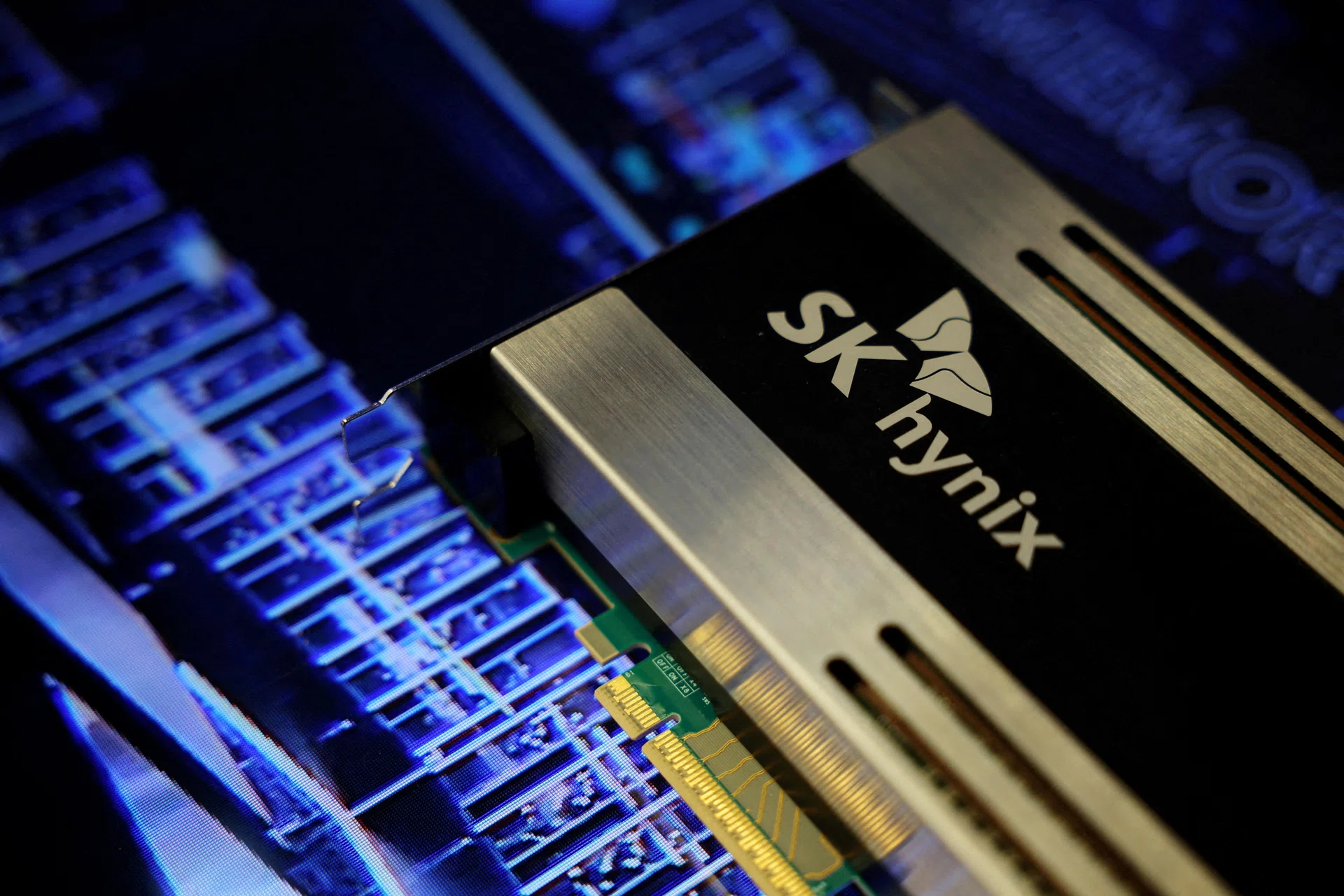
SK Hynix started things off on Wednesday (June 24) by announcing plans for a large-scale stock listing in the United States. The South Korean memory chip maker is seeking around 45.5 trillion won (S$38 billion) in funding, one of the largest in history.
Micron then released its quarterly report, with sales and profit forecasts that beat analysts’ expectations. Shares of the largest U.S. memory company soared, dispelling concerns that spending on artificial intelligence would slow. The reaction in Asian markets was swift on Thursday, with SK Hynix, rival Samsung Electronics and Japanese supplier Kioxia Holdings all adding to their extraordinary gains over the past year.
“The memory industry has been structurally transformed by the proliferation of AI,” Micron CEO Sanjay Mehrotra said on a post-earnings conference call. “We are only at the early stages of significant innovation and productivity that could be unleashed in all parts of the global economy over time.”
As a result, Micron is expected to become the biggest gainer on the benchmark Philadelphia Stock Exchange Semiconductor Index this year. The company’s stock price soared 267% this year through Wednesday’s close, putting it on its biggest annual upward trajectory since 2009.
SK Hynix’s stock price has nearly quadrupled since the start of the year, Samsung’s has nearly tripled, and Kioxia, a humble flash storage specialist, has soared nearly 800 percent thanks to an AI-driven demand surge and is now Japan’s most valuable company.
Back in 2023, companies like Micron and SK Hynix would have looked like unlikely heroes, struggling with losses due to weak demand. At the time, the market was flooded with inventory, and Micron alone lost nearly $6 billion in its fiscal year.
The production of memory chips, which help computers hold and manage data, is a capital-intensive business notorious for boom-bust cycles.
SK Hynix and Kioxia have an even more dangerous history. SK Hynix was born out of the South Korean government-led bailout of its two ancestors, LG Semiconductor and Hyundai Electronics, but it has struggled for many years. Kioxia spun off from scandal-hit Toshiba, but its listing has since been postponed multiple times due to weak investor demand.
The AI infrastructure boom led by Nvidia has changed the equation. SK Hynix is a pioneer in high-bandwidth memory (HBM) components that have proven invaluable in combination with Nvidia AI accelerators. SK Hynix continues to dominate this market, but Micron and Samsung have been racing to catch up in recent years.
The key to the current supply crunch is the issue of capacity expansion. The recent economic downturn has limited long-term spending for chipmakers and HBM, consuming capacity at the expense of traditional DRAM and NAND chips.
Manufacturers of computers, smartphones, and other equipment all struggle to secure supply at cost-effective prices.
That has helped Micron outperform companies like partner Nvidia, a leading maker of AI processors. Even though Nvidia remains the world’s most valuable company, its stock is up just 6.7% this year. Micron said it has already shipped $1 billion worth of HBM4 chips and is increasing its offerings twice as fast as its predecessor last year.
The company is taking advantage of the supply shortage to sign long-term contracts with more customers. Many of these are extended five years into the future, giving Micron greater visibility into its sales and guiding capital investment.
“I’ve been in the memory for 25 years,” said Manish Bhatia, Micron’s executive vice president of global operations. “There’s never been a better time to remember.”
The industry may eventually return to its fabled oversupply state, but it’s unlikely to happen anytime soon. Mehrotra told analysts that the shortage will continue beyond 2027. New opportunities such as robotics will drive demand for memory and storage, he said.
“There is currently no indication as to when the supply of memory will catch up with the increase in demand,” Mehrotra said. bloomberg