payment
Build applications with AI (without compromising trust)
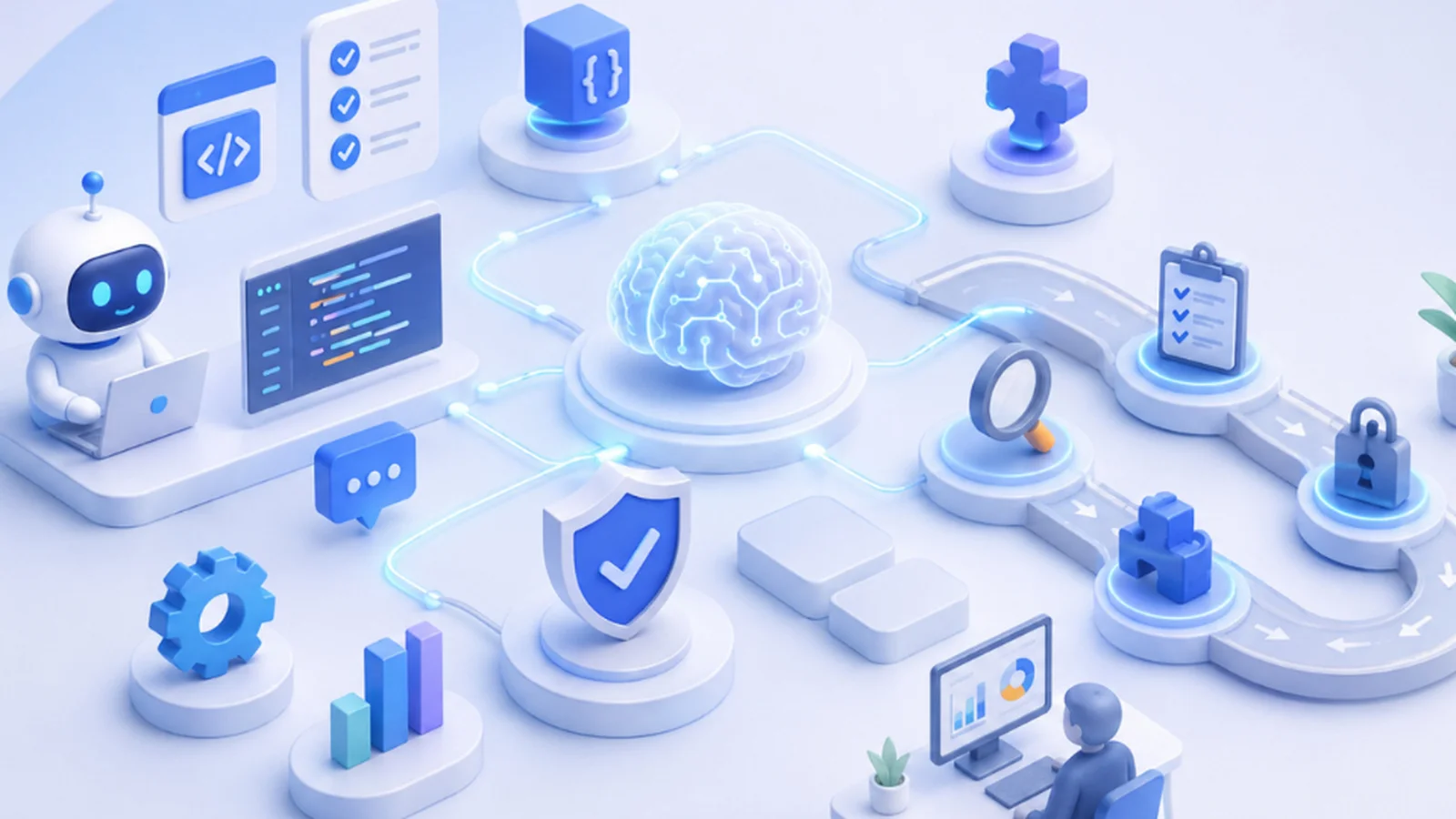
Photo: Paragon Application System
June 24, 2026
AI is no longer an engineering experiment. It is actively used to improve speed, clarity and execution. From my perspective, this opportunity is not just about reducing delivery times, but also focusing on improvements in areas that reduce repetition, aid understanding, and increase confidence without increasing production risk.
This is the authoritative story of AI in engineering. Visible improvements in workflow, clear limits on autonomy, and, most importantly, human accountability. The goal is not to cede control to the model. Rather, it’s about helping experienced resources work faster while maintaining the trust of customers, teams, and production systems.
AI-assisted coding: Faster startup, better throughput, human responsibility
AI is already helping in parts of the development process that slow down engineers, such as iterative refactoring, small utilities, test transformations, and first-pass implementations. The path from idea to draft is shortened. It is not a substitute for engineering judgment. Hardening architecture, edge cases, security, and production environments still relies on experienced engineers. AI increases throughput. Engineers remain accountable for accuracy.
Modernizing large-scale testing frameworks
Framework modernization is one of the clearest and most valuable use cases for AI. When teams need to convert large numbers of tests or migrate old patterns to current standards, the challenge is usually scale, not direction. AI makes that work faster, more reproducible, and less reliant on manual work, and engineers validate output and enhance results.
From weeks of log review to usable stories
Diagnostics is also ideal for AI. On large systems, finding a single log entry is unlikely to be difficult. Rebuild the chain of events across components and time frames. AI can reduce weeks of piecemeal reviews into usable incident narratives. Validation is still important, but the path to insight is much shorter and debugging is more targeted.
Playwright coverage: strong for simple flows, slow for complex ones
AI can also expand the reach of browser automation, especially in simple flows. For simple pages and predictable paths, you can quickly generate useful Playwright tests. The equation changes depending on the complexity. Increased context, UI state, and file relationships can reduce quality and speed. While AI has proven valuable in testing, it is not equally valuable in all scenarios.
Models are more important than wrappers – until context changes the equation
The quality of the model is important, but so is the context of the tool. Better inference and more powerful code generation often come from the model itself. However, in reality, context windows, repository awareness, IDE integration, and workflow can be just as important. The best solution is not the single most powerful model. It’s a combination that works reliably in the environments in which engineers work.
Embedded help before infrastructure-intensive AI
At Paragon, we believe that starting with such a low-risk success is not conservative. We believe that is the right and disciplined approach to AI adoption.
analyzer before generator
The same logic applies to functional design. Analyzers are usually safer than generators. Results analyzers or performance analyzers can provide immediate value by revealing patterns and helping users understand what has already happened. These features improve decision making without changing the state of the system and provide a clearer path to measuring usefulness and building trust.
Warning: Creating AI tests within apps
The most profitable use cases are also the most risky. It’s the AI that creates or runs tests within your application. Without strong limits, invalid actions, dangerous behavior, or side effects that are difficult to reverse can occur. This category requires explicit boundaries.Constrained actions, pre-execution validation, authorization checkpoints, isolation, auditability, and failsafe defaults. When AI interacts with system state, trust must be designed in from the beginning.
Pricing, adoption, and value measurement
AI also requires a commercial model that fits how it is delivered. Some features are included in the base product. Others justify add-on prices due to increased usage or to support demand. The decision becomes much easier when adoption, request volume, feature usage, and support impact are properly considered. Proper measurement distinguishes between novelty and enduring value, supporting more reliable pricing.
This is what we say about how we build
Here at Paragon, we believe the most powerful AI stories in engineering are not substitutes. That’s leverage. This means applying AI in our products where its value has already been proven. Code faster, modernize frameworks, diagnose faster, and run better workflows while explicitly protecting your high-risk autonomy.
Paragon’s principle is to start where AI is useful, measurable, and low risk. Expand only if validation and operational learning support the next step. This is how our engineering team leverages AI to build real benefits without compromising trust.
What this story includes

Paragon Application System
Paragon ATM simulation tools provide features, capabilities, and flexible automation options to help you run more tests in less time, improving quality, shortening delivery cycles, lowering costs, fostering collaboration, and increasing channel profitability.
Request information
learn more