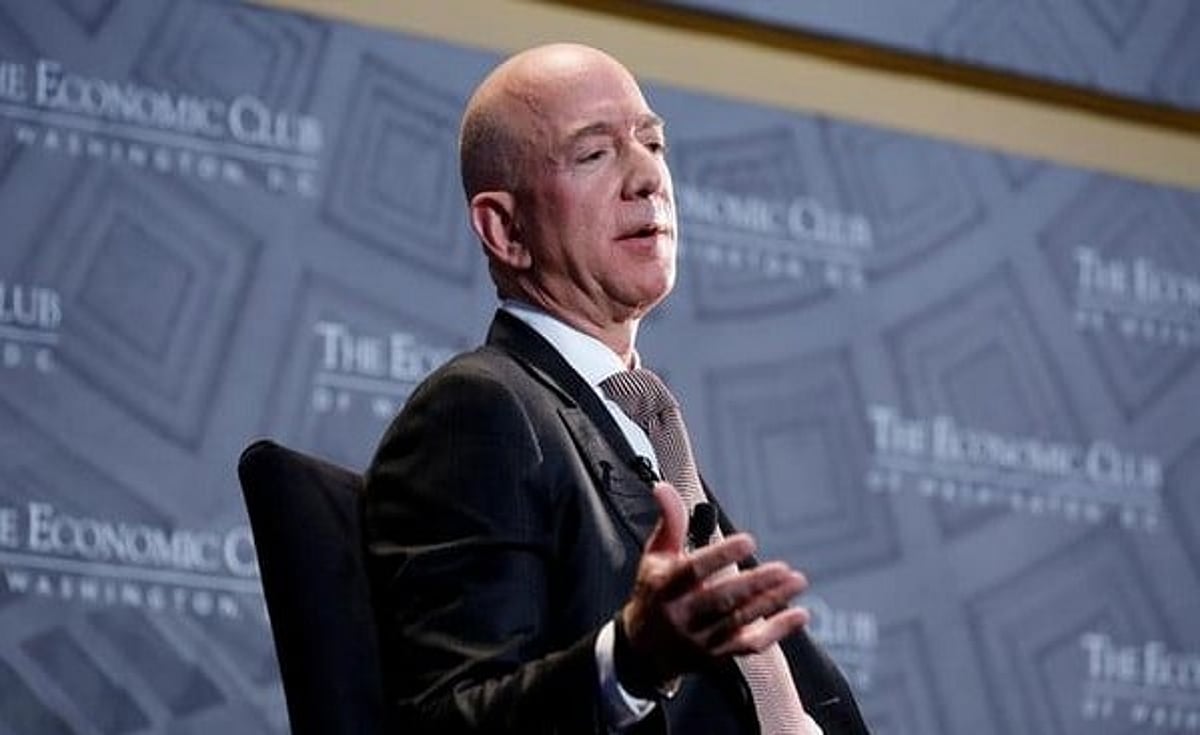
Underlying his comments is a widespread belief that technological advances have historically led to increased efficiency rather than runaway resources. Bezos has frequently argued that innovation tends to solve constraints created by the innovation itself. In this case, as AI grows, that means companies developing more efficient cooling systems, better chip architectures, recycled water solutions, and alternative methods of thermal management. From this perspective, increased adoption of AI does not necessarily lead to a proportional increase in water consumption.
His comments also reflect the view of many technology executives that discussions about AI often overlook the benefits the technology brings. Proponents say AI has the potential to improve scientific research, medicine, logistics, energy management, and industrial efficiency. They argue that focusing only on water used in data centers ignores the potential for AI to contribute to reducing resource consumption in other parts of the economy and potentially have net benefits for the environment.
But Bezos’ argument only addresses one side of the argument. Critics usually do not dispute that agriculture and industry consume more water overall. Their concern is that global figures can obscure local realities. Water is not evenly distributed and the impact of consumption varies widely depending on where the water is generated. Although data centers only account for a small portion of the world’s water use, they remain major consumers in certain cities, counties, and regions. In regions already facing drought and water scarcity, even relatively modest additional demand can be politically and environmentally contentious.
This distinction between global and local influences is important in understanding disagreements. Bezos looks at this issue from a macroeconomic perspective, comparing overall water consumption between AI and humans. Critics look at the issue from a community perspective and question whether certain data centers are over-utilizing local resources. Both observations may hold true at the same time. While AI may represent a small portion of overall water usage, it still poses challenges in certain locations.
Another aspect of Mr. Bezos’ thinking is his long-held belief that humanity should not view economic growth and resource constraints as inherently contradictory. Throughout his career, he has argued that technological innovation expands possibilities rather than simply consuming finite resources. His advocacy for AI water use fits into that broader philosophy. He seems to think that concerns about resource consumption should be addressed through innovation and efficiency improvements, rather than by slowing technological development.
From a practical perspective, Bezos is not arguing that the amount of water that AI will consume is negligible or that environmental concerns are completely misplaced. Rather, he argued that the scale of the problem was often misunderstood. His message was that the water needs of AI should be assessed in the context of all human water consumption and weighed against the economic and social benefits that AI could bring.
The broader debate is therefore not about whether AI uses water, but rather about how much water it is allowed to use, where that water will come from, and whether the benefits of AI are worth the environmental costs associated with its rapid expansion.