
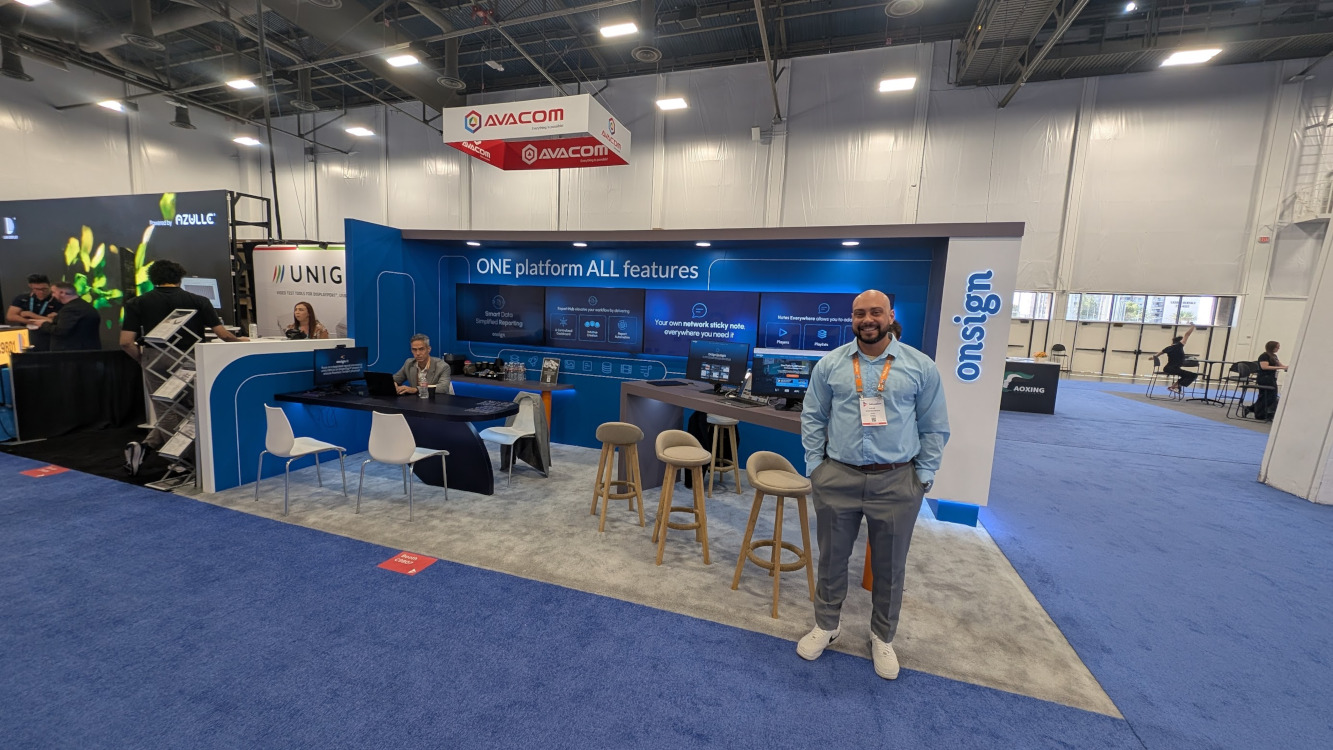
Artificial intelligence continues to be one of the key themes at Infocomm 2026, with many vendors showcasing AI-driven CMS and remote device management capabilities. But despite AI’s strong presence in the marketing narrative, only a few providers offer fully operational solutions. Onsign is one of the companies ahead of the curve, offering a mature and already deployable AI-based device management platform.
What makes Onsign unique is the use of the Neural Processing Unit (NPU) built into the BrightSign media player. These dedicated processors process AI workloads independently of the CPU, enabling continuous analysis without compromising playback performance. The company confirmed that similar functionality is available for other media players equipped with NPU. While it is technically possible to run these AI processes on standard CPUs, this approach requires a limited feature set to avoid negative effects on content rendering.
A central pillar of Onsign’s approach is the use of edge-based AI processing. Running AI models directly on the player eliminates dependence on network connectivity and significantly reduces bandwidth usage. At the same time, it avoids the ongoing costs associated with consuming cloud-based AI tokens. From a security and compliance perspective, processing data locally also ensures that sensitive visual information does not leave the device. This is an increasingly important requirement in many vertical markets.
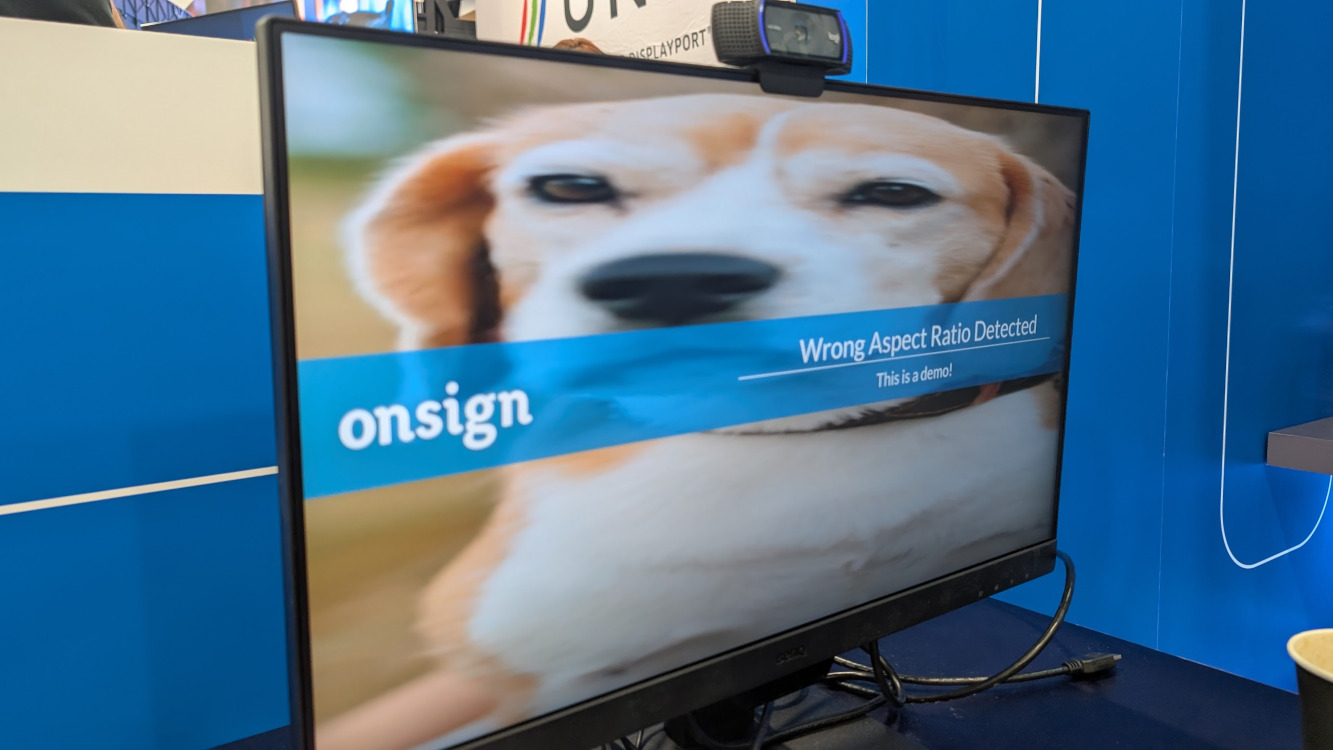
Onsign’s Infocomm demo focused on highly practical applications designed to simplify the daily work of network operators. The system continuously captures and locally analyzes screenshots directly from the display output at a frequency of 1 second or more. This allows the platform to reliably detect common but critical issues such as black or blank screens, frozen images, incorrect resolutions or distorted layouts, pop-up error messages or inappropriate content playing.
Beyond problem detection, the solution is built around automated response mechanisms. Users can define scenarios that are triggered in real-time when certain issues occur. These workflows can be quickly configured using prompt-based input, making them accessible to non-technical users. In practice, this means the system can automatically respond by sending alerts, switching to backup content, blocking offending playlists, or restarting media players. As a result, manual monitoring efforts are significantly reduced, especially for large-scale deployments.
Although Onsign operates more quietly than some of its competitors, it manages a global base of over 100,000 active digital signage licenses. Its remote device management capabilities are already well-established in business-critical applications, particularly in areas such as quick-service restaurant menu boards and public transportation systems where reliability is essential. Onsign has strong roots in Brazil and has expanded internationally, achieving a leading position among transportation authorities in the United States and becoming the leading provider of menu board networks for convenience stores in Mexico and Spain.
Infocomm’s showcase highlights broader industry trends. Although AI is widely discussed, fully realized and scalable implementations remain relatively rare. Onsign’s edge-based strategy shows that AI-powered device management is not only possible today, but can deliver immediate operational value when focused on specific real-world use cases.

