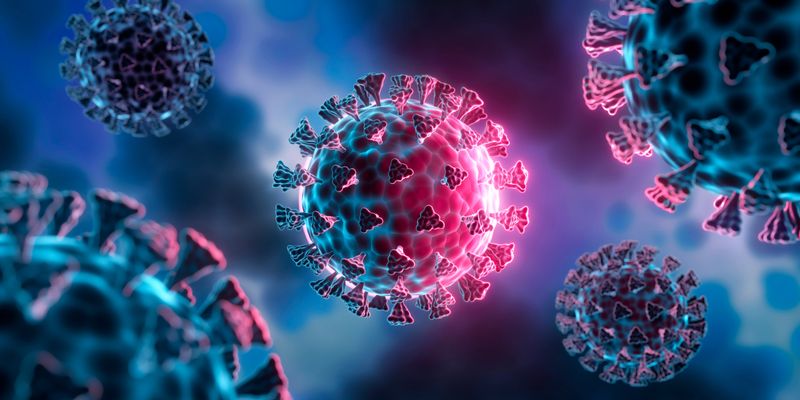
For most of human history, infectious diseases were a major cause of morbidity and mortality. Advances in sanitation, antibiotics, vaccines, and public health have dramatically shifted that balance, especially in high-income countries, increasing life expectancy by nearly 40 years over the past century. But the COVID-19 pandemic was a stark reminder that the threat of infection can still reshape society almost overnight. Between 2019 and 2021 alone, life expectancy in the United States declined by more than two years, and recent modeling suggests there is a roughly 50 percent chance of another coronavirus-sized pandemic within the next 25 years.
Historically, vaccine development models have been primarily reactive and mutation-driven, but the industry is now actively moving toward preventive and universal vaccinology to stay ahead of evolving pathogens. Recent results from a first-in-human clinical trial led by the University of Cambridge and its spin-out company DIOSynVax infection journalprovide early clinical evidence of this shift and demonstrate the safety of AI-designed “superantigens” aimed at broad viral coverage.
Universal approach to coronavirus
The phase 1 study evaluated pEVAC-PS, a computer-designed pan-sarbecovirus vaccine aimed at inducing immune responses across the sarbecovirus subgenus of coronaviruses. This group includes SARS-CoV-2, which caused the COVID-19 pandemic, SARS-CoV-1, which caused the 2002-2004 SARS epidemic, and a large reservoir of related bat coronaviruses with zoonotic potential.
Continue reading below…
Unlike traditional vaccines, which typically use antigens derived from circulating strains, pEVAC-PS is built around AI-designed “superantigens.” The antigen was created by analyzing global sarbecovirus sequence data and using machine learning to identify conserved structural features shared across virus families, including viruses that have not yet infected humans.
Jonathan Heaney, a pathologist and virologist at the University of Cambridge and the study’s scientific lead, said in a press release: “We have moved vaccine development from being reactive to being proactive. Our vaccine continues to protect even if the virus mutates into new strains.”
First in Human Safety Data
The trial involved 39 healthy volunteers between the ages of 18 and 50, all of whom had received two or three doses of an approved COVID-19 vaccine and had no recent confirmed infection. Participants received escalating doses of pEVAC-PS on days 0 and 28.
The vaccine was delivered as a DNA construct by needle-free intradermal injection, improving both participant acceptability and logistics for global rollout. DNA vaccines are typically more stable than mRNA vaccines and can be manufactured and adapted on a large scale. Needle-free delivery also avoids sharps waste and simplifies vaccination campaigns, especially in low-resource settings.
The vaccine was well tolerated across all four dose levels. The majority of adverse events were mild or moderate, and there was no clear dose-dependent increase in reactogenicity. Fewer adverse events were reported after the second dose than after the first dose, suggesting that repeated intradermal administration was well tolerated.
Interpretation of moderate immunogenicity
Although the safety profile was promising, interpretation of immunogenicity proved more complex. Binding antibody responses to the vaccine constructs were detectable, especially at the highest doses, but responses were modest and variable. A slight increase in neutralizing antibodies was seen against the delta and omicron variants of SARS-CoV-2, but activity against the ancestral Wuhan strain and SARS-CoV-1 was limited.
The main reason for this variation was the timing of the study. Recruitment took place from December 2021 to September 2023, when there were successive waves of Omicron infections and booster vaccination campaigns. As a result, participants entered the study with varying immunization histories, complicating attempts to measure vaccine boosts.
To examine whether the vaccine targets immunity to conserved viral regions (a central design goal of the platform), the team used peptide microarray analysis. This revealed that the antibodies bind to conserved receptor binding domain epitopes, including regions that correspond to known broadly reactive antibody sites. Although such binding does not necessarily translate directly into potent neutralization in vitro, these epitopes are associated with in vivo protection via Fc-mediated immune mechanisms.
Continue reading below…
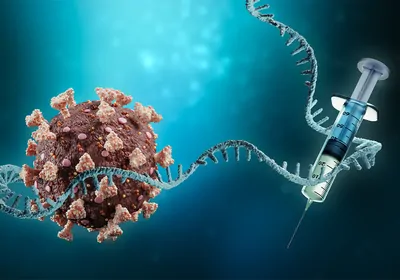
Taken together, the data suggest that although pEVAC-PS did not generate a strong neutralizing response in this small phase 1 study, it provided evidence that the vaccine was successful in focusing the immune system on common coronavirus features, supporting the feasibility of the antigen design strategy.
Prepare for the next ripple effect
Over the past two decades, three major betacoronavirus outbreaks, SARS, MERS, and COVID-19, have demonstrated how frequently zoonotic coronaviruses can breach the species barrier. Bats continue to harbor a vast and largely uncharacterized pathogen of sarbecoviruses, which could jump to humans at any time.
Current COVID-19 vaccines are regularly updated to better adapt to circulating variants, but manufacturing and distribution delays mean vaccines often lag behind the evolution of the virus. While the booster remains effective in reducing severe disease, this reactive model offers limited protection against future spillover from related coronaviruses.
“Viruses such as influenza, coronaviruses and Ebola are continually evolving, and by the time a vaccine is rolled out, they may be poorly suited. Current reactive vaccine systems are struggling to keep up with that pace,” Saul Faust, a clinical researcher in pediatric infectious diseases and immunology at the University of Southampton and principal investigator on the trial, said in a press release.
He added: “If we can develop and clinically advance this new type of vaccine before the virus outbreak begins, we have the potential to save millions of lives, avoid lockdowns and keep the economy afloat.”
Despite modest immunogenicity, this result represents an important proof of concept for AI-induced vaccine design targeting an entire virus family. This is the first time that a vaccine whose active antigen was designed entirely through computer modeling has been tested in humans with a clear safety profile. By demonstrating the safety and immune involvement of conserved sarbecovirus regions, this study refines this approach and lays the foundation for advancing broader and more durable coronavirus vaccines.