
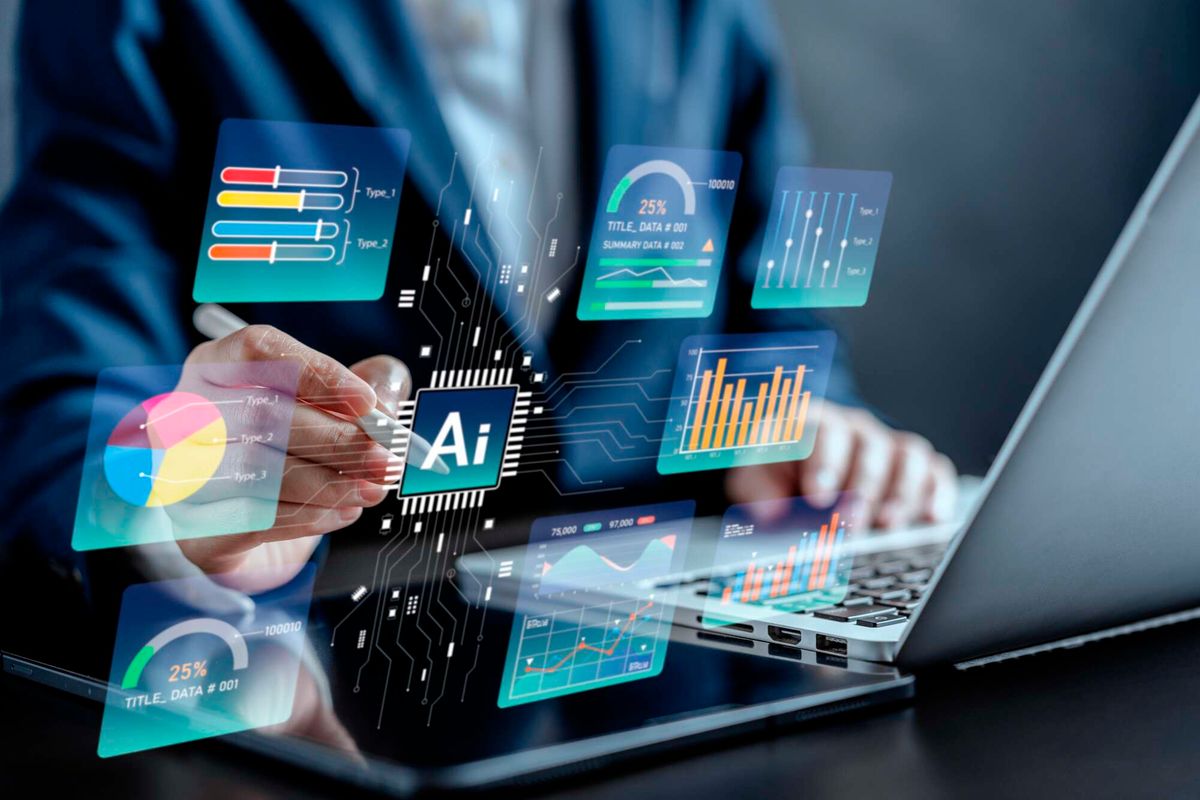
Months from now, your bank may find out you’re buying a home before you submit your mortgage application.
It can recommend home insurance the moment a purchase is completed, provide early warning of signs of financial stress before loan payments are missed, and identify suspicious transactions within seconds of fraud occurring.
This is the future that technology and financial companies are increasingly building as artificial intelligence (AI) moves from experimental pilots to core banking and insurance operations.
In Kenya, banks, insurance companies, mobile money providers, and fintech companies already generate large amounts of customer data, including details of deposits, withdrawals, and fund transfers, spending habits, budget trends, and audio recordings of customer service calls.
These companies are constantly working on building tools that help analyze data pools for valuable insights. Over the past decade, banks and Saccos have invested heavily in digital channels, moving customers from traditional banking halls to mobile apps and online platforms.
But while much of the public discussion about AI focuses on improving efficiency and automating operations, banking and insurance industry executives see greater value in data intelligence.
Global IT companies like Salesforce, NTT Data, Oracle, and Microsoft are using AI, data, and automation to reduce costs, understand their customers better, sell more products, and build tools to improve decision-making.
“The real value is when you actually look at the top line: How are you leveraging AI to cross-sell and up-sell products?” Lauren Wortman, managing director of application services for the Middle East and Africa at NTT Data, told Business Daily. “How do we use AI to identify inefficiencies in the revenue lifecycle and optimize them?”
Cross-selling refers to encouraging existing customers to purchase a related product of their initial choice, while up-selling refers to encouraging existing customers to purchase a more expensive version of an item they are already considering.
This concept is often described as “next-best action,” which uses customer data and predictive analytics to identify what the customer is most likely to need next.
For example, if a customer starts showing signals related to buying a home, an AI system could recommend mortgages, insurance, and other related products. The same principles apply to savings, investments, loans, and insurance.
Kenya’s highly interconnected financial ecosystem makes these opportunities attractive for these technology companies.
Consumers regularly move money between banks, mobile money platforms, businesspeople, insurance companies, and fintech applications, creating a complex web of customer interactions.
“We’re taking customers through a connected journey that looks not just at a single banking ecosystem, but also at partners within that ecosystem, such as mobile money,” Wortman said.
The ability to create a single customer view is also gaining traction as lenders seek new ways to manage increasing credit risk.
Nick Christodoulou, vice president of Africa at Salesforce, argues that most financial institutions already have a wealth of customer information, but struggle to put it to use.
“My bank knows me better than I know myself because I have so many different touchpoints with the bank and all kinds of related organizations that are connected to my bank,” he said.
“What’s missing is the ability to not only create one view of the customer and get closer to that customer and understand that customer’s thought process, but also have enough predictive analytics to actually pretty much stay ahead of the customer’s movements.”
Kenyan banks believe such predictive capabilities could ultimately help borrowers identify signs of financial distress before they default, improve lending decisions and reduce losses.
Beyond lending, AI is increasingly being deployed to fight fraud. Banks are experimenting with systems that can analyze suspicious activity across multiple platforms, automate investigations, and speed up responses when customers report stolen funds.
According to a 2025 study by the Central Bank of Kenya (CBK), banks are using anomaly detection models to identify anomalous network activity, automate threat triage, and speed up incident response.
“The top three AI and ML applications by institutions that have adopted AI were credit risk assessment at 65%, cybersecurity at 54% and customer service at 43%, followed by e-KYC at 41% and fraud risk management at 40%,” CBK said.
But amid concerns about mass job losses due to increased automation, executives argue that the technology is more likely to augment the workforce rather than replace them completely.
Customer service agents, relationship managers, underwriters, and claims processors are increasingly equipped with AI tools to surface information, recommend actions, and automate repetitive tasks.
“What I’m seeing is increased productivity and empowering humans to create better experiences, make better decisions, and have more data and information to guide their organizations,” Wortman said.
Despite industry enthusiasm, local financial companies are cautious, spending significant time establishing governance frameworks around data privacy, security and responsible use of AI before deploying the technology at scale.
Experts say regulators will play a key role in defining these boundaries as automation expands into customer onboarding, claims processing, fraud management, lending decisions and personalized product recommendations.


