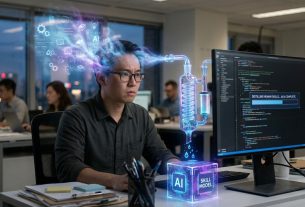
Only a quarter of employees feel well prepared to use AI in the workplace, according to a new workforce readiness survey.
According to Skillsoft’s Workforce Readiness Report, 86% of employees are using AI in the workplace, but only 24% feel they have all the skills needed to effectively use AI to drive results.
But at the same time, 77% of managers believe their employees are ready to succeed with AI, revealing a 53-point readiness gap between managers and their teams.
The report also identified a number of structural flaws in organizations that prevent the appropriate use of AI.
One of the main barriers was skills visibility, with only 11% of employees undergoing formal skills assessments. Only 16% of employees receive training before implementing new AI tools, meaning training is out of sync.
Governance is also the exception rather than the rule, with fewer than one in 10 employees feeling that their organization has comprehensive governance in place. Just over a fifth (21%) said their employer did not provide any guidance on AI.
Employees also expressed concern that it was not clear which skills were important. 43% of leaders say they are very clear about which skills are important, while 69% of employees say they are somewhat or not very clear.
One-fifth of employees say they are cautious or distrustful of AI tools, and 59% say they don’t have time to build new skills. Almost a third (31%) admitted that guidance on AI varies from manager to manager, rather than being determined by company-wide standards.
Skillsoft urges leaders to build a “skills supply chain” so that companies have a clearer picture of where skills exist in the workforce and where they need to be developed.
“Organizations cannot afford to confuse AI adoption with AI enablement,” said Ciara Harrington, the company’s chief human resources officer.
“When leaders and employees operate from fundamentally different readiness perspectives, performance will be inconsistent at best and unreliable at worst.
“Bridging that gap starts with treating skills as a business discipline and building systems that align the supply of skills with evolving demand across the organization.
“While most organizations have established recruitment, onboarding, and performance management processes, our research shows that many organizations still struggle with the same rigor in understanding what skills they have, building the skills they need, and deploying them where they are most in demand.”
Harrington added that companies that redesign their efforts around AI, rather than deploying it first, will have the most success leveraging AI.
“Traditional workforce systems help organizations manage employee records and workforce processes. What is often missing is continuous visibility into employee capabilities: what skills exist, what skills are needed, how quickly those gaps can be closed, and the impact they have on the business,” she said.
“Without that visibility, leaders are forced to make employee decisions based on assumptions rather than evidence. This means moving from one-time training to continuous development, and from ad hoc governance to company-wide standards.”
Skillsoft’s report echoes recent WTW research that found 59% of employers expect AI to fundamentally reshape the workplace experience for their employees.
Sign up for our weekly roundup of HR news and guidance
Receive the “Human Resources Today Direct” e-newsletter every Wednesday
Human Resources Today’s Change Management Opportunities
See more change management jobs