
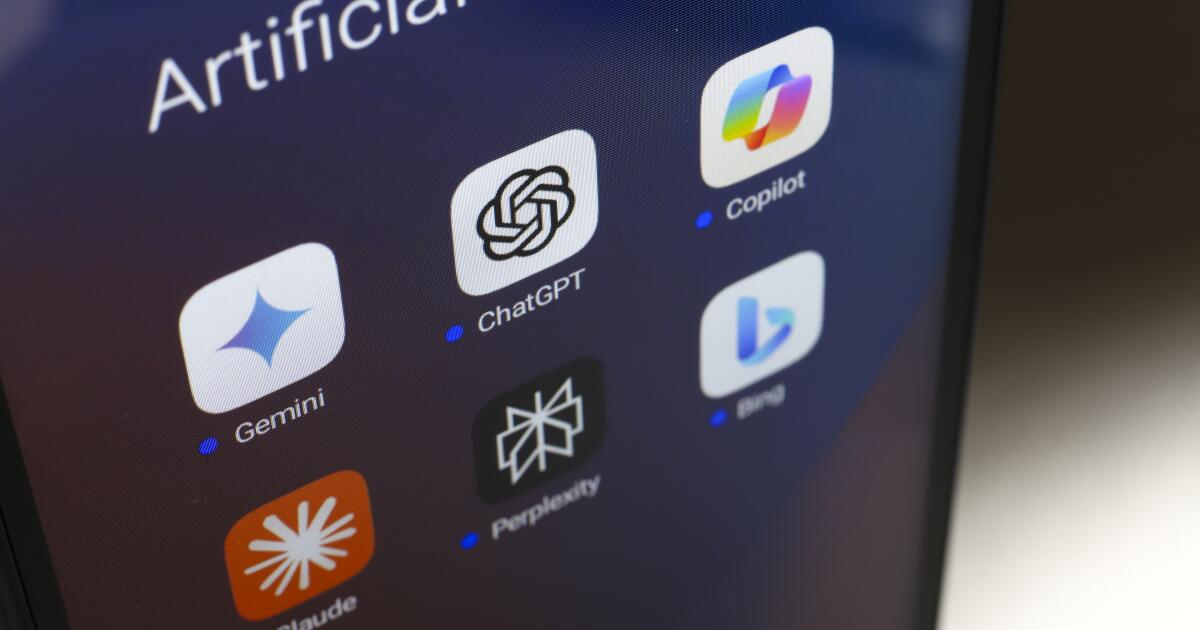
As the use of artificial intelligence spreads to businesses around the world, employees are being freed from boring old chores while new ones are being created.
A new study of individuals using AI found that it increases productivity and saves approximately 11 hours per week. But at the same time, employees must spend an average of six hours or more “bot-sitting,” checking AI output, correcting mistakes, and rerunning prompts.
“Most people don’t realize how much time they spend developing tools to achieve the promised time savings,” says Paul Leonardi, Duca Family Professor of Technology Management at the University of California, Santa Barbara.
Leonardi is Work AI Research Institutewhose contributors include scholars from Stanford University and the University of California, Berkeley. The institute is sponsored by AI company Glean. Leonardi said the research points to broader trends in understanding the impact of AI on work.
The study surveyed 6,000 digital workers in the US, UK and Australia between December and January.
The report finds that while we are on the verge of significant increases in personal productivity, few companies are translating those gains into revenue or business growth.
Research shows that while 75% of individuals report increased productivity, only 13% of organizations say their business has seen significant benefits as a result of implementing AI.
The study analyzed aggregated, anonymized workplace data collected from companies using the Glean Work AI platform, a private search tool used to manage internal information.
Over the past six months, Silicon Valley companies have encouraged their employees to: Get the most out of AI . However, in examples like Uber, the benefits of simply maximizing AI usage are unclear; AI budget in 2026 Within 4 months without releasing a usable feature.
The reason productivity gains are sometimes wasted is because it takes time for people to gather the right files, documents and tacit knowledge needed to modify the bot’s work and produce high-quality output, Leonardi said.
“It’s amazing the amount of time and effort people put into it,” Leonardi said.
Research shows that most employees currently spend six or more hours a week babysitting their work chatbot.
The report says there is a “thick, almost invisible layer of human labor that holds it all together.”
The study found that for every hour employees spend getting useful output from AI, they spend about another hour making the AI usable.
Of the total time employees spend interacting with AI each week, 37% is spent bot-sitting and 36% is spent actually using the tool to generate work.
One reason why so much time is spent botsitting is that tools are often lacking. Workers report that more than a third of AI sessions fail completely, requiring a complete restart or major rework.
Paradoxically, as more workers delegate large portions of their work to AI, personal decisions and responsibilities are being delegated to bots. According to the survey, 41% of employees say they sometimes have difficulty explaining when asked about AI-generated work.
This report features the example of Robin, a junior software engineer who pasted in thousands of lines of AI-generated code before bed. But something is broken there, and while Robin struggles to explain it, a senior engineer, already behind a deadline, has to untangle it.
“I think what’s happening now with many of these Gen AI tools is that they basically expect individual contributors to act as managers,” Leonardi says. “They’re just managing these AI tools and AI agents, and we expect them to be able to create more, but they’re not considering all the work that actually goes into managing them.”
This problem is unlikely to go away.


