

This article was first published in Digital Edge, The Edge Malaysia Weekly from June 8, 2026 to June 14, 2026.
In industrial environments, relying on reactive maintenance strategies can be costly, as unplanned downtime can reduce asset productivity by 5% to 20%. Meanwhile, the average manufacturer experiences approximately 800 hours of equipment downtime per year.
According to a 2025 report titled “Growing your digital transformation with the breadth and integration of Aveva’s digital twin solutions,” the cost of these disruptions is estimated at US$50 billion annually.
Companies often face delays, inefficiencies, and high operational risk because data is incomplete, inconsistent, or difficult to share across teams. These problems are exacerbated by poor information flow across the design, construction, and operations stages, and become more difficult as companies expand across multiple locations.
“Here, businesses need solutions that can unify data, harmonize processes, and provide actionable insights in real time. For example, digital twins can help reduce rework, improve collaboration, and maintain lifecycle continuity, allowing organizations to deploy assets faster to meet today’s growing demands,” said Caspar Herzberg, CEO of industrial technology company Aveva.
A digital twin is a digital representation of a physical system, plant, or equipment that uses data, analytics, and insights from multiple sources. Connecting real-time operational data, engineering models, documentation, and historical information into a single platform provides a comprehensive view of how assets perform and interact with their environment.
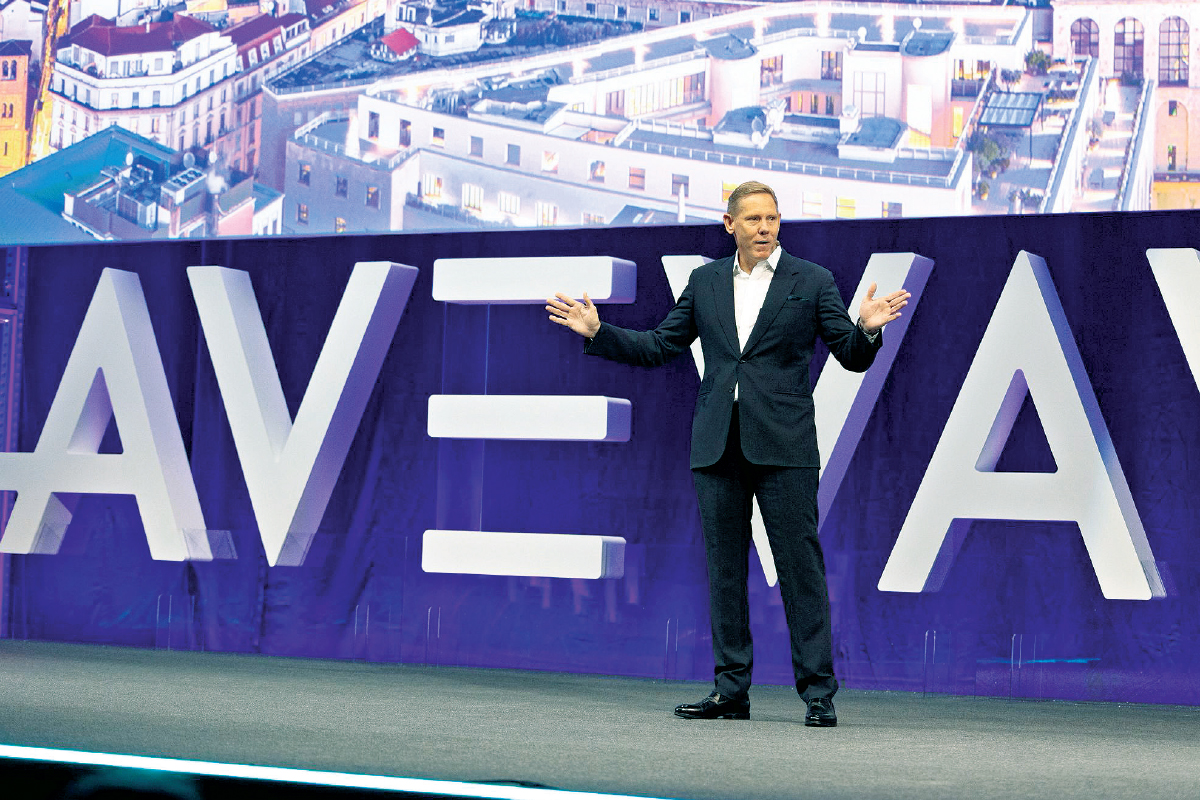
“Through digital twins, users can visualize performance, monitor assets, optimize processes, and make informed decisions faster. Digital twins are increasingly becoming a strategic priority for industrial organizations,” Hertzberg said in a speech at the Aveva World 2026 conference, held in Milan, Italy, from May 19-21.
According to a 2025 report, the global digital twin market is expected to reach USD 149.81 billion by 2030. The report also states that 35% of G2000 companies will adopt supply chain orchestration tools with digital twin capabilities by 2027.
Herzberg points out that the question is no longer whether organizations should adopt digital twins, but how they can be implemented at scale to create long-term business value.
As an example, Canada-based nuclear facility Bruce Power saved 1,000 hours of employee time through faster data acquisition, reduced repeat walkdowns and site inspections by 15%, and reduced costs and schedule by 50% using Aveva’s industrial intelligence platform CONNECT. The platform not only provides dashboards and built-in artificial intelligence-driven analytics for rapid decision-making from digital twins, but also supports what-if scenario planning to enhance safety, optimize performance, and manage risk.
“Some of the industries that will benefit from digital twins are the oil, gas and energy sectors due to their risk and asset size. In energy-intensive industries, organizations can typically achieve savings of 15% to 20%,” said Sebastian Ory, vice president of Europe, Middle East and Africa at Aveva.
“By creating virtual representations of physical assets and processes, companies can reduce project timelines by up to six to 12 months. This technology can also reduce capital expenditures by approximately 10% of the total project cost, generating significant savings and business value across a wide range of industries,” he said in a Q&A session at Aveva World 2026.
Aveva Group, headquartered in Cambridge, UK, is a global provider of industrial software solutions. The company was founded in 1967 by the UK Department of Technology and the University of Cambridge as the Center for Computer-Aided Design, became a private company in 1983, and was rebranded as Aveva in 2001.

“If your company is interested in AI and building a smart factory or smart plant, make sure you have the data secured, the right processes in place, and data collection mechanisms that are secure and easily accessible.” – Chappell
Bridging siled work processes
Digital twins not only improve operational efficiency but also play a key role in preparing organizations for industrial AI. Bringing data from disparate systems into a single environment establishes the foundation that AI applications need to learn and deliver meaningful business outcomes.
For industrial organizations, the pressure to adopt AI is increasing. However, many businesses continue to grapple with fragmented data, aging infrastructure, and complex regulatory environments.
“Data is the lifeblood of AI. The first data that you think of in the industrial space is numerical time series, sensor data, temperature and pressure, flow rates, and all kinds of data that can be recorded every minute, every second, every interval. And they form patterns, and that’s what AI likes. AI is a pattern machine, and that’s exactly what machine learning is,” Jim Chappell, global vice president and head of AI at Aveva, tells Digital Edge. Aveva World 2026 sideline.
However, many industry organizations still operate data locked in silos across multiple systems, plants, departments, and vendors. Information can be incomplete, inconsistent, or locked within legacy infrastructure, making it difficult to establish a reliable foundation for AI.
Therefore, Chappell says that successful implementation of industrial AI is less about deploying more AI tools and more about building the digital foundations that make them work effectively.
“Don’t do it all at once. Take it step by step and make sure you have the right foundational elements before you do it. If your company is interested in AI and interested in building a smart factory or smart plant, make sure you have the data, have the right processes in place, and have data collection mechanisms that are secure and easily accessible,” he says.

“Companies don’t adopt technology for technology’s sake; they need to be convinced that the technology will help improve productivity and have a positive impact on the bottom line.” – Pan
Additionally, the pace of AI adoption will largely depend on an organization’s ability to invest in the necessary technology, people and processes, said Thomas Pang, Aveva Southeast Asia market leader.
“For large companies, it’s easier to integrate and put the right technology in place and have the right people in the right places, where they can collect all the information. It’s more difficult for smaller companies and they need a lot of nudges and a lot of help so they can jump on the bandwagon,” he added.
Pan said the government can play a role in helping small and medium-sized enterprises (SMEs) adopt AI by supporting investments in digital infrastructure, workforce development and technology adoption.
More than 60% of Malaysian businesses will remain at a basic level of digitalization in 2025, highlighting a large readiness gap, especially among SMEs and local entrepreneurs, according to the Malaysia Digital Economy Corporation’s “Belan Jawan 2026: Digital Economy Snapshot” report.
These findings point to the need for ongoing interventions that address both competency and accessibility challenges in digital transformation. To fill this gap, the government has expanded allocations to digital centers and introduced programs such as Maju Usahawan Madani 2.0, alongside targeted tax incentives for small and medium-sized enterprises investing in AI and cybersecurity training.
“Companies don’t adopt technology for technology’s sake; they need to be convinced that the technology will help improve productivity and have a positive impact on the bottom line,” says Pan.
“Unlike large enterprises, typical enterprises have a few things to consider. First, they need to have a strong data architecture. They also need to adopt digital workflows that align with their business processes. Third, they need to have some level of standardization.”
Save by subscribing to us for your print and/or digital copy.
P.S.: The Edge is also available on Apple’s App Store and Android’s Google Play.


