
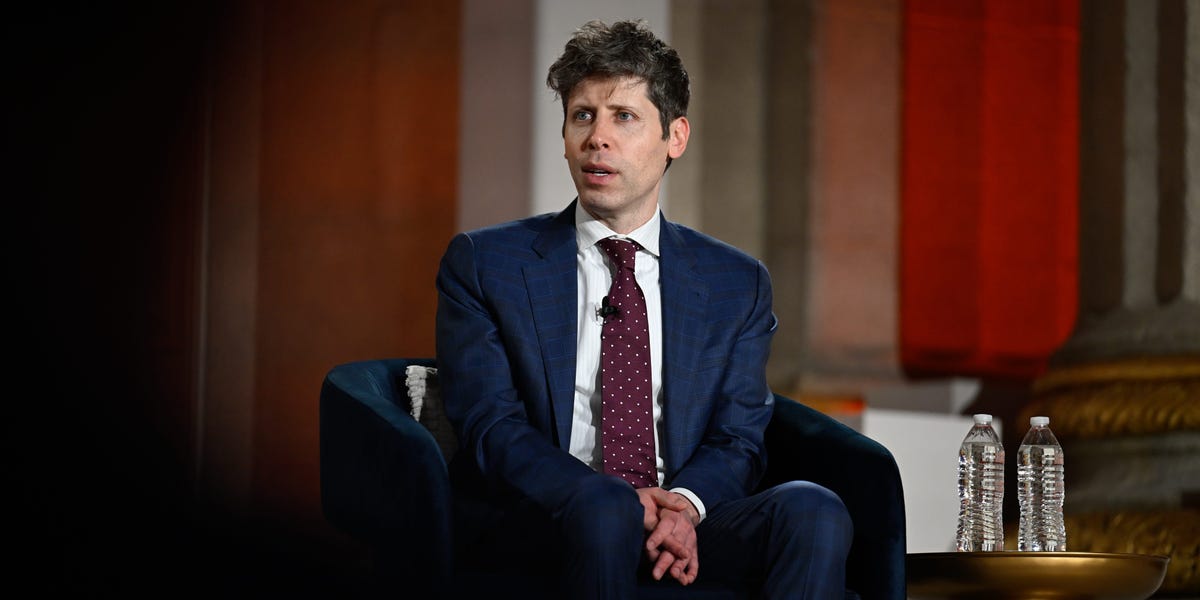
Sam Altman addresses one of investors’ biggest concerns about AI.
OpenAI’s CEO said in an interview with CNBC on Monday that as companies continue to pour billions of dollars into infrastructure, chips and software, there are legitimate questions about whether the huge spending on AI will ultimately pay off.
“So I think this is the fairest criticism of AI right now,” Altman said. “You’ve heard companies say, ‘I’m spending a ton of money on AI.’ We know great things are happening, but we also know there’s a lot of waste.”
He went on to summarize the concerns he has heard from businesses.
“How long do you have to wait until you actually see revenue? And how long do you have to wait before you can actually get your costs under control?” he said. “I think the industry will figure that out quickly, but I think it’s a fair and just issue.”
The comments come as investors are increasingly scrutinizing whether the AI boom can generate enough returns to justify its staggering costs. The Wall Street Journal reported in April that OpenAI itself missed several key revenue and user growth goals last year.
Recent data from cloud optimization platform Cast AI suggests that many companies are paying for far more AI computing power than they actually use. After analyzing 23,000 clusters across thousands of companies, the company found that average GPU utilization was just 5%. This means that approximately 95% of the provisioned graphics processing power is idle.
Laurent Gill, co-founder and president of Cast AI, said companies often buy up scarce AI chips not because they need them right away, but simply because they fear missing out, resulting in a growing stockpile of underutilized computing resources.
Gary Marcus, a longtime AI researcher, author, and professor emeritus at New York University, also said hyperscalers are spending unprecedented amounts of money on AI without seeing a return on investment.
“The biggest capital allocation misallocation in history,” Marcus wrote in a post on X, describing some companies’ AI capital spending plans and adding that Amazon, Google, Microsoft, and Meta combined spend more money each month than the Manhattan Project.