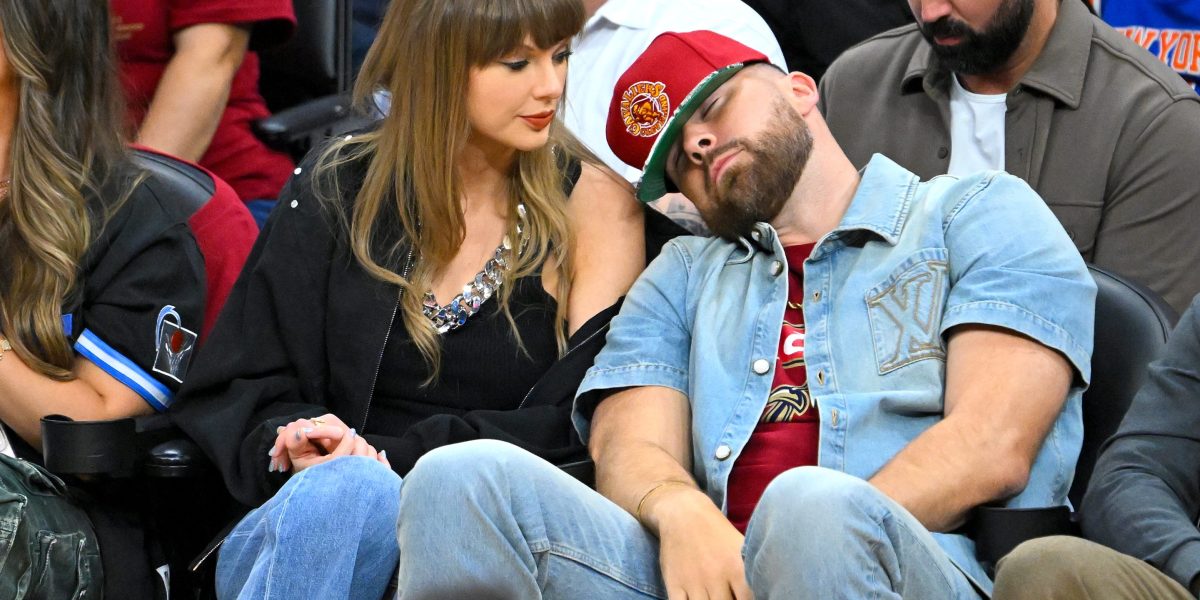
Taylor Swift, one of the world’s most popular celebrities, has already endured AI-related abuse.
Fake nudes of the singer were widely spread on the internet. Her voice and likeness have also been used to create fabricated political messages and fake product endorsements.
In April 2026, Swift pushed back. Her intellectual property and brand management company, TAS Rights Management, has filed a trademark application covering short audio clips of her vocal and visual similarities.
As a law professor, I was shocked by Swift’s filing. Because they highlight new legal frontiers in artificial intelligence.
Most AI-related litigation centers around copyright law, which protects creative works such as songs, books, photographs, and sound recordings from being copied, distributed, adapted, or performed in public without permission.
However, TAS Rights Management’s recent moves have more to do with trademark law than copyright. The filing isn’t actually intended to protect Swift’s lyrics or albums. Rather, the aim is to prevent AI-generated sounds and images from misleading people into thinking she is endorsing a product, political message or cause.
Copyright is about creative works
Most AI-related lawsuits concern whether there was copyright infringement, specifically whether an AI company used copyrighted works to train its systems, or whether its chatbots produced output that closely resembled protected material.
For example, the New York Times sued OpenAI and Microsoft in 2023, alleging that the companies used the company’s journalism to train their AI systems, which then produced output that competed with or duplicated New York Times articles. Authors, publishers, photo agencies, and music publishers are also suing other AI companies for the same reasons.
But copyright infringement is only part of the legal issues posed by generative AI.
Copyright does not necessarily protect personal identity. That doesn’t give Swift any general right to control what she sounds like, what she looks like, or what evokes her in the audience’s mind.
If AI-generated voices imitate Swift without copying specific recordings, songs, or lyrics, copyright may not address the real issue. It’s that people are being led to believe that she said, sang, or endorsed things that she never approved of.
Trademarks are about trust
Trademark law begins with a different concern. Protect names, images, sounds, and other markers that help consumers identify the person or content behind a product or service.
A trademark is a word, phrase, symbol, design, or a combination of these. Well-known examples include brand names such as Coca-Cola, logos such as Nike’s swoosh, slogans such as Subway’s “Eat Fresh,” and even distinctive sounds such as MGM’s lion’s roar.
A trademark is not a general proprietary right to a word, phrase, sound, or image. It’s a way to help consumers know who’s behind what they’re buying, listening to, and watching. When AI can imitate people’s voices and faces, the difference becomes decisive. Imagine a company using AI-generated Swift-like voices to sell perfume or cryptocurrency. The concern is that listeners may think Swift endorses the product or message. It’s a trademark issue. Trademark law asks whether its use misleads consumers about whether a company or individual created or approved something. Swift’s filing appears to be aimed at that danger. They suggest concerns beyond copied songs, including fake endorsements, fake appearances, and fake signals of approval. Swift’s concerns also affect the so-called “right of publicity,” which generally protects people’s identities, such as their name, image, likeness and voice, from unauthorized commercial use. A typical right of publicity case involves a company using a celebrity’s face in an advertisement without permission, misleading consumers into believing that the celebrity is endorsing the product. AI’s ability to reproduce sounds and images makes publicity laws particularly important. However, in the United States, publicity rights are primarily governed by state law, and the rules vary widely from state to state. This patchwork helped inspire the bipartisan NO FAKES Act of 2025. The law would establish national standards to prohibit unauthorized replicas of AI-generated human voice or physical likenesses. The bill is still in its early stages and has been referred to the Senate Judiciary Committee for consideration. Swift isn’t alone: Actor Matthew McConaughey has trademarked his memorable line from “Dazed and Confused,” “It’s okay, it’s okay,” to prevent its use in AI-generated content. Courts have already recognized that sounds can function as trademarks. However, it is unclear whether trademark law can police AI-generated replicas of human voices and images if the issue is fabricated recommendations rather than counterfeiting. A person’s voice or likeness does not automatically become a trademark. To be certified, it must be used by consumers to identify who is behind the product or service. One existing limitation on trademark protection is particularly important. Federal law protects certain uses of images and likenesses of celebrities in cases involving parody, criticism, commentary, and news reporting. Not all imitation is a form of deception. Courts will have to draw that line on a case-by-case basis. Fake ads that make consumers think Swift is endorsing a product are different from parodies that comment on celebrity culture. Her voice scam is different from news articles about AI deepfakes. That said, Swift’s filing reflects a real problem. The AI made the fake testimonials look and sound like the real thing, and spread before anyone could set the record straight. Major AI copyright cases will continue to focus on copied works. But when AI is used to create identity, support, and trust, copyright alone is no longer enough. Swift’s filing suggests that the AI Act will increasingly focus not only on protecting the work of musicians, writers, journalists, and artists, but also on protecting the signals that tell audiences who is really speaking. Darryl Lim, Penn State Associate Dean for Research and Strategic Partnerships This article is republished from The Conversation under a Creative Commons license. Read the original article.
untested part