
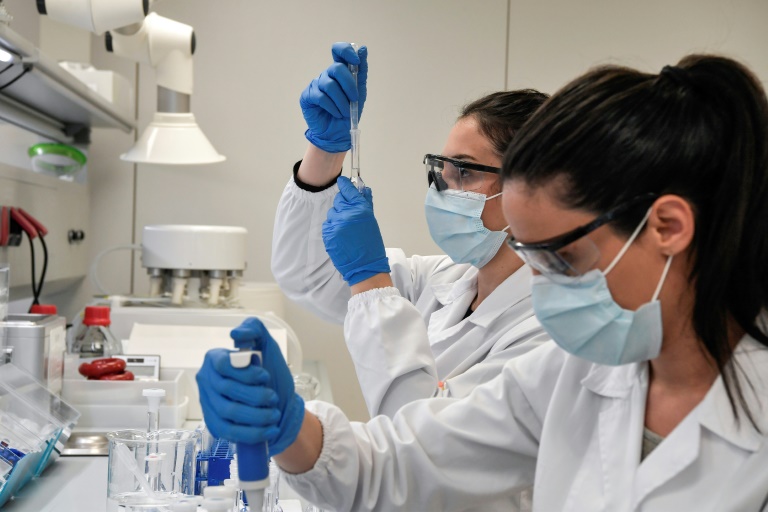
Proposed reforms aim to lower drug prices, prevent shortages and speed up the supply of new compounds – Copyright AFP/File Louisa GOULIAMAKI
Lean manufacturing has long been a cornerstone of operational excellence in the pharmaceutical industry, driving waste reduction, process consistency, and cost efficiency. However, the increasing complexity of biopharmaceutical processes and stringent regulatory expectations have exposed the limitations of traditional lean tools when applied alone.
The integration of artificial intelligence (AI) and advanced data analytics has reshaped the Lean paradigm, enabling a more adaptive, predictive, and measurable approach to process optimization. This is key to the continued digital transformation of pharmaceutical and healthcare products.
From static lean systems to dynamic lean systems
Classic Lean methodologies such as value stream mapping (VSM), root cause analysis, and Kaizen events rely heavily on retrospective analysis and human interpretation. Although effective, these approaches are often limited by sampling bias, limited data resolution, and lagging indicators.
AI fundamentally shifts this paradigm by transforming lean systems from reactive to proactive. Machine learning algorithms can process vast datasets from manufacturing execution systems (MES), environmental monitoring programs, and equipment sensors in real time. This allows you to continuously identify inefficiencies at a granularity far beyond manual capabilities.
For example, instead of regular VSM exercises, an AI-driven digital twin can simulate an entire production line and dynamically identify bottlenecks as they occur. In aseptic filling operations, such models can predict small outages and flow imbalances hours before they impact batch throughput.
Visible Improvement: From Hypothesis to Evidence
One of the key benefits of AI-powered lean manufacturing is its ability to produce statistically robust and quantifiable improvements. Several measurable outcomes are increasingly being reported across pharmaceutical operations.
- Reduced batch cycle time: AI-based scheduling and process optimization algorithms have been demonstrated to reduce end-to-end cycle times by 10-25% by minimizing equipment idle time and streamlining changeovers.
- Reduced deviation rate: Predictive analytics applied to historical deviation data can identify leading indicators of process failure. Sites implementing such models have reported up to 30% reductions in repeatability deviations, particularly those related to operator variability and environmental variation.
- Improved yield: In biologics manufacturing, AI-enabled optimization of process parameters (e.g., pH, temperature, feed rate) is increasing yields by 5-15% and directly impacting cost of goods (CoG).
- Environmental Monitoring (EM) Tour: Integration of AI and EM trends enables early detection of abnormal microbial patterns. This has measurably reduced behavioral level deviations by 20-40%, especially in EU GMP grade B and C environments (or ISO 14644 equivalent environments).
Importantly, these outputs are not just operational metrics; they are directly tied to compliance and patient safety, and align with regulatory expectations for continuous process validation (CPV) and contamination control strategies (CCS).

The power of digital data analysis
At the heart of AI-powered Lean is the effective use of digital data. Pharmaceutical facilities already generate vast amounts of data, but until now it has been siled across systems such as LIMS, SCADA, and quality management platforms.
Advanced analytics platforms enable the integration and contextualization of these datasets, providing several important benefits:
- Real-time visibility
Dashboards that combine process parameters and equipment performance provide near real-time insight into manufacturing health. This supports instant decision-making and reduces reliance on post-batch reviews. - Multivariate analysis
Traditional Lean tools typically evaluate variables individually. AI enables multivariate analysis to identify complex interactions, such as the combined effects of humidity, human movement, and cleaning frequency on contamination risk. - predictive ability
Predictive models shift the focus from “what went wrong” to “what went wrong.” For example, machine learning models can predict filter integrity test failures based on upstream bioburden trends or subtle changes in pressure differential. - Standardization and knowledge acquisition
AI systems reduce reliance on tacit knowledge by incorporating decision-making rules and learned patterns into algorithms. This enhances consistency across shifts and sites, a known challenge in global manufacturing networks.
Several traditional lean tools are being powered by AI.
- Smart root cause analysis: Natural language processing (NLP) applied to deviation reports can identify recurring themes and hidden correlations across thousands of records, speeding investigations.
- automatic improvement identification: AI systems can continuously scan performance data to flag opportunities for improvement and effectively execute “always-on” improvement programs.
- Digital on-site walk: Augmented reality (AR) and AI-powered analytics enable remote assessment of workplace conditions supported by live data streams and anomaly detection.
- Optimized preventive maintenance: Predictive maintenance models reduce unplanned downtime by predicting equipment failures and aligning maintenance schedules to actual risk rather than fixed intervals.

Regulatory alignment and data integrity
A key consideration in pharmaceutical manufacturing is regulatory compliance. AI deployments must comply with the Data Integrity Principles (ALCOA+) and be explainable to inspectors.
Encouragingly, regulators are increasingly supporting advanced analytics when properly validated. Using AI in a validated state with defined data governance and model lifecycle management can improve traceability and documentation and strengthen compliance.
For example, AI-generated trend analysis enhances CPV reporting and provides objective evidence for process control. Similarly, data anomaly detection directly supports the expectations of Appendix 1 for proactive contamination control.
Challenges and considerations
Despite its potential, implementing AI is not without its challenges.
- data quality: Poor data integrity impairs model reliability. Robust data governance is essential.
- change management: Employee acceptance and training are key to successful implementation.
- Model validation: AI models should be validated using methods similar to analytical techniques, such as performance qualification and lifecycle monitoring.
The integration of artificial intelligence into lean manufacturing represents a major evolution for the pharmaceutical sector. AI transforms Lean from a static toolkit to a dynamic, continuously improving system by enabling real-time, data-driven decision-making.

Source – Ragesoss (CC BY-SA 4.0)
Measurable benefits such as shorter cycle times, higher yields, reduced deviations, and enhanced contamination control demonstrate that AI is more than just a technical enhancement, it is a strategic enabler for operational excellence.
As regulatory expectations continue to emphasize scientific understanding, risk management, and lifecycle management, AI-driven lean manufacturing offers an attractive path to meeting these demands while delivering tangible business value.


