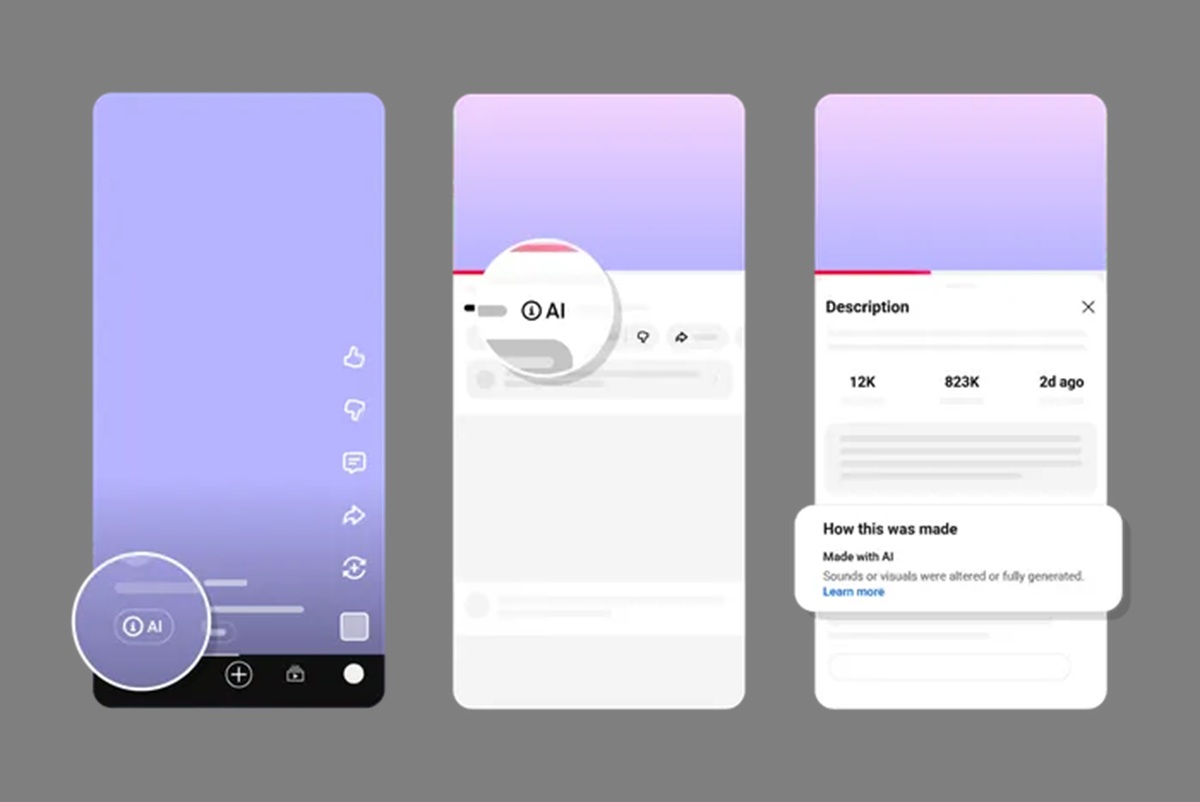
In a May 27 post published by the YouTube team, the company said it was updating the way disclosure labels appear on content created or modified with artificial intelligence tools and would begin automatically applying labels if creators have not disclosed significant AI use.
The Google-owned video search engine said the disclosure label for “photorealistic and meaningful AI-modified or generated content” will be moved to a more prominent position for viewers. According to YouTube, long-form videos’ labels appear below the video player and above the description, while short-form videos’ labels appear as an overlay on the video itself.

Image: YT
The company said disclosures of “unrealistic, animated, or slightly altered” content will remain in the expanded video description.
YouTube also said it would roll out “new internal signals” starting in May 2026 to help identify AI-generated content. The company said YouTube will automatically apply the label if the creator does not specify the use of AI and the system detects “significant photorealistic AI use.”
The company says creators who believe their content has been incorrectly identified will be able to update their disclosure status in YouTube Studio. However, YouTube said disclosures will continue in perpetuity for content created using YouTube AI tools like Veo and Dream Screen, as well as content that includes C2PA metadata that indicates the content is entirely generative AI.
YouTube said the disclosure label does not affect recommendations or monetization eligibility.
This update reflects broader efforts by online platforms to more clearly identify AI-generated media as generation tools become more popular. Supporters may see the change as a transparency measure that would allow parents to more quickly identify videos that are generated by or have been significantly altered by AI when their children are watching online content. But critics are likely to focus on the accuracy of automated detection systems and how disclosure policies are applied in practice.
Review by Irfan Ahmad.
Read next: Privacy isn’t dead – tech companies are just making it less convenient
[ad_2]
Source link