
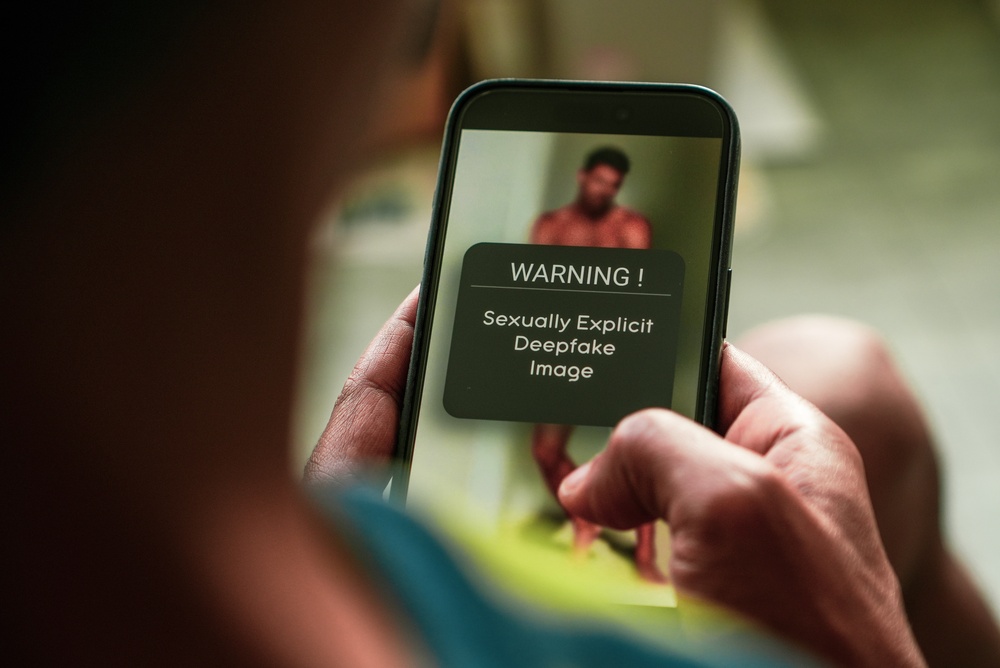
BRUSSELS — EU lawmakers have agreed to ban AI “nudifier” applications and systems used to generate child sexual abuse material, a move welcomed by faith leaders and ethicists ahead of Pope Leo XIVʼs first encyclical, Magnifica Humanitas, on human dignity in the age of artificial intelligence, scheduled for release on May 25.
‘An attack on human dignity’
Speaking to EWTN News, Irish Member of European Parliament Michael McNamara, one of the European Parliamentʼs lead lawmakers on the AI Act, said negotiators pushed for an outright ban on systems used to generate nonconsensual intimate imagery and AI-generated child sexual abuse material, which he described as “an attack on the fundamental rights of real people, particularly the inviolability of human dignity and the right to privacy.”
McNamara previously participated in an interfaith Brussels delegation on AI governance led by former Irish ambassador to the Holy See Professor Philip McDonagh.
“We were insistent that these prohibitions sit in Article 5, among the absolute bans in the AI Act,” McNamara added.
Following the agreement, he said the new provisions would ensure authorities had “the tools to act if providers do not address AI systems that compromise fundamental rights or human dignity.”
Under the agreement, companies will have until Dec. 2 to comply with the new restrictions.
Delays to ‘high-risk’ AI rules
The legislation also postpones the application of some obligations for “high-risk” AI systems until 2027 and 2028, a move lawmakers say was necessary because technical standards required for implementation were not ready in time.
Under the act, high-risk systems include AI used in healthcare, education, employment, law enforcement, and border management, where algorithmic decisions can directly affect human rights and access to essential services.
“To be frank, my preference would have been no extension,” McNamara said, while acknowledging lawmakers faced pressure to ensure the rules could be implemented with legal certainty.
“Certainty matters: for industry, yes, but also for citizens and for the authorities that will enforce these rules,” he said.
EU bishops welcome restrictions
The Commission of the Bishops’ Conferences of the European Union (COMECE) welcomed the ban. Speaking to EWTN News, Friederike Ladenburger, COMECE adviser on ethics, research, and health, said the restrictions are “legally justified” because such systems process biometric and intimate personal data in ways that undermine fundamental rights, particularly human dignity, privacy, consent, and the protection of minors.
“From an ethical perspective, nudifier applications constitute a form of technological exploitation that objectifies the person,” she added. Such systems conflict with principles of “dignity, solidarity, and the safeguarding of vulnerable individuals” that should guide implementation of the AI Act, she said.
Alessandro Calcagno, COMECE assistant general secretary and adviser on fundamental rights, said the organization has consistently called for stronger protections for children in AI regulation.
“In its 2020 contribution to the EU White Paper on AI, COMECE stressed that children are the most vulnerable in the context of AI use and application,” he told EWTN News.

Interfaith and Vatican dialogue on AI
The anticipated papal encyclical follows several years of Vatican engagement on AI ethics through the Pontifical Academy for Life, the Rome Call for AI Ethics, and repeated interventions from previous popes warning against technologies that risk reducing the human person to data, manipulation, or simulation.
McDonagh, who serves as director of the Centre for Religion, Human Values, and International Relations at Dublin City University, said the debate surrounding AI reflects a technological transformation of “profound historical and civilizational significance,” comparable to the agricultural and industrial revolutions, which also produced “dramatic new forms of inequality and violence.”
Following the provisional agreement, he said the rapid emergence of AI raises deeper questions about human coexistence and the moral foundations of society.
“The anthropological question of how we make sense of our existence and co-existence is more urgent than ever,” he said.
Ahead of the encyclicalʼs release, members of the COMECE presidency held private talks with Pope Leo XIV at the Vatican on AI governance, the future of the EU, and wider global challenges.


