AI video makes it easier than ever to create something impressive in seconds.
Surreal camera movement. Dramatic close-up. An imaginary creature walking in the fog. A character facing the camera with cinematic lighting. These clips are beautiful, amazing, and highly shareable. It’s also perfect for social media, where the goal is often to create a single memorable moment.
But long-form storytelling is different.
A 10-second AI video can be successful for its atmosphere, novelty, and visual impact. A 10-minute animated story must maintain continuity, structure, pacing, character consistency, production planning, editing, and audience attention. The longer the work, the less impressive the isolated shots become. What matters is whether the story is cohesive.
This is where many AI animation projects fail.
Viral clips are moments. Stories are systems.
Most viral AI clips are self-contained. There’s no need to explain what happened before filming, what happened after filming, and why viewers should care. Single image to video generation works because the clip only needs to serve one idea.
A full-length anime has a completely different burden.
A story needs characters that remain recognizable across different scenes. Places should feel consistent. Tone must be conveyed from one moment to the next. The audience needs to understand where they are, what is happening, and why each scene is important.
In a traditional animation pipeline, this is handled through development, storyboarding, character design, layout, art direction, editing, and production management. AI does not eliminate these needs. Compress and modify.
Although this compression is powerful, it also creates pitfalls. Creators can generate visual material faster than they can organize it.
The real bottleneck is not generation.
The general assumption is that better video models will make it easier to make films with AI.
Of course, better models would help. Improved temporal stability, improved motion control, enhanced prompt adherence, and character consistency are all important. But model quality alone doesn’t solve the core problem of feature-length productions.
The difficult part is that you don’t get a single good shot.
The challenge is creating the right shot at the right moment in the story, in the right place, with the right character, and with the right visual style.
It requires a workflow.
Creators working on longer AI animations need to constantly answer practical questions.
- What is this scene trying to accomplish?
- What shots do you need to clearly convey that?
- What characters and assets are featured here?
- What visual references guide your shots?
- What has already been established in the early scenes?
- Will this shot be cut correctly in the next shot?
Without that structure, AI production quickly becomes a folder full of beautiful pieces.
After all, the story comes first
The irony of AI filmmaking is that the technology doesn’t make the story less important, it makes it more important.
As production becomes cheaper and faster, visual novelty loses some of its value. Anyone can create strange creatures, cinematic landscapes, and dramatic developments. What remains difficult is constructing meaning over time.
Long-form storytelling is all about cause and effect. The characters make choices. The situation changes depending on the scene. Visuals support emotions. Viewers follow the thread.
That’s why story development is still important, even in an AI-assisted pipeline. Before producing a shot, creators need to understand the meat of the piece: the premise, the emotional arc, the progression of the scene, and the purpose of each moment.
To discuss this further, Ciaro Pro has an informative article on why story remains at the heart of AI filmmaking, “Why Story Matters.”
This is not just a philosophical point. It’s a production issue. The clearer your story, the fewer wasted generations you will create. The clearer the structure of your scene, the easier it will be to prompt, review, revise, and edit.
Continuity is a hidden cost
Short AI clips can hide discrepancies. You can’t do that with long-form projects.
Most viewers probably won’t care if a character looks a little different in a viral clip. If that character changes facial shape, costume details, proportions, or personality over 20 shots, the audience will notice right away.
The same goes for location, props, lighting, composition, and performance. Feature-length works ask viewers to believe in the world. Contradiction shatters that belief.
This is why concepting is an important part of the AI animation workflow. Characters, environments, props, and visual references should be developed before production begins, rather than being improvised shot by shot.
Dedicated concept creation tools can be helpful in these cases as well. For example, Ciaro Pro’s Concept Workspace is designed around building and managing the visual elements of your project before they are used in storyboards and production. Ciaro Pro Concepting.
The goal is not just to create beautiful images. The goal is to create a reusable visual direction.
Feature-length AI animation requires pre-production
Many creators jump directly from an idea to the next generation. It can be used for experiments. It hardly works for sustained storytelling.
Feature-length AI animation benefits from this production mindset:
First, define your story. Then split it into scenes. Next, divide the scene into shots. Next, establish characters, locations, and key visual references. Next, generate images and video clips with a clear purpose. Then edit, revise, and polish.
It sounds obvious, but this is where many AI projects fail. This technology encourages improvisation. The reward structure of storytelling.
Traditional animation studios don’t start final animation until they understand the characters, board, scene flow, and visual direction. AI authors should be careful not to skip these steps just because the generation tools are appealing.
The best results are usually achieved when you treat AI like a production engine, rather than like a magic button.
Practical example: biome brigade
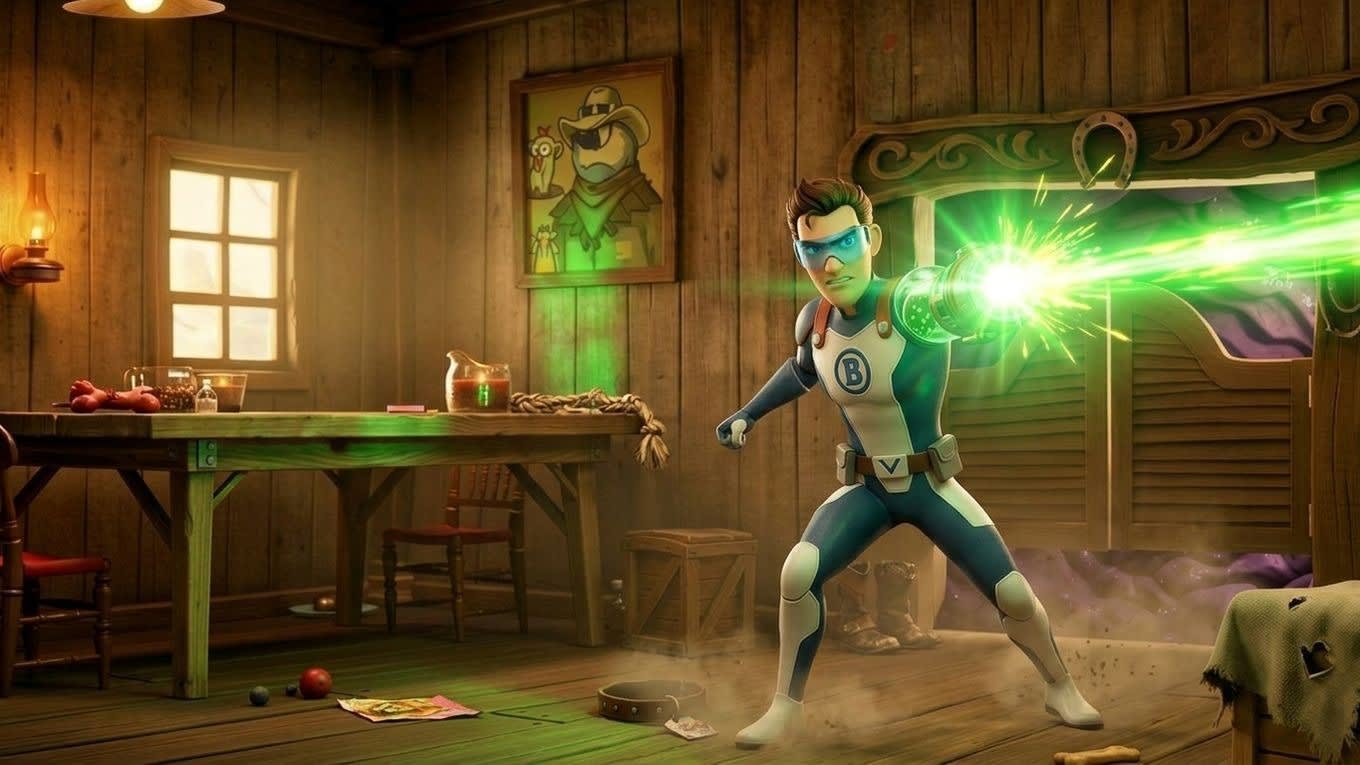
One useful example is *Biome Brigade*, an AI-assisted animation project introduced by Ciaro Pro. This isn’t just a random sequence of AI clips. This points to the larger challenge of using AI to support actual animated episodes with characters, scenes, continuity, pacing, and a complete structure.
This is the kind of example we need more of in the AI animation field. It’s not just an isolated test. It’s not just, “Let’s see what we can do with this model.” A finished work that shows whether your workflow can carry a story from start to finish.
That difference is important.
A single shot proves that the model can generate images and motion. The completed episode proves that the process can support production.
Editing is where your project becomes reality
Another reason feature-length AI animation is more difficult than clips is because editing exposes everything.
Shots that look impressive on their own may fall flat when used in succession. The timing may be wrong. Camera movement may conflict with the next shot. Character actions may not be connected. Sometimes the emotional beat comes too early, sometimes too late.
Long-term work doesn’t just create wealth; It’s about assembling it into a rhythm.
This is where AI filmmaking starts to resemble real filmmaking again. It involves selection, modification, pacing, transitions, sounds, music, and sometimes compromise. Discover what the piece is really about during editing.
This is also why integrated workflows are important. When writing, storyboarding, concepting, generation, and editing aren’t coordinated across many tools, creators end up spending a lot of energy moving information around instead of improving the film.
Ciaro Pro’s animation workflow is an example of how this can be approached as a connected pipeline rather than a pile of separate AI tools. [Ciaro Pro Animation](https://ciaro.pro/animation).
The future isn’t just about better clips
AI video will continue to improve. Clips are sharper, longer, more controllable, and more realistic. But creators who want to create feature-length work need more than just a better deliverable.
Production literacy is required.
You have to think about each scene, not just the prompt. Before you can generate a performance, you need to design your character. You need to manage continuity, build story structure, and edit with purpose.
The next big leap in AI filmmaking may not come from a single model. It could come from better workflows that help creators turn AI output into coherent movies.
That’s the gap between the viral clip and the actual animated story.
One is momentary.
The other thing is production.
And even with AI, production is still difficult.
[1]: https://help.vocal.media/hc/en-us/articles/360050836513-How-do-I-add-photos-videos-and-media-to-my-story?utm_source=chatgpt.com “How do I add photos, videos, and media to my story? – Vocal”