Game developers continue to walk a difficult line in deploying artificial intelligence, aiming to impress investors while avoiding the ire of gamers. In its latest earnings presentation, Sony took time to discuss how it leverages AI in game development for the PlayStation. The technology claims to “unleash creativity” in studios without replacing artists or developers, but the presentation may have raised more questions than answers.
Sony said it is using AI to automate repetitive tasks, make payments and transactions more efficient, speed up quality assurance, and improve software engineering productivity. Not much is said about the generation of AI assets, suggesting that the focus is primarily on streamlining workflows. CEO Hiroki Totoki insisted that AI will not replace artists and developers, but the company said AI is being used in areas such as 3D modeling and animation, and the potential use cases appear to be very broad.
PlayStation CEO Hideaki Nishino gave a complete presentation to investors on AI in gaming! He said AI is a powerful tool to deliver cutting-edge entertainment experiences. AI use cases mentioned: – AI Performance Capture Facial Animation – AI Hair Animation – AI Racing Agent… pic.twitter.com/TiSenT8iICMay 8, 2026
A specific example is a tool Sony calls Mockingbird. Sony Interactive Entertainment CEO Hideaki Nishino said the model uses performance capture data to speed up facial animation workflows, reducing animation work from hours to “fraction of a second.” He said the technology is already being used by Diego Studio, which recently released MLB The Show 26, and The Last of Us developer Naughty Dog.

AI hair animation tools that convert video footage of hairstyles into strand-level 3D models were also mentioned.
“Importantly, we are optimizing how the data from these live captures is processed, rather than replacing human performers,” viewers were told. Human talent is still responsible for “vision, design, and emotional impact.”
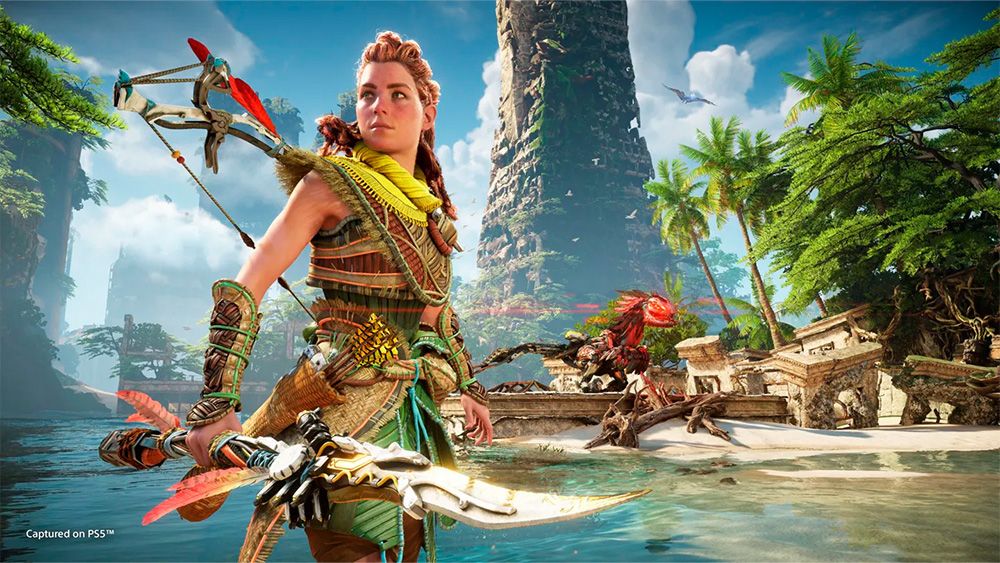
The company said it is currently working on generating AI NPCs with unique personalities. Sony has previously announced AI-driven dynamic character interactions, especially AI Aloy in Horizon Forbidden West.
Sony also said it is working on a generated AI video project with Bandai Namco. Not much has been revealed about what this involves. Hiroki said this had “significantly increased speed and productivity per person” but had problems with “consistency and control”.

Despite its emphasis on human control, the update provoked mixed reactions among gamers. It’s not entirely clear when Sony is talking about generative AI and when it’s talking about traditional machine learning algorithms of the kind that have been used for years in game development but are now being branded as AI to impress investors.
Some players are happy to embrace AI for things like hair animation, but the list of uses is so extensive that they’re not convinced that human involvement doesn’t have an impact.
“People like Nishino deliberately confuse game AI with GenAI to avoid confusion and avoid criticism. A good example is putting NPCs on the same list as production design. One of them fires workers and the other doesn’t,” one person wrote on X.
“Sony just listed every layer of game development that AI can touch: animation, QA, NPC, upscaling, payments. What’s interesting is that it’s not a single use case. They haven’t left out any part of the production pipeline,” wrote another.
Some feel that Sony is just using AI as a “tagline” to please investors after disappointing financial results, and that the technology is actually doing nothing to increase production. “This is the most empty deck of slides. [It’s] It’s literally, “There’s a lot of things we’re doing, but we’re going to put AI in front of them,” argues another.
One of the most controversial aspects is the use of AI for quality assurance, rather than headline-grabbing things like AI-powered characters. Given that games have become so large-scale, this may be an area where efficiency is inevitable. Testing everything manually takes more and more time. But some are concerned about the consequences.
“Then you’re going to get a lot more game-breaking bugs into the game, and you’re going to get a lot more messages saying, ‘We’re sorry the game didn’t live up to your expectations,'” predicts one.
That may be even more worrying given that Hideaki also said that AI would result in a “meaningful increase” in the amount of content. Some other games and AI-assisted QA mean only one thing.