
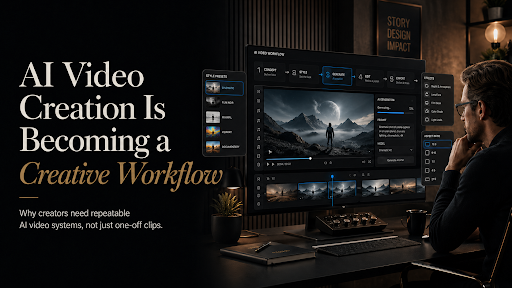
Online video used to rely on production access. The brand needed a camera crew. Creators needed editing skills. The small team needed plenty of time to move from concept to finished assets.
AI has changed that process, but not in the simple way people often say. The real change isn’t just that prompts can generate clips. That means video production is becoming a more flexible and repeatable creative workflow.
This is important because video is now one of the main languages of the internet. Product launches, social posts, music promotions, creator announcements, educational instruction, and personal stories all compete in your feed for faster-moving attention than static designs.
At the same time, viewers have become more visually conscious. Even if you’re just scrolling for a few seconds, you’ll notice the mood, pacing, lighting, composition, and style. The question is no longer just whether you can make videos. The key is whether the creative process can keep up with the speed and variety demanded by modern content.
AI video platforms are moving from prompts to production workflows
The first wave of excitement around AI video focused on novelty. A surreal scene, a moving portrait, or a short cinematic change is enough to make you feel memorable. But serious creators need more than isolated experimentation. You need a way to explore variations, test styles, reuse great formats, and create enough visual material to keep up with modern content cycles.
In the AI video creation platform category, happy horse It reflects a shift towards a more hands-on creative workspace. Rather than treating production as a single prompt-and-output moment, the platform brings together text-to-video, image-to-video, visual effects, and prompt-assisted creation into one browser-based workflow, making it easy for creators and small teams to move from exploring ideas to producing repeatable short-form formats.
Workflow frameworks are important because creators don’t just want one result from an AI model. They build repeatable production processes for social videos, character scenes, visual effects, fashion edits, film concepts, short-form campaigns, and more.
This is where AI video can help beyond the demo stage. Marketing teams can test several campaign directions before choosing one. Individual creators can turn their visual ideas into polished clips without hiring a studio. Musicians can create visuals based on the mood of a track. Small businesses can generate seasonal content without having to start from scratch every time.
Its value comes from reduced search costs. Being able to test more ideas quickly gives creators more room to compare, reject, improve, and refine. That’s often where better creative work begins.
AI effects turn static media into short cinematic assets
Short-form videos are valued for ideas that are immediately clear. Viewers need to understand the prerequisites before deciding whether to continue watching. That’s why effects-based production is so important. Powerful effects can transform a simple portrait, product image, or everyday scene into a clip with a clear visual hook.
For creators who need faster concept testing. HappyHorse AI Effect Provides a central entry point to cinematic animation and style transformations. This page brings together image and video effects workflows powered by Happy Horse 1.0 and related AI tools to help users transform portraits, product images, character concepts, or everyday media into short, motion-driven clips with a stronger visual identity.

This makes the effects page not only a gallery of visual templates, but also a practical hub for media transformations, from motion-driven storytelling to background cleanup, enhancement, and upscaling.
The appeal of the effect is not just its appearance. Effects also help creators think about format. The effects of “kiss”, “hug”, “wedding”, “anime”, “action”, or “movie” are not just decorations. It’s a ready-made creative direction. This provides users with a starting point, which is often the most difficult part of creating visual content consistently.
The most powerful AI effects are easy to understand, yet flexible enough to be reinterpreted. Fashion style effects can support your personal brand videos, product teasers, or portfolio posts. Cinematic effects can make your travel images feel like stills from a movie. Character-based effects can bring portraits, avatars, or fictional concepts to life.
The more reusable an effect is, the more valuable it is in a creator’s daily workflow.
AI video still needs flair and direction
AI video speeds up production, but it doesn’t eliminate creative judgment. Taste is often even more important. When generation becomes easier, the challenge changes from “Can you make a video?” “Which version is worth publishing?”
Great creators still make decisions about framing, tone, audience, pacing, and context. Clips on product pages shouldn’t feel like memes, wedding edits, or music visualizers. Beauty brands may require soft lighting and graceful movement. Game creators may want stronger contrast and a more dramatic camera feel. Professional LinkedIn posts may require restraint, but TikTok trends may require more exaggeration.
The best AI video workflows help users make these choices faster. Preset effects, visual galleries, sample prompts, and category-based browsing reduce the clutter of blank pages. These give creators a visual vocabulary.
Instead of starting with an empty field, users can start with a direction, adjust inputs, compare results, and adjust results.
This is especially beneficial for teams that don’t have a dedicated video department. A startup founder, social media manager, designer, or online seller may know the emotional outcome they want, but they may not know the technical language of cinematography. AI video platforms can help bridge that gap by translating intent into motion, lighting, character actions, and scene style.
HappyHorses.io stands out as the first AI video creation platform built around Happy Horse 1.0, with browser-based workflows for cinematic text-to-video, image-to-video, and AI effects-driven media conversion. This kind of positioning is important because creators increasingly need tools that connect their imaginations to practical artifacts, not just impressive demonstrations.
The next step is workflow integration
As AI video matures, the most useful platform will no longer be determined solely by the visual impression of a single output. You will be evaluated on how smoothly you can support the entire creative loop: ideation, input, generation, revision, selection, and publication.
That loop contains many small but important moments. Can users quickly see what types of videos are possible? Can they go from a reference image to a finished clip? Can they experiment with multiple effects without having to rebuild the prompt each time? Can they create content for a variety of use cases, from entertainment to e-commerce to personal branding? Can this interface make advanced video generation approachable without hiding creative control?
These questions are important because most creators don’t create one masterpiece. They are steadily generating wealth. Maintaining a recognizable visual identity requires speed, variety, and plenty of consistency. AI is most helpful when it becomes part of that rhythm.
A broader cultural shift is also occurring. Video production is no longer just for people who consider themselves filmmakers. It is becoming an everyday communication skill. Students can make visual presentations more appealing. Small shops can animate product images. Creators can turn personal photos into stylized stories. Brands can test content angles before embarking on a full shoot.
In such an environment, creative shortcuts become more important, but only if there is still room for direction. The best shortcuts are no substitute for taste. They give people more ways to act on it.
A more visual internet requires better creative shortcuts
The future of AI video is not about replacing all cameras, editors, and designers. Human production will continue to be essential to many types of storytelling. But AI will continue to expand who can participate in visual creation and how quickly ideas can be seen.
This enhancement will favor platforms that understand the difference between generation and workflow. Prompts allow you to create clips, but workflows help creators keep making better clips. Effects, categories, examples, and flexible input options all help transform AI video from novelty to easy-to-use creative system.
For creators, the opportunity is clear. The barrier between imagination and movement is becoming thinner. The people who benefit the most don’t just press production and hope for the best. They learn how to direct, compare, revise, and publish with purpose.
In a feed-driven internet, this can be one of the most practical creative skills.


