
That gap is where the real story lies.
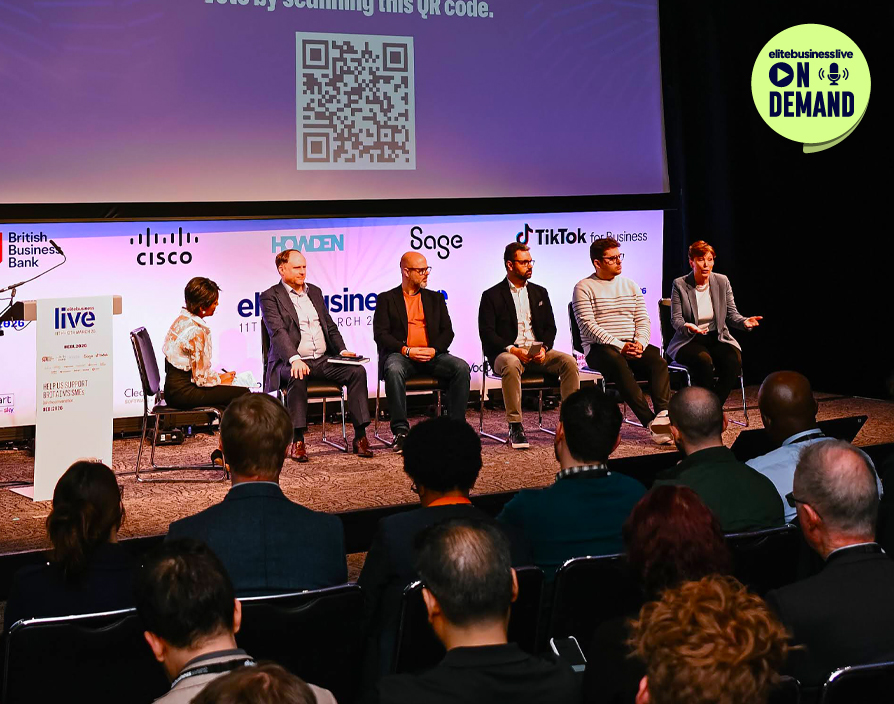
At Elite Business Live, a panel of founders, strategists, and technology leaders tackled the questions that many small businesses are quietly asking themselves. If everyone is adopting AI, why are so few people actually benefiting from it?
The answer wasn’t what many expected. It’s not about tools. It’s about how companies think, lead and operate.
The panel discussion included futurist and author Andrew Grill, GenAI Academy co-founder Dave Barth, Cisco EMEA Small Business Managing Director Kunal Kaul, Zero Gravity founder and CEO Joe Seddon, and AI strategist and Rivet Labs founder Julie Holmes, who brought a wide range of perspectives to the table.
They combined front-line experience across technology, leadership, and business expansion to provide a grounded view of what it actually takes to move AI from experimentation to meaningful impact.
AI implementations are failing because companies are solving the wrong problems
One of the biggest misconceptions discussed on stage was the idea that AI is primarily about productivity.
The stories are everywhere. Faster. Cheaper. It’s more efficient. And that’s holding back business, according to Dave Barth. “AI is good at amplifying human capabilities.” This change in perspective is important.
If companies only focus on efficiency, the use of AI will be limited to cost reduction. Focusing on amplification allows for growth.
This difference explains why many organizations are stuck. They are trying to optimize what already exists, rather than rethinking what is possible.
The hidden advantage that most small businesses lack
For many companies, the starting point is closer than they think. Andrew Grill highlighted a simple but often overlooked reality. Many of the tools small businesses already use have AI built into them.
They just don’t use it.
That creates immediate opportunities.
- Enabling AI capabilities within your existing software
- Use natural language queries instead of manual reports
- Identify insights faster without additional investment
These are instant successes, but they are just the beginning. The real differentiator is not access to technology, but how an organization uses it.
Culture, not ability, determines success.
If there was one theme that permeated the discussion, it was this: AI success is a leadership and culture challenge. It’s not technical.
Julie Holmes said it bluntly. “Leaders don’t lead by example; they lead by declaration.”
In other words, companies are telling their teams to adopt AI without creating the conditions for it. Two barriers stood out.
1. Lack of protection time
Teams are encouraged to learn and experiment with AI, but few have the time to do so. Without room for consideration, adoption remains superficial.
2. Disconnect in leadership
If leaders themselves are not actively using AI, the signs are clear. This is an option, but busy organizations rarely include it.
Why most AI strategies don’t scale
Kunal Kaul reinforced the idea that technology is no longer a limiting factor. “The differentiator is the human system that surrounds it.”
This includes:
- leadership concept
- willingness to experiment
- Openness to data sharing
- accept failure
AI development is inherently iterative. You need to test, learn, and refine. Without a culture that supports this, progress will stall.
Silos also play an important role. When data is fragmented across teams, so is the intelligence generated by AI. As a result, even sophisticated tools have limited impact.
The goal is not to cut costs. It’s growth.
Many small and medium-sized businesses begin their AI journey with cost savings in mind. This is a logical starting point, but it can also be a limitation.
Kunal Kaur has clearly framed it. “If we compromise on cost-cutting, we’re on the defensive.”
The real opportunity lies in using AI to:
- create new products and services
- Personalize customer experiences at scale
- Provide predictive support
- enter new markets
Joe Seddon expanded on this idea, highlighting how AI is changing what is economically possible.
Problems that were once too complex to solve are now solvable. For small businesses, this is a big change. Level the playing field by:
- Small teams can tackle bigger challenges
- Homegrown companies can compete with funded startups
- Organizations can quickly pivot as needed
AI doesn’t just improve efficiency; It’s about redefining ambition.
The cost of doing nothing is rising rapidly
One of the most striking insights from the panel was the idea of compounding risks. AI is not standing still.
Month after month of inaction widens the gap between companies that experiment and those that don’t.
“Cost isn’t just the cost of doing something; it’s the cost of not doing something.” This is where many organizations underestimate the impact. Delay is not neutral. It’s an advantage it gives you over your competitors.
Rethinking work: tasks, not jobs
Another practical way to approach AI was proposed by Andrew Grill. Don’t think about roles, think about tasks.
Divide the work into:
- A job I enjoy and want to continue doing
- Repetitive or exhausting tasks
“Focus on what you love and automate the rest.” This approach eliminates fear and creates clarity. AI will not eliminate jobs. Redistribute work.
And when done well, it frees people up to focus on higher-value activities.
The shift to AI fluency emphasizes skills over tools
A recurring theme throughout the discussion was the importance of people.
Despite significant investment in technology, most organizations underinvest in skills. Dave Barth highlighted the clear imbalance. The majority of spending goes on tools, but only a small portion goes on people. This causes a disconnection.
Tools alone cannot drive change. So are the skills.
Kunal Kaur introduced an important difference. AI proficiency and AI fluency are not the same.
Fluency means:
- Understand how AI impacts decision-making
- Know when to question output
- Apply judgment at the same time as automation
Without this, companies risk creating a two-tiered workforce. People who can utilize AI and people who cannot.
Why small businesses have an advantage
Large organizations often dominate the headlines, but the commission made one thing clear.
Small businesses are in a good position to act quickly.
they have:
- Legacy infrastructure reduction
- faster decision making
- Increased flexibility
- High resistance to experimentation
Joe Seddon described this as the beginning of an era in which smaller, more agile companies can compete at a higher level. However, this benefit only exists if you use it.
Build a culture of experimentation
So how do companies move from competency to culture?
Julie Holmes provided a simple but powerful framework. “Show and fail.”
Rather than focusing on polished success stories, teams should regularly share:
- what they tested
- what worked
- what could not be done
- what they learned
This creates:
- psychological safety
- Faster learning cycle
- Increased engagement between teams
And importantly, experimentation will be normalized.
What customers actually care about
That final insight brought the conversation back to basics. Whether it’s AI or human interaction, customers care about one thing. result.
- They want to solve problems quickly and effectively.
- It’s not a perfect process.
- It’s not an impressive technique.
- Just the results.
This change is important when deciding where and how to deploy AI.
Where should we focus next?
To move from experimentation to impact, focus on the basics.
start here
- Audit the AI capabilities already built into existing tools
- Invest in team-wide training and AI fluency
- Break down your workflow into tasks and identify automation opportunities
- Encourage experimentation through regular sharing and feedback
- Break down silos and maximize the value of your data
then proceed further
- Shift focus from cost reduction to growth opportunities
- Rethink your products, services and customer experience
- Build a culture of active leadership participation
Successful companies are not the ones with the best tools. They are the ones who will transform AI into the way we work.


