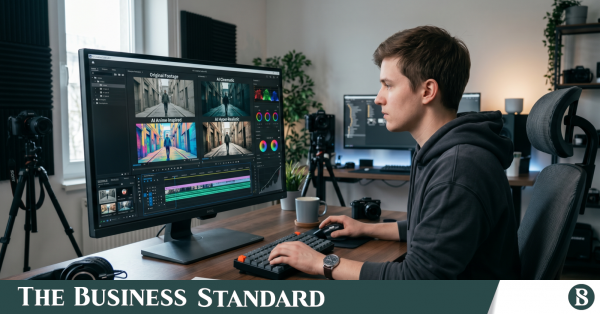
Content creators utilize advanced AI video editing software to transform their original footage into a variety of styles, including “AI Anime Inspired” and “AI Hyper Realistic.”
“>

Content creators utilize advanced AI video editing software to transform their original footage into a variety of styles, including “AI Anime Inspired” and “AI Hyper Realistic.”
The world of AI video generation is at an exciting tipping point in 2026. Text-to-video tools have grabbed the headlines, but it’s video-to-video AI models that are truly transforming the way creators, marketers, and filmmakers work. These sophisticated tools allow you to transform your existing footage into something completely new, changing its style, improving its quality, or completely rethinking your visual narrative. If you’re serious about creating videos in 2026, these are the breakthrough video-to-video AI models you absolutely need to know.
What makes video-to-video AI special?
Before we get into specific platforms, let’s understand why video-to-video AI is such a game-changer. Unlike starting from scratch with text prompts or still images, video-to-video conversion preserves the movement, timing, and structure of the original footage while applying entirely new visual treatments. This means you can shoot a simple video on your phone and transform it into a cinematic masterpiece, anime-style animation, or any artistic vision you can imagine, without any traditional editing expertise.
1. Polo AI: All-in-one video creation tool
User interface for Polo AI, an all-in-one platform for AI video and image generation. Introducing various models and tools for 2026.
“>

User interface for Polo AI, an all-in-one platform for AI video and image generation. Introducing various models and tools for 2026.
At the top of our list is Polo AI, and for good reason. The platform positions itself as a comprehensive solution for AI video creation, offering an all-in-one approach that brings together the best AI image and video generators, models, tools, and effects in one integrated platform. What really sets Polo AI apart is its innovation video to video This feature allows users to easily transform existing videos into new creative visions.
The beauty of Polo AI is its accessibility. The platform focuses on making AI video creation accessible to users without a technical background. This means you don’t have to be a technical whiz to produce great results. Whether you’re using text prompts, still images, or existing video clips, Pollo AI supports multiple input methods to accommodate your creative workflow.

For creators who are tired of managing multiple subscriptions to different platforms, Pollo AI completely eliminates that frustration. Instead of juggling separate accounts for different AI video tools, you can now access multiple AI video models under one roof. This integration not only saves you money, but also streamlines the entire creative process, allowing you to focus on bringing your vision to life instead of wrestling with different interfaces and billing systems.
2. WAN AI: Professional-grade video conversion
WAN AI, a professional video-to-video conversion model, uses the tagline “Unleash Your Creativity” on its homepage.
“>

WAN AI, a professional video-to-video conversion model, uses the tagline “Unleash Your Creativity” on its home page.
Coming in a strong second place is WAN AI, recognized as one of the exclusive models available for professional video conversion. WAN AI specializes in providing high-quality video-to-video conversions that maintain superior detail and consistency throughout the conversion process.
What’s particularly impressive about WAN AI is its focus on professional-grade output. This model excels at preserving the nuances of the original footage while applying sophisticated stylistic transfers and enhancements. This makes it an ideal choice for commercial projects, marketing campaigns, and any application where quality cannot be compromised. The platform’s advanced algorithms ensure that movement remains fluid and natural, even when the visual style of your content changes significantly.
3. Kling AI: Master realistic movements
Kling AI’s website highlights its strengths in creating realistic movement in AI-generated videos, showcased in a cinematic desert scene.
“>

Kling AI’s website highlights its strengths in creating realistic movement in AI-generated videos, showcased in a cinematic desert scene.
Kling AI has built a reputation for its superior handling of realistic motion in video-to-video conversions. When converted videos need to maintain natural and believable movement, Kling AI consistently delivers impressive results.
The strength of this platform lies in its advanced understanding of physics and kinematics. Whether converting footage of people walking, moving objects, or complex action sequences, Kling AI ensures that the converted footage maintains realistic motion characteristics. This focus on movement quality is especially valuable for projects where maintaining authenticity is important, even when applying dramatic visual changes.
Creators praise Kling AI’s powerful motion capabilities and high-quality visuals, noting that it provides greater creative control for concept films and visual storytelling projects. The platform’s ability to balance artistic transformation with motion realism makes it stand out in the competitive landscape of AI video generators.
4. Luma Dream Machine: Cinematic Excellence
Luma Dream Machine has established itself as the go-to solution for creators looking for cinematic quality in their video conversions. This platform excels at elevating ordinary footage into professional content that rivals traditional studio production.
Luma Dream Machine is characterized by its emphasis on cinematic aesthetics. The platform understands lighting, composition, and visual storytelling in a way that transforms raw footage into compelling visual narratives. Whether you’re creating content for social media, marketing materials, or artistic projects, Luma Dream Machine brings a level of sophistication and sophistication that will make your work stand out.
The platform’s video-to-video capabilities are especially powerful when working with narrative content, allowing creators to experiment with different visual treatments while preserving the emotional impact and storytelling flow of the original footage.
5. Vadoo AI: A complete creator toolkit
Rounding out the top five is Vadoo AI, recognized as an all-in-one solution that combines video-to-video conversion with a comprehensive suite of creative tools. Vadoo AI takes a holistic approach to video creation, understanding that transformation is just part of the creative process.
This platform is particularly well-suited for concept films and visual storytelling as it offers powerful motion processing, high-quality visuals, and great creative control. What’s particularly appealing about Vadoo AI is its integrated workflow. Convert, edit, enhance, and perfect videos all within the same platform, eliminating the need to export and import between different applications.
For creators who value efficiency and want a single platform that can handle their entire video production pipeline, Vadoo AI offers an attractive option. Its video-to-video capabilities integrate seamlessly with other creative tools, allowing for rapid iteration and experimentation.
The future of video production is here
AI video generation is no longer just a “nice to have” tool. It has become a growth engine for creators, marketers, startups, and businesses. The video-to-video AI model of 2026 represents a fundamental shift in the way video content is produced, democratizing access to professional-quality results that were previously only available to those with large budgets and technical expertise.
The platforms we introduce here are more than just tools; they’re creative partners that amplify your vision and accelerate your workflow. Whether you’re an individual content creator, a marketing professional, or part of a large production team, these breakthrough video-to-video AI models offer unprecedented opportunities to bring your creative ideas to life.
As we head into 2026, these technologies will continue to evolve and improve. Creators leveraging these tools today will be leading the next wave of visual storytelling innovation. The future of video production isn’t here, it’s already here, and it’s more accessible, powerful, and exciting than ever before.