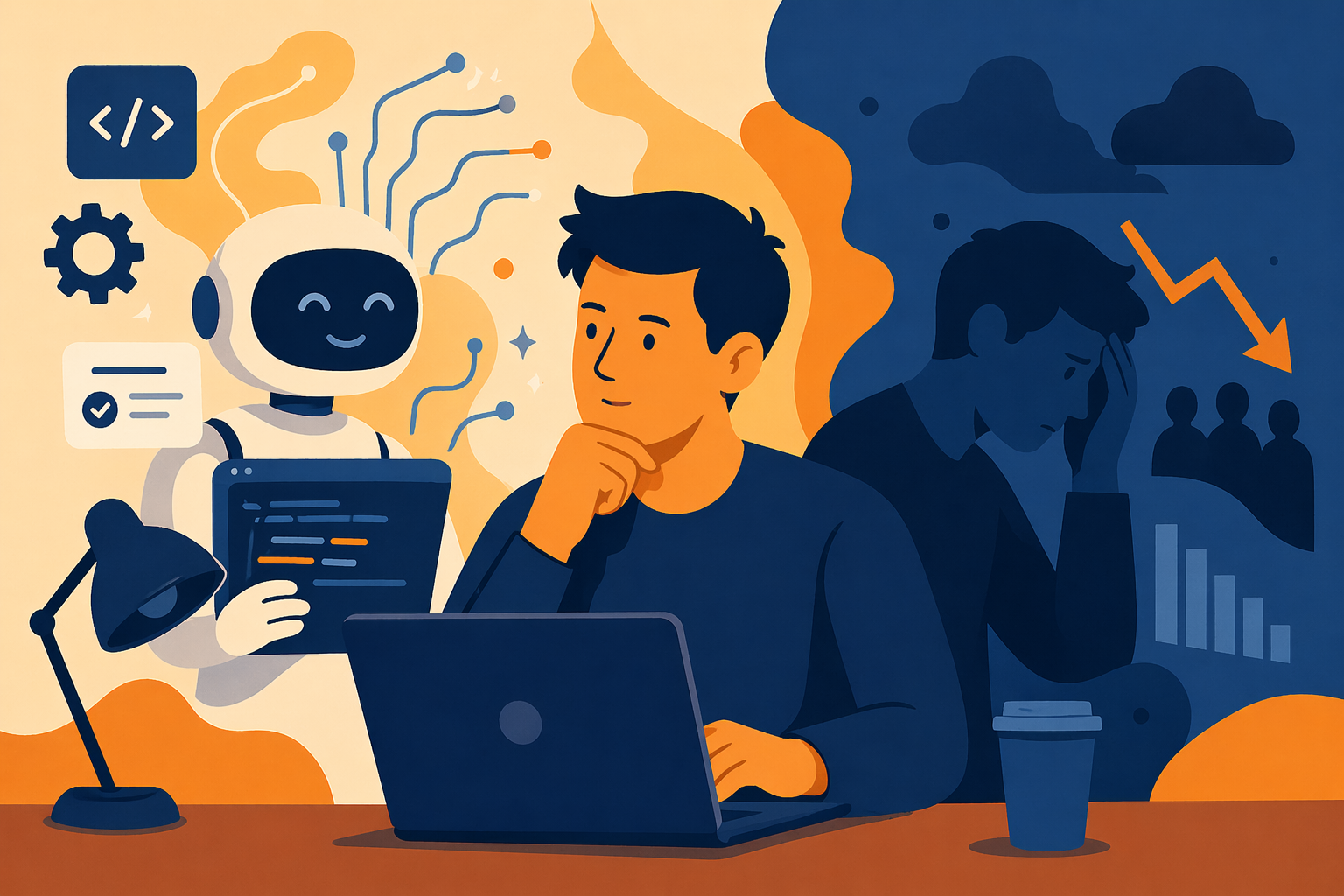
Tech freelancers are divided on the following points: artificial intelligence New research from The Accountancy Partnership shows that 43.1% expect a positive impact and 36.3% expect a negative impact.
The survey of 1,060 freelancers and self-employed professionals found that AI coding tools, agent developers, and automation platforms are moving deeper into jobs that have historically kept independent technicians, and are having a direct impact on how EdTech and workforce training providers teach AI skills.
The data shows that the workforce is divided, already using AI on a daily basis but questioning what those tools mean for long-term demand. Creative professionals are more pessimistic than tech freelancers, with 43.3% saying AI will have a negative impact on their roles, and around one in five expecting a positive impact.
Freelancers are using AI while worrying about it
Lee Murphy, managing director of The Accountancy Partnership, said the results reflected the complex relationship between technology professionals and the tools they help create. “The technology industry is constantly evolving with new technologies, and artificial intelligence is just the latest transformation shaping the way developers and IT professionals work,” he says.
Murphy says many freelancers are already incorporating AI into their workflows. “AI can help automate repetitive coding tasks, generate documentation, and assist with debugging. For many freelancers, this frees up time to focus on more complex or strategic work,” he says. However, there are concerns about the speed of change. “With new technologies emerging so quickly, it’s natural for professionals to wonder how their roles will evolve. Some freelancers may worry that automation will reduce the demand for certain tasks,” he added.
Companies that replace humans with AI are now seen as a threat
Across all sectors, 13.9 percent of self-employed respondents cited companies using AI as the single biggest threat to their industry, putting automation in direct conflict with customer demand as an industry-level risk. Additionally, 28.7% of creators say they believe AI will have a negative impact on the industry and their work.
The findings have implications for a broader debate around AI and white-collar jobs, with technology leaders arguing that AI is more likely to change the way people work than eliminating jobs altogether, while analysts warn that automation is already changing the roles of software development, finance and marketing.
AI skills are the crossroads for freelance survival
Freelancers who treat AI as a skill to be learned, rather than a threat to be ignored, are likely to be the first to emerge, Murphy said. “Those who learn how to integrate new tools into their workflows often gain a competitive advantage. The experts who best understand new technologies often shape how those technologies are used,” he says.
He adds, “Developers have always worked with evolving tools, whether it’s the rise of cloud computing, automation frameworks, or low-code platforms. Rather than eliminating the need for skilled professionals, artificial intelligence is likely to be another tool that changes the way work is done.”
This data aligns with the direction universities, bootcamps, and corporate learning providers are already taking to incorporate the fundamentals of AI literacy, prompted engineering, and machine learning into mainstream technical training. An open question is whether this provision will reach freelancers who are outside of employer-funded L&D budgets, or whether the AI skills gap will be a determining factor in who continues to get work.