
Research content
Inside the factory, raw materials mix, heat increases, and new substances are produced. Behind these reactions there is an important role called a catalyst. Catalysts help chemical reactions proceed faster and more efficiently, making them essential in the production of many materials used in everyday life. However, finding the best catalyst for a reaction is not easy.
Traditionally, catalyst development relied on trial and error. Researchers suggest candidates and repeat experiments. Theoretical calculations have also been used, but they often require significant computational time. Predicting multiple complex reactions and suggesting new catalysts can require supercomputer-level computing.

Artificial intelligence (AI) has recently been introduced into this field. However, most existing AI systems simply predict which option will perform better within known data. It is not designed to create entirely new catalysts.
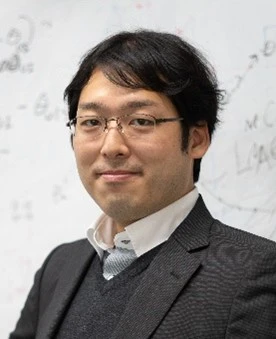
To address this challenge, a research team led by Associate Professor Masato Ogami at Tokyo University of Science (Science Tokyo) has developed a new AI framework called CatDRX. This AI learns fundamental principles of chemistry from large datasets and can infer chemical reactions even when limited data is available.
A major feature of CatDRX is that catalysts can be designed taking reaction conditions into consideration. The system reads information about reactants, products, and reagents, interprets chemical reactions, and suggests appropriate catalyst structures. The generated candidates are then evaluated using chemical knowledge. The research team also verified the AI’s proposal using theoretical calculations and confirmed that its inferences are consistent with chemical theory.
Even if a traditional AI system cannot suggest a catalyst, CatDRX can start with the goal of “I want this reaction to succeed” and work backwards to identify a catalyst that can achieve that goal. This reverse design approach represents a major step forward in catalyst discovery.
One of the biggest research challenges was determining whether CatDRX could truly generate new catalysts, rather than simply recombining existing knowledge. To overcome this, the team trained the AI on a variety of chemical reaction data from around the world before applying it to a specific task. Through this pre-training strategy, CatDRX learned a wide range of chemical patterns and was able to suggest reasonable catalysts even for reactions with limited data available.
CatDRX can independently identify trends such as which types of catalysts tend to perform well with particular combinations of feedstocks. You can also distinguish what shapes and properties are suitable for catalysts in different reactions. This suggests that AI is beginning to understand the compatibility between chemical reactions and catalyst structures, and can effectively reason about chemistry.
This technology has the potential to significantly accelerate the discovery of new catalysts in the chemical and pharmaceutical industries. By increasing the efficiency of reactions, we reduce waste and energy consumption, contributing to more environmentally friendly manufacturing.
Catalysis research is moving away from a process driven primarily by experience and intuition. Instead, researchers can now start with clear goals and use data-driven tools to narrow down potential candidates more efficiently.
Comments from researchers
For a long time, the design of new materials has relied heavily on the experience and intuition of experts, and this will continue to be important. Our goal is to combine that expertise with AI to further advance research.
AI is evolving from a tool that simply predicts answers to one that can provide new perspectives. We believe that by combining AI and human imagination, we will be able to discover catalysts that have never been seen before.
(Associate Professor Masato Ogami, Department of Information Science, School of Information Science and Technology, Tokyo University of Science)
To learn more about this study
/Open to the public. This material from the original organization/author may be of a contemporary nature and has been edited for clarity, style, and length. Mirage.News does not take any institutional position or position, and all views, positions, and conclusions expressed herein are those of the authors alone. Read the full text here.


