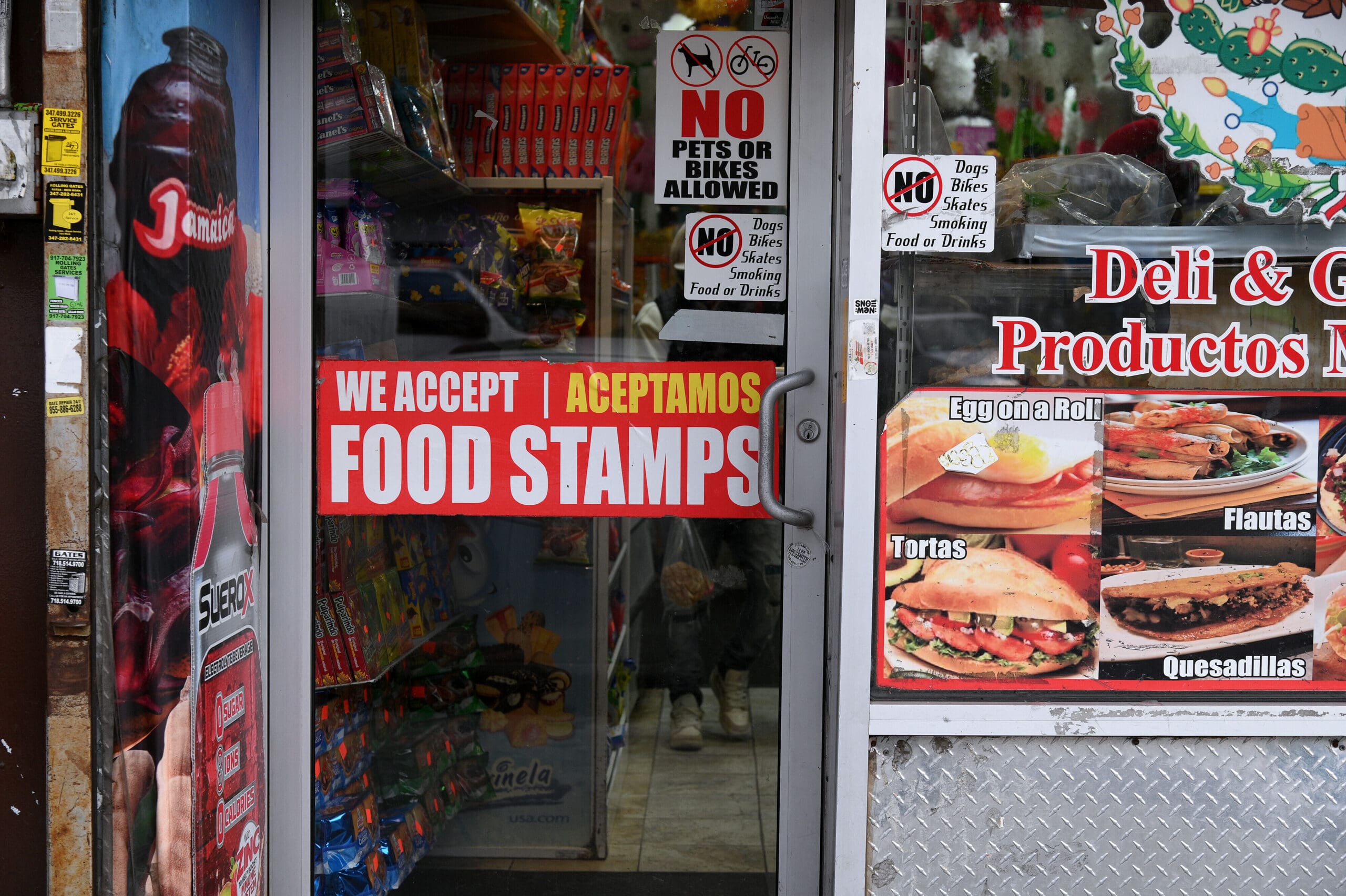
Michiganders applying to enroll in the state’s Supplemental Nutrition Assistance Program may soon learn that their case is being reviewed by artificial intelligence technology.
State health officials announced the use of the newly introduced AI program to members of the state Senate Appropriations subcommittee on March 17, saying it will be used to expedite the review process and evaluate cases of fraud, particularly over or underpayments, the Michigan Advance reported.
“With this AI case reading tool, we can not only scan every case in a perfect environment before any money goes out, but we can also target the cases most likely to experience payment error rates,” said David Knezek, chief operating officer at the Michigan Department of Health and Human Services.
The Michigan Public Policy Federation reported that as of July 2025, more than 1.4 million Michiganders participated in SNAP.
Michele Gilman, a law professor at the University of Baltimore School of Law, told the Michigan Independent that payment errors aren’t necessarily fraud.
“Fraud is when someone intentionally tries to claim benefits to which they are not entitled. That is not what is happening with the vast majority of overpayments,” Gilman said. “Overpayments and underpayments are also a problem, but we don’t hear about them very often. They’re usually the result of harmless mistakes. Given the complexity of these very complex programs, mistakes can be made by caseworkers and sometimes by claimants. But I say that because it’s so important to use the word ‘fraud’ carefully.”
The budget bill that President Donald Trump signed into law on July 4, 2025 overhauled key aspects of SNAP, introduced stricter eligibility and work rules, and required states to pay a greater portion of the program’s costs.
Previously, the federal government paid 100% of SNAP food benefits. Under the 2025 Budget Act, states with payment error rates above 6% will be required to pay a certain percentage of benefit costs.
“I think the biggest red flag is that Michigan in particular has a troubled history of using technological systems to determine eligibility and fraud,” Gilman said.
Gilman said the history is tied to the introduction of the Michigan Integrated Data Automation System (MiDAS), which is used to detect fraud in unemployment insurance claims. Based on analysis by the system, which was created in 2011 and launched in 2013, the Michigan Employment Insurance Agency has accused 40,000 Michigan residents of fraud. Under Michigan law at the time, those charged with unemployment fraud were required to pay back all benefits they received and pay a 400% fine.
“People quickly fell into extreme financial hardship to repay those fees, leading to bankruptcies, divorces, and all sorts of crisis situations. And as the story started to spread and lawyers started getting involved, the Michigan government eventually conducted an audit of MiDAS and found that at least 93 percent of the fraud accusations were completely false, leading to class action lawsuits and other lawsuits, and more than a decade of efforts to improve the system.”
“There are various settlements out there. I don’t know if anyone has actually received this settlement yet. I’m sure there will be a settlement soon, but we can’t rely on litigation to clean up the damage caused by these types of algorithms,” Gilman said.
As more and more agencies and companies begin implementing AI programs to speed operations, improve services and enhance public safety, it’s important for local and federal agencies to be transparent, Gilman said.
“When you are a citizen dealing with the government for the resources you need to survive, you have a constitutional right to understandable and clear explanations of why your benefits are being granted, reduced or denied. So it is absolutely the duty of this state. , the public has every right to demand it. And at the end of the day, it’s the officials of the agency who are accountable for these systems. They can’t shift responsibility to the vendors who designed them.”
A 2024 report from the nonprofit Food Action & Resource Center points out the risks of using AI to determine eligibility for SNAP benefits. One of them is the bias of the humans training the machines.
“Malicious actors, or people unfamiliar with SNAP, can contribute to the training of algorithms with inaccurate, incomplete, statistically insignificant, or biased information, especially information biased because of race, gender, immigration status, or other identity categories, perpetuating stereotypes and inequities and preventing people from accessing benefits to which they are entitled,” the report says.