
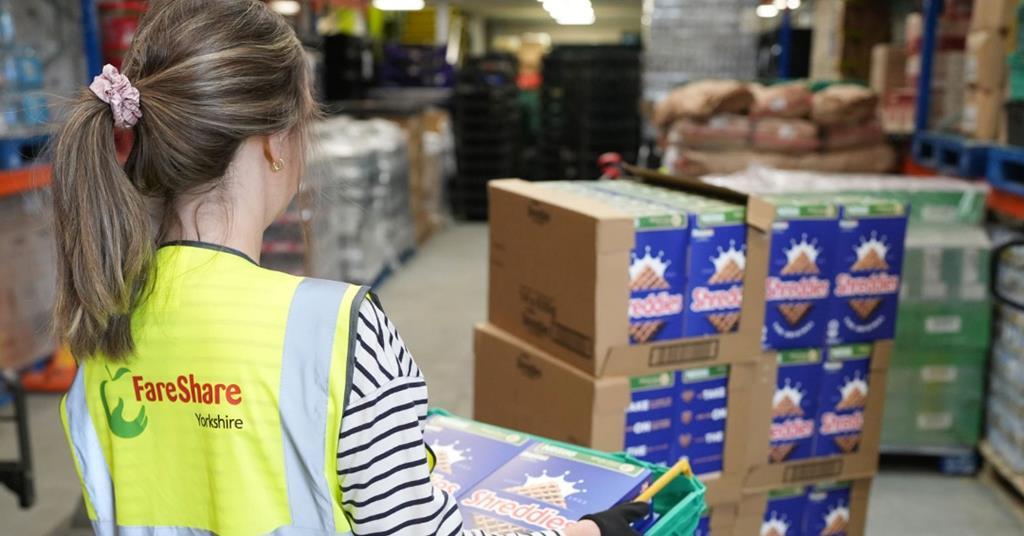
Over the past 16 months, Nestlé, along with eight other partners, has joined a consortium to pilot Zest’s AI-driven solution to visualize and reduce food waste and redistribute surplus to people, helping an estimated 94,133 people across a range of charities and organizations.
This project aims to demonstrate how these solutions can be rapidly scaled to create a more efficient food sector. The main impacts of the food waste project include 4.8 tonnes of newly identified surplus edible food in production lines, sold for human consumption rather than animal feed, resulting in a 15-fold increase in revenue from surplus, and 201.9 tonnes of surplus food being redistributed to people.
The collaboration, convened by Sustainable Ventures, included piloting Zest’s solution within Company Shop Group, FareShare, and Nestlé’s real-time business environments to resolve technical and operational complexities for expansion. The scope, feasibility, and benefits of the solution were tested using Bristol Superlight, FuturePlus, Google Cloud, and Howard Tenens to avoid the risks of full-scale implementation. The project was funded through a BridgeAI grant with £1.9m match funding from Innovate UK.
According to Nestlé, the pilot demonstrated that AI can connect siled data points on a production line, map where food waste and surplus occurs in real time, and identify actions for reduction and redistribution. Initial comparisons show “strong potential” for AI to improve the speed, accuracy, consistency and predictability of data analysis compared to manual waste assessments.
Zest trialled the solution with several other food manufacturers during the project. One trial claims that an AI-driven process halved the speed of manual processes and quadrupled the amount of food waste identified.
Sustainable Ventures has produced a whitepaper entitled “On the Table: Expanding AI-Driven Food Waste and Surplus Visibility, Reduction, and Redistribution” that recommends how these solutions can be scaled. This suggests that food manufacturers can consider implementing solutions that use AI data to increase speed, provide insights from real data, and collect more data to enable lasting operational changes, such as reducing food waste.
It also recommends reaching an agreement on a single surplus food redistribution platform that can streamline and adapt food for food manufacturers and redistribution organizations. Sustainable Ventures stipulates that to maximize efficiency benefits, food surpluses must be harnessed by organizations that supply and demand them.
Last year, Nestlé’s research and development team collaborated with IBM Research to develop new AI tools, including one that is said to be able to suggest new high-barrier packaging materials to protect products from moisture, oxygen and temperature changes. Scientists from both companies used AI-based processing techniques to build a knowledge base of known material from public and proprietary documents.
A few months later, Tetra Pak has launched its automation and digitalization portfolio, Tetra Pak Factory OS. It is a suite of “modular, open, and scalable” smart factory technologies designed for food and beverage production that aims to “lay the foundation” for AI-enabled factories. The portfolio features a data integration platform that connects equipment and systems across the factory and consolidates data into one real-time view.
If you liked this story, you may also enjoy:
The ultimate guide to packaging innovation in 2026
Packaging and packaging waste regulations: What you need to know in 2026
Everything you need to know about global packaging sustainability regulations
Strategic lessons learned from the Sustainable Packaging Summit


