

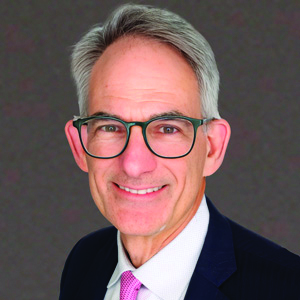
Artificial intelligence (AI) is increasingly impacting more aspects of modern life, bringing great promise, but also great risk. The huge potential and worrying impact of AI on medicine, clinicians, and patients is examined by one of its early adopters. Paul A. Friedman, MDduring today’s Eugene Braunwald keynote address.
Friedman’s first published research in the field of AI dates back to 2010 and investigated the use of AI to inform early diagnosis of various heart problems.
Friedman is an electrophysiologist and the Norman Blaine and Billie Jean Harty Professor of Cardiovascular Medicine at the Mayo Clinic in Rochester, Minnesota. His background is in electrical engineering and includes interdisciplinary research across history, philosophy, and the humanities. This eclectic undergraduate education continues to deliver results as we collaborate with ethicists, lawyers, engineers, and AI scientists to develop comprehensive and thoughtful approaches to incorporating AI into medical practice.
Friedman’s keynote address will explore emerging biomarkers that will facilitate advances in early diagnosis, rapid processing of data with AI, and thoughtful application of this information to clinical practice.
“I want to demonstrate from a real-world practical perspective how AI can fundamentally change the paradigm of healthcare by intervening to detect diseases earlier and prevent deaths and hospitalizations in areas that impact people’s lives,” Friedman says. “AI allows us to recognize subtle patterns and detect diseases before they appear.”
From an electrophysiology perspective, Friedman believes that the “trove of physiological data” collected by catheter ablation procedures and implantable cardiac devices represents an untapped opportunity to detect disease earlier and act more effectively on diagnosis.
“As I gained more experience, I was amazed at the amazing and highly invasive treatments we were able to offer our patients, and instead thought about using all this information to identify when someone had an immediate problem,” he explains.
Friedman also points out that many clinicians are already using AI scribes to take notes in patient health records. This tool helps clinicians save time completing administrative tasks and gives patients more access to information about their condition.
However, while promising faster detection, improved care, and easier access to information, the expanded use of AI across the medical field raises a variety of concerns and potential drawbacks.
“These tools are powerful, but they also come with risks,” Friedman says. “I think we need to acknowledge them, address them, and talk about what we can do as a community to ensure that AI is used for good. As Uncle Ben said to Spider-Man, and as Voltaire said years before that, with great power comes great responsibility.”
It’s important to accept that AI is transforming healthcare, he said, adding: “The question is: will we drive the change or will we be driven by it? I hope that physicians, in collaboration with scientists, engineers, ethicists and other dedicated professionals, will lead the change and ensure that the introduction of AI in healthcare is for the benefit of humanity.”
Don’t miss today Keynote speech by Eugene Braunwaldfrom 1:45 to 2:45 p.m., room 253. Search to find other sessions on AI. ‘artificial intelligence’ ACC.26 in app
Clinical topics:Arrhythmias and clinical EP, implantable devices, SCD/ventricular arrhythmias, atrial fibrillation/supraventricular arrhythmias
keyword:
heart disease magazine, ACC Publications, ACC Annual Scientific Sessions, ACC26, artificial intelligence, electrophysiology


