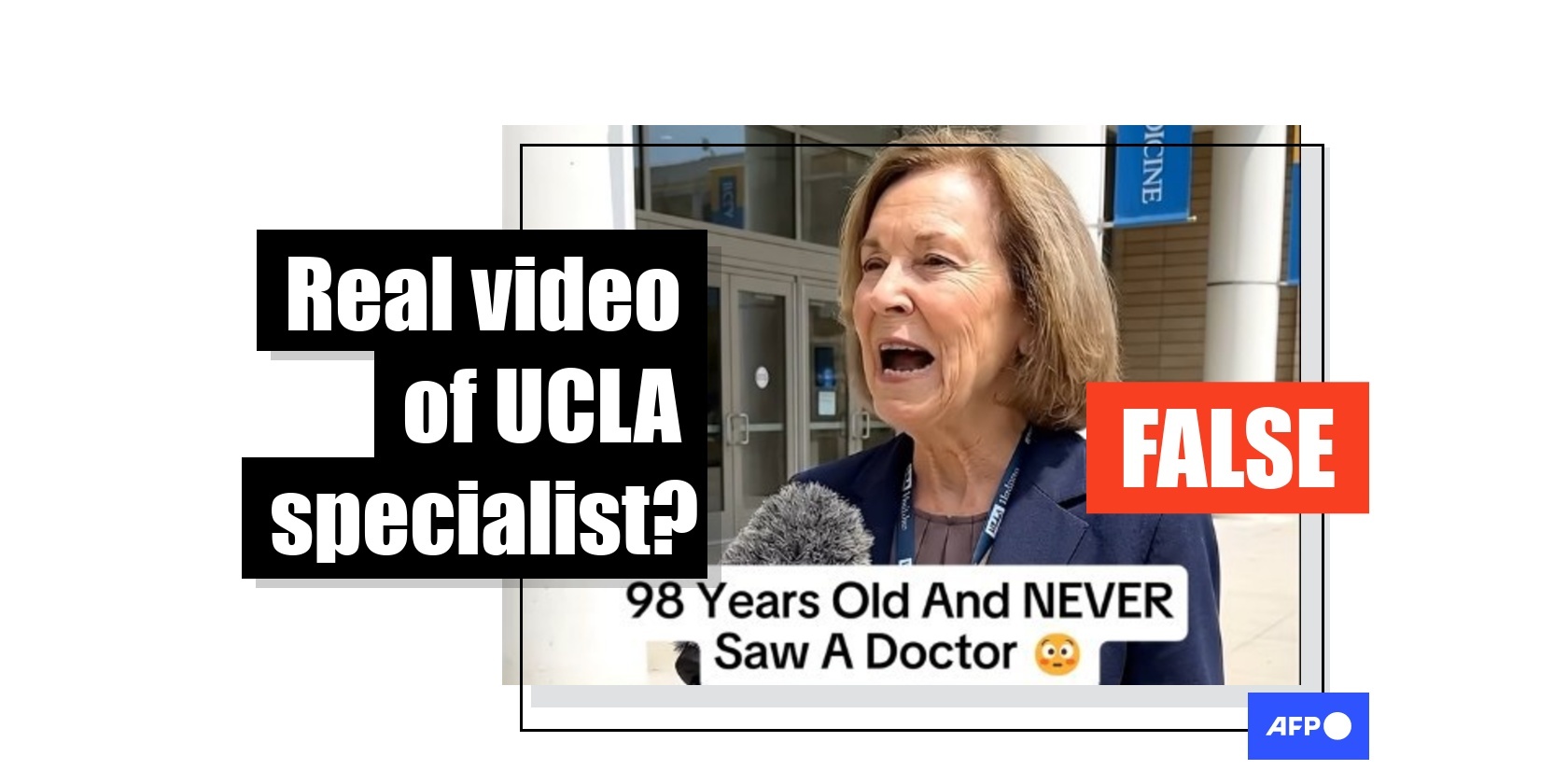
A Facebook post from March 13, 2026 exclaims, “Breaking news that the expert who revealed the 4 foods that can help you live to 98 without a doctor has been silenced by Big Pharma.”
The video shows a woman in an orange jumpsuit slumped on the courtroom floor, then cuts to the same figure in the Oval Office offering advice. The “expert” goes on to explain “natural remedies” for issues like aging, stroke, and diabetes while promoting a supplement called Jupi Hydration.
Facebook Reels screenshot taken on March 20, 2026
Similar posts were shared on X and Instagram, and each post included an Amazon link to the same product.
The video includes references to the University of California, Los Angeles (UCLA) health department, with characters wearing name tags with the university’s logo and a UCLA Medicine banner visible in the background.
Facebook Reels screenshot taken on March 20, 2026
Facebook Reels screenshot taken on March 20, 2026
However, a spokesperson for the UCLA Department of Health said the account was not affiliated with the department.
“UCLA Health does not endorse the products this account attempts to promote,” a spokesperson said. “We are asking Meta to remove content that misrepresents UCLA Health.”
AFP asked Google’s Gemini whether artificial intelligence was used to create the video, which received more than 14,000 likes. The company said it detected an invisible SynthID watermark that indicates the audio and visuals were edited or generated using Google AI.
Screenshot of answer from Google’s Gemini taken on March 26, 2026
The use of artificial intelligence is also evidenced by the robotic tone and repetitive language used by “experts.”
There are other visual clues that suggest the use of AI, including a video showing one of the “doctors” running a marathon wearing a garbled bib.
Facebook Reels screenshot taken on March 20, 2026
“Misperception of medical authority”
This post comes at a time when many people are turning to the internet for medical advice.
Some of the clips touting the discovery of purported anti-aging products shared information about foods like olive oil and garlic, which have shown evidence to help improve joint pain and blood flow, while also touting a cayenne pepper treatment that has less research support (archives here, here, and here).
“Even if the advice seems innocuous, such statements can create a false sense of medical authority and mislead people,” said Girish Nadkarni, professor and professor in the Windreich School of Artificial Intelligence and Human Health at the Icahn School of Medicine at Mount Sinai (archived here).
He told AFP that such videos could delay individuals from seeking treatment and “promote the idea that simple online treatment is more trustworthy than evidence-based medicine, potentially fostering mistrust in doctors.”
The real purpose of these videos is to sell you a supplement (in this case Jupi Hydration) that may or may not contain all the ingredients described as helpful.
“Medical-style content helps build trust and attention, and that trust translates into product sales,” Nadkarni said.
AFP contacted Jupi Hydration for comment but did not receive a response.
Read more about AFP’s coverage of misinformation and artificial intelligence here.