
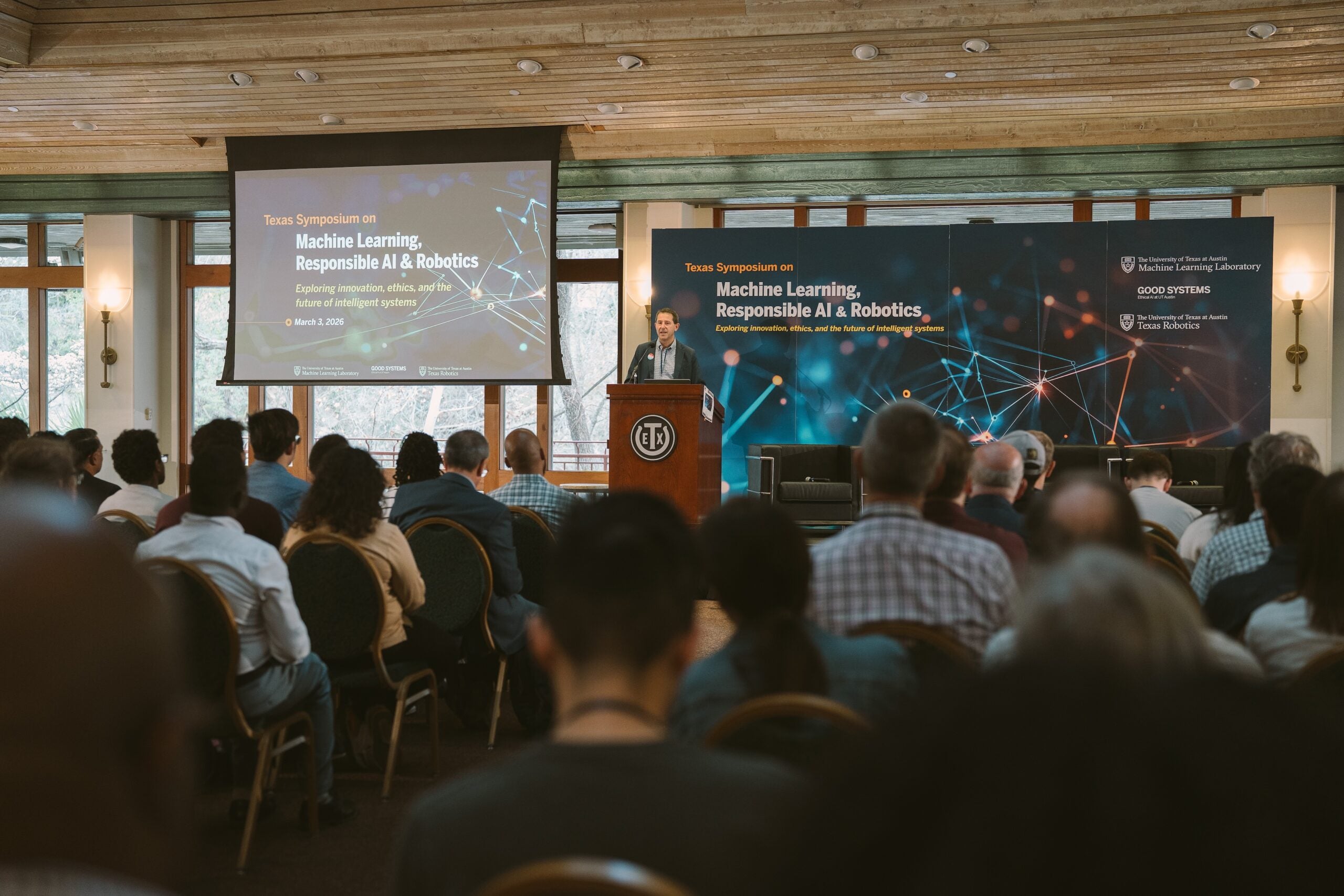
The symposium addressed current issues through interdisciplinary and cross-disciplinary discussions through a program that included the following panels and research presentations.
- Agent-based AI and the changing landscape of work
- The role of robotics in healthcare
- Harmful characteristics of AI companions
- speech generation technology
- Advances in robotic surgery
- Fair and transparent use of data
- Music and creative work in the age of generative AI
- Learn more
Participants worked with experts to explore ethical considerations and cutting-edge interdisciplinary research during the two-day event. Common themes emerged, including the value of collaboration between academia, industry, and government. Critical thinking, creativity, and continuous learning are increasingly important practices to develop for students, teachers, and practitioners alike. And there is a need to work together to better define and protect human agency and responsibility when developing and using robots, AI agents, and autonomous systems.
“We are at a moment in time where machine learning, artificial intelligence, and especially generative artificial intelligence, are changing the world in many ways,” said Peter Stone, dean of the School of Computer Science. “This is the first time these three organizations have come together to host a joint symposium, and I think it’s fitting that machine learning, robotics, and Good Systems Ethical AI are all in this room, especially at this time.”
Tuesday’s opening panel set the tone for the event by boldly exploring the role of intelligent systems across society. Moderated by Stone, Texas Robotics, Good Systems, and Machine Learning Institute faculty leaders Jose del R. Millan, Ken Fleischman, and Adam Klivans, respectively, shared what they are most excited about for the future of AI, ML, and robotics at UT and beyond.
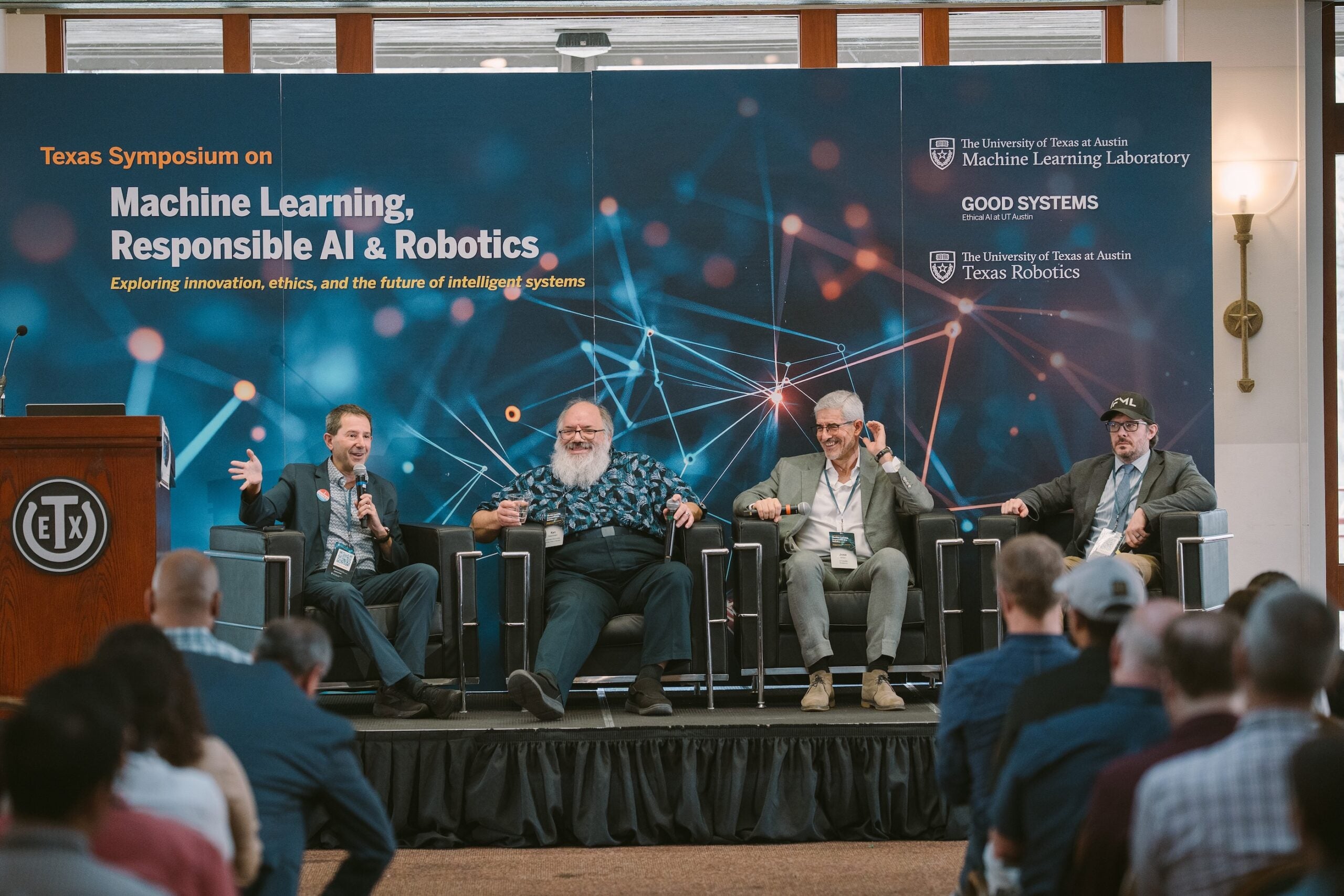
Klivans discussed the value of open source AI models, such as those being developed by the Machine Learning Institute, the Machine Learning Fundamentals Institute, and the Center for Generative AI, in promoting responsible research and technology. All of this leverages vast computing resources, including the largest computing cluster in academia at the Texas Advanced Computing Center. “We’ll be able to train near-frontier-sized models and try out a lot of ideas to find out what’s really going on in these closed-source companies,” Klivans said.
Millan highlighted how UT’s unique culture of collaboration allows the university to lead in interdisciplinary fields such as embodied AI and robotics and build innovative resources for the community. The university’s new academic health system will include a state-of-the-art, digitally enabled hospital. “We can start thinking about and implementing artificial intelligence and robotics in how we integrate them into the hospitals of the future,” Milan said.
Mr. Fleischmann spoke about considerations for the future of work, including government work and national security, and the importance of a human-centered, values-based approach to the adoption and use of AI. “There has never been a more important time to ask these questions. should do we do that? Fleischmann emphasized.
Professor Stone offered encouragement, reflecting on the University of Tokyo’s unique environment in which researchers consider the ethical implications of their work and collaborate with colleagues in the humanities and social sciences to advance scientific discovery and technological progress.


