
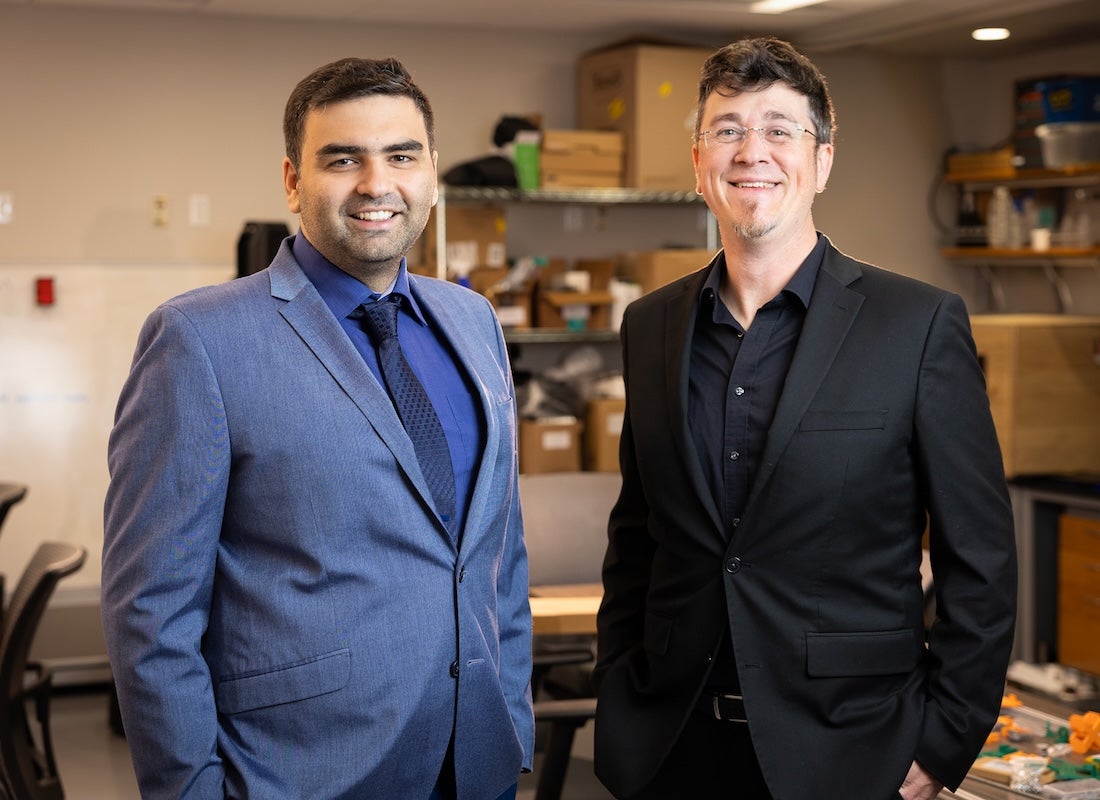
UCF researchers are partnering with Meta Platforms Inc. to study how humans learn to control digital systems using muscle signals. This has the potential to improve human-computer interaction in virtual and augmented environments.
The two-year project, supported by Meta, uses electromyography (EMG)-based human-machine interface technology as a platform to investigate motor learning through a gamified training system. Although EMG systems are often studied in the context of prosthetic limb control, the broader goal of this project is to understand how adaptive interfaces can become more intuitive and tangible over time.
“This meta-support will enable my lab to tackle real-world problems that can have immediate impact on neurotechnology.” — Mohsen Rakshan, Assistant Professor
UCF was selected through Meta’s Competitive Funding Initiative. One reason for this is our interdisciplinary approach, which combines engineering with philosophy and ethics.
Mohsen Rakshan, assistant professor in UCF’s Department of Electrical and Computer Engineering and the Disability, Aging, and Technology (DAT) Faculty Cluster Initiative, and Jonathan Beaver, professor of philosophy and director of the UCF Center for Ethics, will lead the project.
“This meta-support will enable my lab to tackle real-world problems that can have immediate impact on neurotechnology,” says Rakshan. “The impact ranges from people using augmented and virtual reality for entertainment to people with amputations and paralysis who are looking to improve their quality of life. It also gives engineering students the opportunity to incorporate ethical research into their technical work.”
Advances in motor learning using EMG
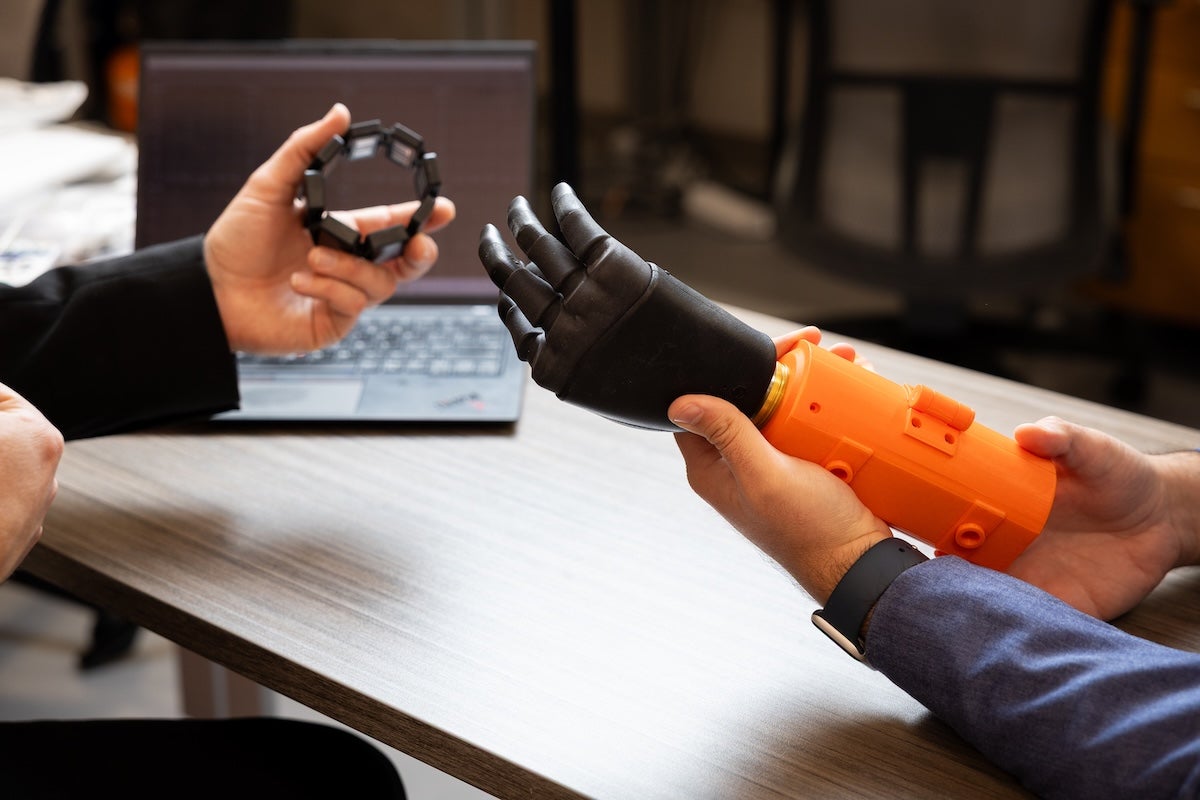
EMG-based interfaces convert electrical signals generated by muscle activity into digital commands, allowing users to control the device through subtle physical gestures. In immersive environments, these systems enable more natural interaction with virtual objects. In rehabilitation settings, it is useful for training neuroprostheses.
The UCF team is using this technology to investigate how people learn new motor skills in digital environments, specifically through gamified interaction tasks designed to enhance human-computer collaboration. Researchers aim to create a system that improves with the user by training both the participants and the signal processing algorithm (often called a “decoder”) simultaneously, through a process known as co-adaptation.
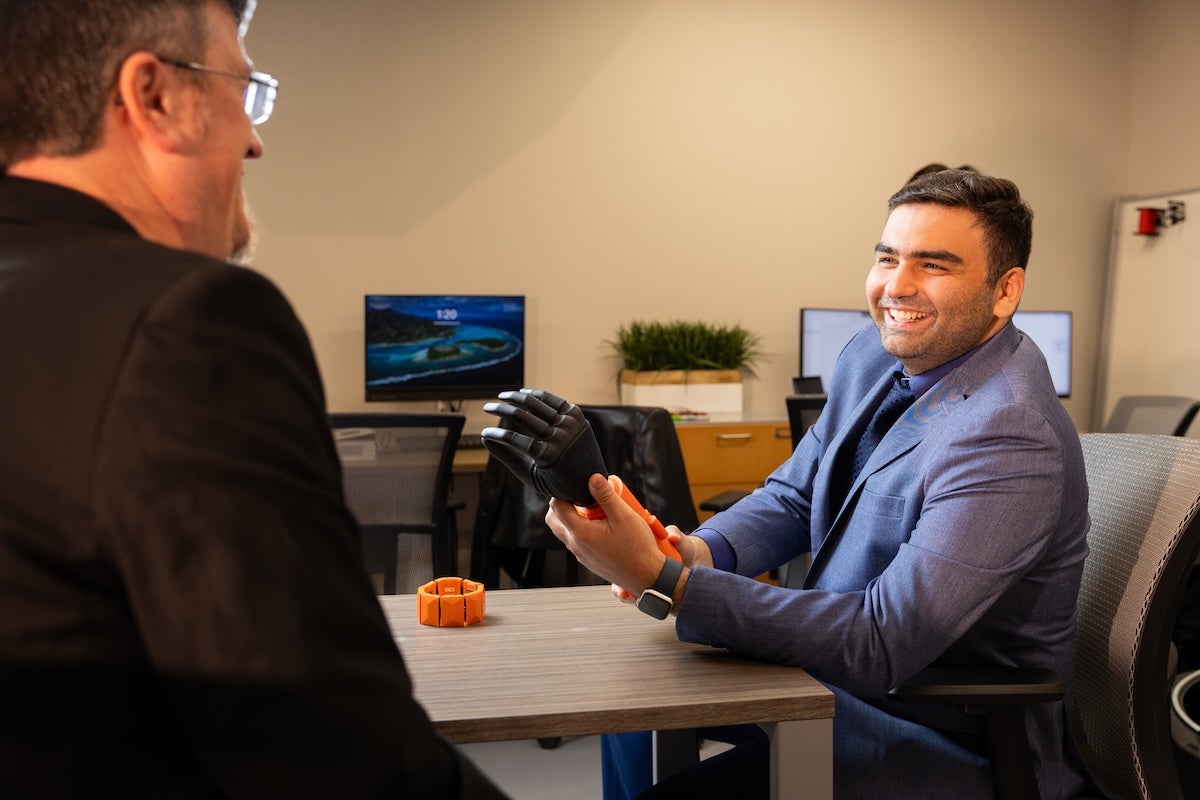
“A significant challenge for most of these systems is that they require continuous retraining or calibration of the decoder,” says Rakshan. “Retraining after each use may discourage the long-term use of these devices. The human nervous system is plastic and can adapt and improve performance over time. However, if the decoder is constantly reset or kept in a static state, the nervous system may not be able to take advantage of that plasticity. We aim to develop a co-adaptive loop between humans and devices.”
Rather than focusing solely on stable decoding, this project investigates how adaptive systems can enhance motor learning, improve user trust, and foster a stronger sense of embodiment in human-machine interactions.
If successful, this research could inform next-generation EMG systems used in immersive computing, rehabilitation technology, and assistive devices.
Incorporating ethics into engineering
What makes this project unique is that it integrates engineering and ethics from the beginning.
“Interdisciplinary collaboration between ethics and technology experts is the best path to responsible innovation.” — Professor Jonathan Beaver
Longitudinal electromyographic studies can reveal subtle movement signals that uniquely identify individuals, raising questions about privacy and data protection. Adaptive systems can also influence the user’s sense of agency, whether the individual feels truly in control of the interface. For example, if an EMG system begins to automatically adjust its interpretation of muscle signals, users may feel that the device is responding intuitively or, in some cases, acting unpredictably. Researchers want to better understand how these dynamics influence trust, feelings of security, and long-term use.
To address these questions, Beever will be embedded within the UCF Machine-Brain Interaction Laboratory (LIMB) and directly contribute to experimental design and evaluation. The team will conduct a structured assessment of subjectivity and embodiment while investigating potential privacy leaks from EMG signal data.
“Interdisciplinary collaboration between ethics and technology experts is the best path forward for responsible innovation,” Beaver said. “Advances in technology must be directed toward good ends. Our research focuses not only on ethical research practices but also on deeper questions of autonomy and agency at the human-machine interface.”
3 stages of research
This longitudinal study involved 30 participants completing 10 sessions over a two-month period, allowing researchers to measure both short-term and long-term motor learning outcomes.
The project will take place in three phases.
Phase 1: Standardizing muscle signal data allows artificial intelligence systems to more accurately interpret user intent.
Phase 2: Train both participants and machine learning models simultaneously. It is a co-adaptive process designed to improve human-computer interaction through gamified tasks.
Phase 3: We conduct a structured assessment of subjectivity, embodiment, and privacy risks while developing a publishable ethical framework for adaptive EMG-based systems.
“There has been a significant increase in industry interest in using biosignals, such as electromyograms from muscles and brain waves from the brain, to interact with virtual and augmented reality, consumer electronics, prosthetics for amputees, and robotic systems for paralyzed patients,” Rakshan says.
This research is supported by donations from Meta. This project is being conducted by faculty and students from UCF’s Department of Electrical and Computer Engineering, the Disability, Aging, and Technology Research Cluster, and the UCF Center for Ethics.


