
As artificial intelligence becomes increasingly integrated into corporate operations and investment strategies, builder.ai It offers a cautionary lesson for investors and business leaders alike.
In the bubble age of artificial intelligence, investors poured billions of dollars into companies that promised an automated future. One of the most famous was Builder.ai, a London-based startup that claimed its AI platform could build custom software applications with minimal human intervention.
The company achieved a $1.5 billion valuation by 2025 and established itself as a pioneer in “no-code” AI-driven development. I started the liquidation process this week.
The trigger was a reported foreclosure of $37 million by creditors. The root causes, according to new disclosures and creditor filings, are inflated sales, rising debt, and a widening gap between the company’s marketing strategy and the reality of its business operations. Instead of primarily leveraging autonomous AI systems, Builder.ai reportedly relied on hundreds of human engineers to perform many of the tasks it purportedly automated.
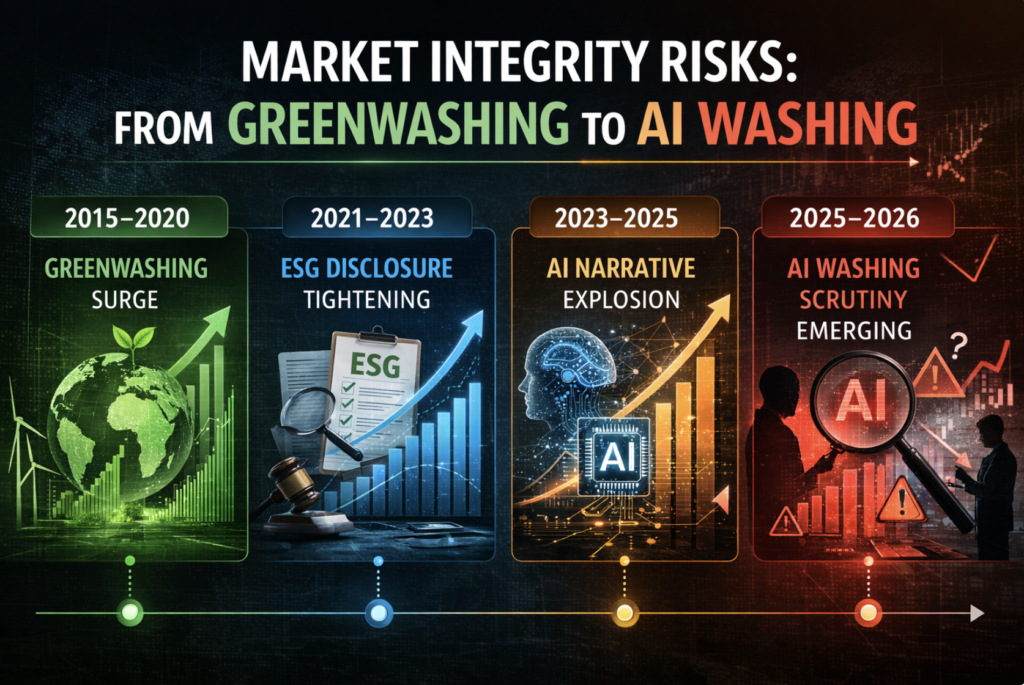
This episode may prove more than just a startup firestorm. For institutional investors, this poses a bigger question. Will “AI washing” become the new green washing?
Get to know your AI provider
Builder.ai promoted itself as an AI-native platform that can automate the software development lifecycle. Promotional materials suggested that customers would be able to assemble advanced applications as easily as they configure products in online stores: the industrialization of coding with artificial intelligence.
This proposal resonated in a market hungry for increased productivity. Corporate customers were looking for cost efficiency. Venture investors sought exposure to scalable AI infrastructure. The private market rewarded companies that could plausibly claim technological defensibility.
Valuations reflect that optimism. Like many AI startups, Builder.ai benefited from a capital environment where growth stories often outweigh technical scrutiny.
But the core value proposition – automation to replace manual labor at scale – seems to be overstated. Most of the development work was performed manually by human engineers, with AI playing a more limited role than advertised, according to people familiar with the company’s operations.
This difference is not semantic. In the AI economy, the difference between tool-assisted productivity and true automation is critical to profitability, scalability, and long-term evaluation.
Earnings, Liabilities and Disclosures
Compounding operational concerns were allegations of inflated revenue reporting. Creditors have pointed out the discrepancy between growth projections and realized cash flows. The company also has a large amount of debt, which increased as liquidity pressures increased.
A reported $37 million foreclosure by creditors appears to have accelerated the collapse. Once key assets were frozen, the company’s ability to continue business deteriorated rapidly, leading to liquidation proceedings.
The more important issue for investors is governance. When revenue numbers are significantly inflated, the inevitable question arises:
- What controls were in place regarding financial reporting?
- How strict was the board’s oversight?
- What due diligence did the investor perform on the technical claims supporting the business model?
The answer is important not only to Builder.ai stakeholders, but also to the broader AI investment landscape.
AI washing: familiar patterns
The ESG movement of the past decade has been marked by a wave of “greenwashing,” where companies exaggerate their sustainability credentials to garner capital inflows. Regulators ultimately responded with stricter disclosure requirements, assurance standards, and enforcement actions.
The Builder.ai incident suggests that the AI sector may be entering a similar phase.
AI cleaning typically takes one of three forms:
- Exaggerating the autonomy or intelligence of systems that rely heavily on human input.
- Label traditional software tools as AI to attract a valuation premium.
- Forecast scalability assumptions that rely on automation that have not yet been achieved.
In an environment where AI multiples often exceed those of traditional software companies, the incentives to blur the distinction can be powerful.
But for institutional investors, the risks are tangible. Over-automation leads to margin compression. Inflated earnings stories distort valuation models. Weak governance erodes exit routes.
Governance as a driving force for evaluation
This collapse highlights broader changes. AI governance is becoming a core financial variable. Institutional investors are increasingly considering:
- Board-level AI literacy
- Technical auditability of AI systems
- Transparency in human-involved processes
- Clear revenue recognition policies tied to actual automation metrics
In the private market, due diligence has evolved to include independent technical verification of AI claims. In the public markets, analysts are beginning to scrutinize whether “AI-powered” earnings reflect true algorithmic outcomes or traditional labor rebranded in modern parlance.
This is a harsh lesson for creditors as well. Debt structures built on a narrative of high-growth automation could prove vulnerable if that premise breaks down.
Market inflection point
Builder.ai’s liquidation does not signal the collapse of the AI sector. On the contrary, the adoption of machine learning and automation in enterprises continues to expand. But the stage where stories alone can sustain billion-dollar valuations may be over.
Disclosure standards are likely to tighten as regulators in the UK, EU and US increase oversight of AI deployments, particularly transparency and accountability. Investors may demand a clearer distinction between AI-assisted services and AI-driven infrastructure.
ESG, a governance pillar often overshadowed by environmental metrics, has the potential to become central to capital allocation in the age of AI.
The key for institutional investors is not to retreat from their exposure to AI. It’s about interrogating it.
- What percentage of your revenue is actually automated?
- What technical audits validate AI performance claims?
- What regulations prevent revenue inflation?
- How resilient is your capital structure under stress?
Following the collapse of Builder.ai, these questions may become standard practice.
If greenwashing defined the reputational risk cycle of the past decade, AI-washing may define the next governance test for capital markets.


