
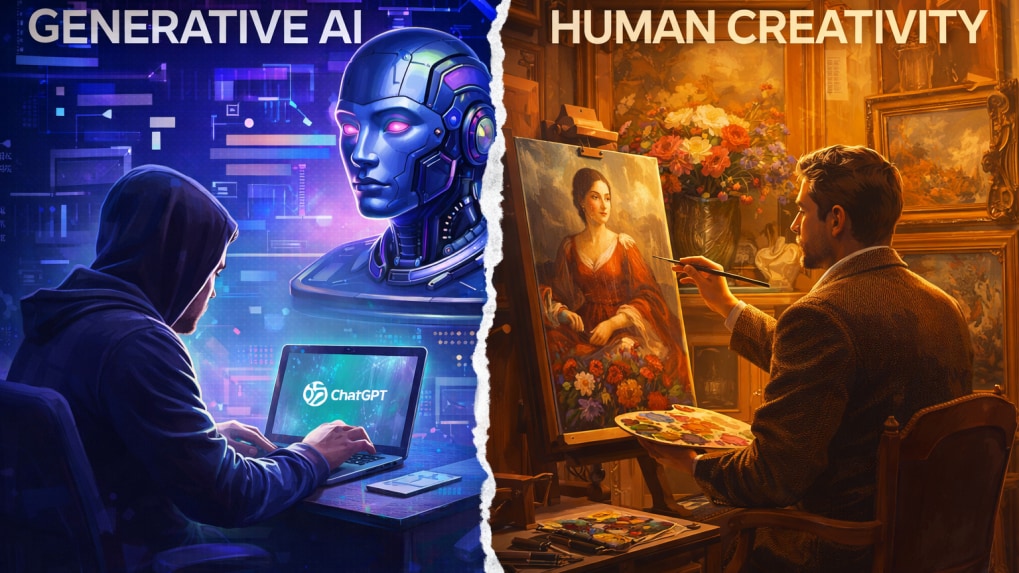
A viral Instagram video has reignited debate about the social impact of generative artificial intelligence, with one creator arguing that rather than democratizing creativity, the technology could deepen cultural and intellectual divides.
The video, posted by AI ethics critic Catarina Doria, argues that generative AI tools are increasingly being promoted to the masses, while wealthy communities continue to prioritize human-made art, writing, and cultural learning.
In the video, the creators suggest that recent advertising trends are revealing new differences between how brands communicate with affluent consumers and how they communicate with general audiences.
Human creativity as a luxury signal
The video references a campaign by luxury automaker Porsche, which emphasizes that its ads are “100% human-made.”
According to the authors, such messages reflect a broader positioning strategy among luxury brands that positions human craftsmanship and artistic labor as premium attributes.
She argued that while high-end brands celebrate human creativity, mass-market campaigns are increasingly experimenting with AI-generated visuals and storytelling.
AI-generated content for large audiences
As an example, the authors referenced a Coca-Cola Company holiday ad that incorporated AI-generated imagery.
Brands often experiment with emerging technologies to reduce production costs or speed up creative workflows, but this video suggests this trend could have a broader impact.
The creators argue that if generative AI becomes a primary tool for creating content for mass audiences, it could create a cultural divide where AI-generated material becomes the norm for the majority of consumers.
“Government. It should be more powerful than corporations”: OpenAI’s Sam Altman attacks Anthropic amid Pentagon fracas
Concerns about over-reliance on AI tools
The video also raises concerns about the increasing integration of generative AI tools into everyday work and learning environments.
Platforms like ChatGPT are now widely used for writing assistance, research summaries, coding help, and content generation.
Proponents argue that these tools can significantly increase productivity and lower barriers to information access. But critics worry that over-reliance on AI could impede independent thinking or reduce motivation to develop certain cognitive skills.
The authors argue that over-reliance on AI-generated outputs could lead people to outsource activities such as writing, analyzing, and synthesizing information.
Educational and cultural concerns
The video also touches on education, suggesting that wealthy families may continue to invest in environments that emphasize traditional intellectual practices such as reading, writing, philosophy, and the arts.
According to the authors, these experiences play an important role in the development of critical thinking and cultural literacy.
In contrast, if people primarily rely on machine-generated summaries or automated writing tools, she argues that widespread reliance on AI-generated content can lead to lower levels of engagement with ideas.
Following Australia, Indonesia moves to block social media for users under 16 years old
The video’s claims sparked debate online, reflecting broader debates about the social impact of generative AI.
Technology companies often frame AI tools as the democratization of creativity, by allowing individuals with no technical or artistic training to create images, videos, or text.
Disclaimer: The views expressed in the video belong to the content creator and are based on publicly shared social media content. They do not necessarily reflect the views of this publication.
First publication date


