The cryptocurrency market has matured from a speculative fringe experiment to a fast, data-intensive financial ecosystem. With 24/7 trading cycles, fragmented liquidity, socio-emotional volatility, and algorithmic competition, digital asset markets present structural challenges that are difficult to address using traditional discretionary trading methods. More and more machine learning (ML) systems are stepping in to fill that gap.
Machine learning doesn’t just accelerate cryptocurrency trading. It is about redefining strategy formulation, risk modeling, portfolio construction, and execution logic. For institutional desks, hedge funds, fintech startups, and even sophisticated retail participants, ML has become a fundamental component of competitive cryptocurrency trading infrastructure.
Complexity of the virtual currency market structure
Cryptocurrency markets differ from traditional stock markets and foreign exchange markets in several ways.
- Achieving continuous trading 24 hours a day, 365 days a year without establishing intensive closing periods
- High retail participation and sentiment-based volatility
- Exchange fragmentation and cross-venue arbitrage inefficiencies
- Rapid innovation cycles (DeFi, NFTs, tokenized assets, layer 2 ecosystem)
- Sensitivity to macro events and regulatory changes
These situations generate large and noisy datasets (order book depth, transaction flows, derivative funding rates, on-chain activity, social signals) that exceed the limits of human cognitive processing. Machine learning systems excel precisely in environments that require pattern recognition within high-dimensional data.
Data as the core trading edge
In algorithmic cryptocurrency trading, data is alpha. ML systems ingest structured and unstructured datasets, such as:
- Historical price and volume time series
- Order book microstructure data
- On-chain wallet flow and transaction clustering
- Social media sentiment indicators
- Developer activity and GitHub commits
- Macro indicators and interest rate forecasts
Supervised learning models, such as gradient boosting machines and neural networks, identify predictive relationships between features and future price movements. Unsupervised methods cluster market regimes and detect changes from a trending environment to a mean-recovery environment.
For traders building systematic strategies, ML models help transform raw data into probabilistic predictions. This essentially answers the question: What is the probability distribution of future returns under current conditions?
Improved signal generation
Traditional technical analysis relies on lagging indicators such as moving averages and RSI. Machine learning enhances signal generation in three main ways:
1. Feature engineering at scale
ML pipelines generate thousands of derived variables, such as volatility measurements, order flow imbalances, and correlation matrices, far beyond what manual traders can calculate. A feature selection algorithm then identifies which signals carry the predicted value.
2. Adaptive learning
Markets evolve. A breakout strategy that works in a bullish cycle can fail in a sideways regime. ML systems continually retrain on rolling windows of data to adapt to regime shifts and structural changes.
3. Nonlinear modeling
Cryptocurrency price trends are rarely linear. Neural networks, random forests, and ensemble models capture nonlinear relationships between variables and allow for more nuanced predictions than linear regression models.
The result is improved signal quality and reduced overfitting, assuming appropriate cross-validation and walkforward testing techniques are applied.
Reinforcement learning and trade execution
Predictive modeling is improving start and stop timing, while reinforcement learning (RL) is transforming execution strategies.
Reinforcement learning agents learn optimal policies by interacting with a simulated trading environment. They aim to maximize a reward function such as:
- sharpe ratio
- Risk-adjusted return
- Minimize drawdown
- Reduced slippage
In high-frequency environments, RL agents optimize order placement across multiple exchanges, reducing market impact and increasing execution efficiency. This is especially important in crypto markets where liquidity fragmentation can cause execution delays under volatile conditions.
Institutional cryptocurrency desks are increasingly deploying RL-based execution engines to reduce transaction costs. This is often a more consistent source of performance improvement than directional prediction.
Sentiment analysis and natural language processing
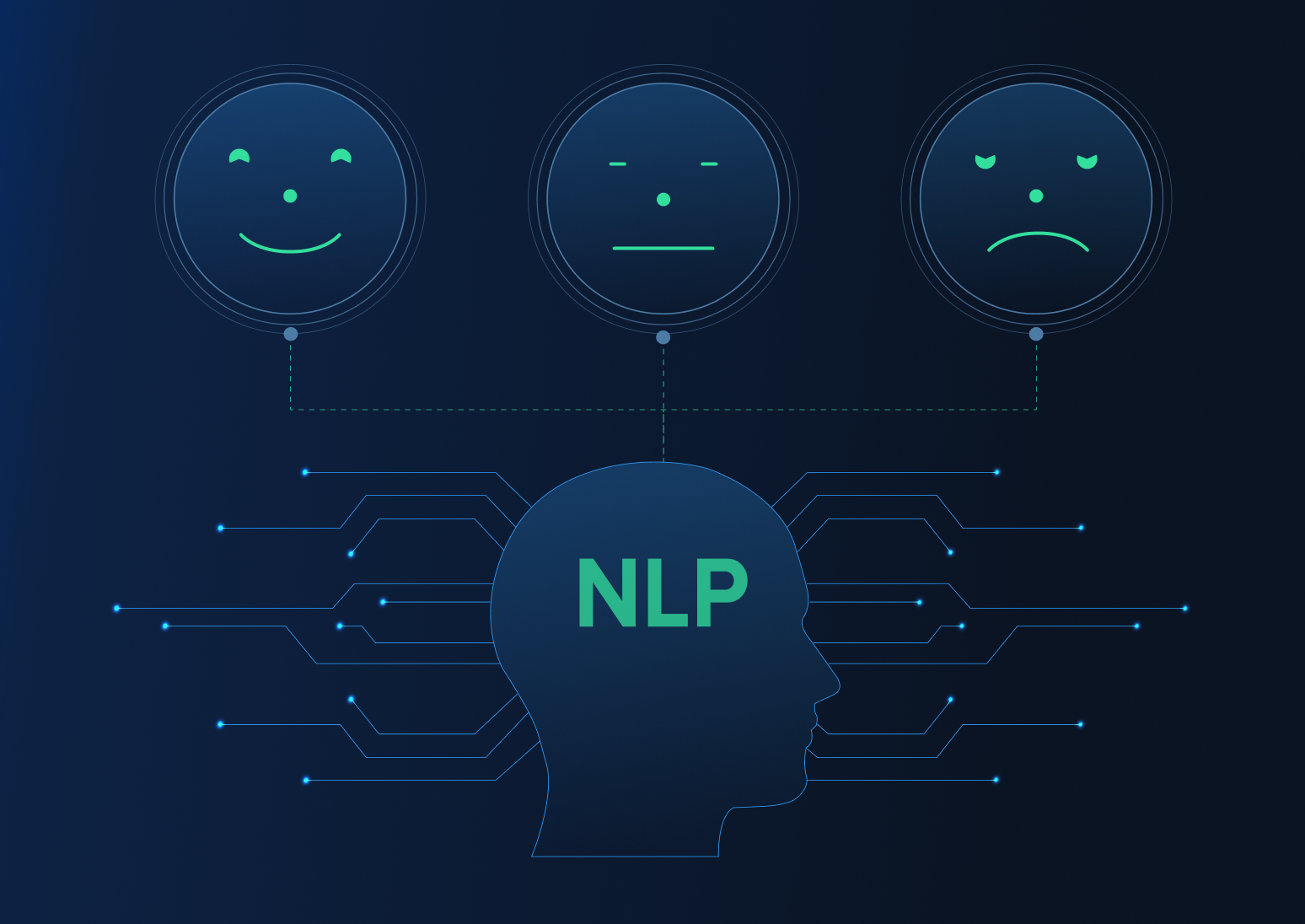
Cryptocurrency markets are uniquely sensitive to changing narratives. Tweets, regulatory announcements, protocol updates, and macro commentary can cause prices to move within minutes.
Natural language processing (NLP) models analyze:
- social media stream
- news articles
- Regulatory notification
- Blockchain governance proposal
Transformer-based architectures can classify emotions, detect emerging themes, and quantify emotional intensity. These outputs become structured inputs to the predictive model.
For example, negative sentiment surrounding currency solvency may spike sharply prior to liquidity withdrawals and price declines. ML models trained on historical sentiment and price correlations can detect and act on these signals faster than discretionary traders.
Risk management with predictive analytics
Risks in cryptocurrency markets include not just volatility but also counterparty risk, liquidity shocks, and system-wide contagion events.
Machine learning enhances risk management by:
- Predicting value at risk (VaR) using nonlinear distributions
- Identify correlation breakdown between tokens
- Detection of abnormal currency outflows
- Model tail risk scenarios with ML-enhanced Monte Carlo simulation
Advanced anomaly detection algorithms alert you to abnormal trading activity or liquidity collapses in real time. This allows portfolio managers to dynamically rebalance before drawdowns increase.
In volatile markets, capital preservation is often more important than directional accuracy. An ML-driven risk engine provides that layer of defense.
Portfolio optimization in a multi-asset crypto environment
The crypto ecosystem currently includes thousands of tokens ranging from:
- layer 1 protocol
- Layer 2 scaling solution
- DeFi governance token
- stable coin
- Tokenization of real-world assets
Machine learning helps you:
- Correlation clustering
- Dynamic asset weighting
- System-aware allocation strategy
- Portfolio construction that adjusts for volatility
Unlike static mean-variance optimization, ML models continually update the covariance matrix and expected return estimates to reflect real-time market conditions.
For institutional investors considering digital assets, ML integration increases diversification and capital efficiency.
Democratizing algorithmic tools
While hedge funds and private trading firms pioneered ML-driven strategies, access to machine learning frameworks was democratized.
Cloud infrastructure, open source libraries (TensorFlow, PyTorch), and API-based exchange connectivity enable advanced strategy development with relatively little capital.
However, this democratization increases competition. As more participants introduce similar models, alpha decay accelerates. A sustainable edge currently depends on:
- own data source
- Superior feature engineering
- Robust backtesting framework
- efficient infrastructure
This competitive environment drives continuous innovation in strategy design.
Foundation Layer: Asset Acquisition and Infrastructure
Before deploying advanced strategies, traders must build a secure acquisition and storage pipeline. understanding How to buy Bitcoin Doing it safely is a fundamental step in building an algorithmic trading infrastructure.
Before allocating capital, institutional investors evaluate an exchange’s credibility, custodial structure, API robustness, and compliance requirements. Similarly, retail traders often start by learning how to buy Bitcoin through regulated platforms that offer a secure onboarding process.
Purchasing Bitcoin may seem simple, but your choice of infrastructure will impact the execution of your downstream strategy. API latency, withdrawal constraints, and order book depth directly impact algorithm performance.
On-chain analytics and machine learning
Unlike traditional markets, cryptocurrencies provide transparent blockchain data. On-chain analytics provides insights not available in stocks or FX.
Machine learning models analyze:
- Whale wallet movement
- Exchange inflow and outflow trends
- Miner behavior
- Stablecoin issuance rate
- Smart contract interactions
Clustering algorithms identify wallet entities and behavioral patterns. Predictive models correlate on-chain accumulation stages with future price increases.
For example, continued accumulation by long-term holders and a decline in foreign exchange reserves can be a sign of supply compression. ML systems detect these structural imbalances early.
Challenges and limitations
Despite its benefits, machine learning in crypto trading faces significant challenges, including:
overfitting
Crypto data sets are relatively new. Limited history depth increases the risk of noise in curve-fitting models.
regime instability
Macro shocks, regulatory changes, and black swan events can rapidly invalidate trained models.
data quality
Exchange wash transactions, API mismatches, and unreliable volume reporting can corrupt datasets.
Infrastructure risk
Model performance depends on the reliability of execution. If an exchange goes down during a spike in volatility, the strategy’s returns can suffer.
Robust model validation, stress testing, and scenario analysis are essential safeguards.
Ethical and regulatory considerations
As ML-driven trading expands, regulators are scrutinizing algorithmic transparency and market manipulation risks. Flash crashes caused by automated systems highlight system vulnerabilities.
Responsible deployment requires:
- Clear governance framework
- Auditability of trading algorithms
- Risk parameter constraints
- Compliance monitoring
Institutional adoption will depend in part on aligning ML trading operations with evolving regulatory standards.
Strategic fusion of AI and digital assets
Machine learning does more than just power cryptocurrency trading; it enables a structural transition to an intelligent and automated financial system.
From predictive modeling and execution optimization to on-chain analytics and dynamic risk management, ML systems are embedding intelligence into every layer of the digital asset market.
For new entrants, the journey often begins with understanding how to buy Bitcoin, but the competitive front quickly shifts to algorithmic sophistication. As adoption increases, the intersection of artificial intelligence and decentralized finance will continue to reshape capital markets.
In a few years, the distinction between “cryptocurrency trading” and “AI-driven trading” may disappear completely. The key participants will be those who treat machine learning as a core trading infrastructure rather than an optional extension.
In a market defined by volatility, speed, and innovation, machine learning offers things that human traders cannot: scalable pattern recognition, adaptive learning, and probabilistic accuracy. This combination is transforming cryptocurrency trading from a speculative experiment to a data science-driven field.