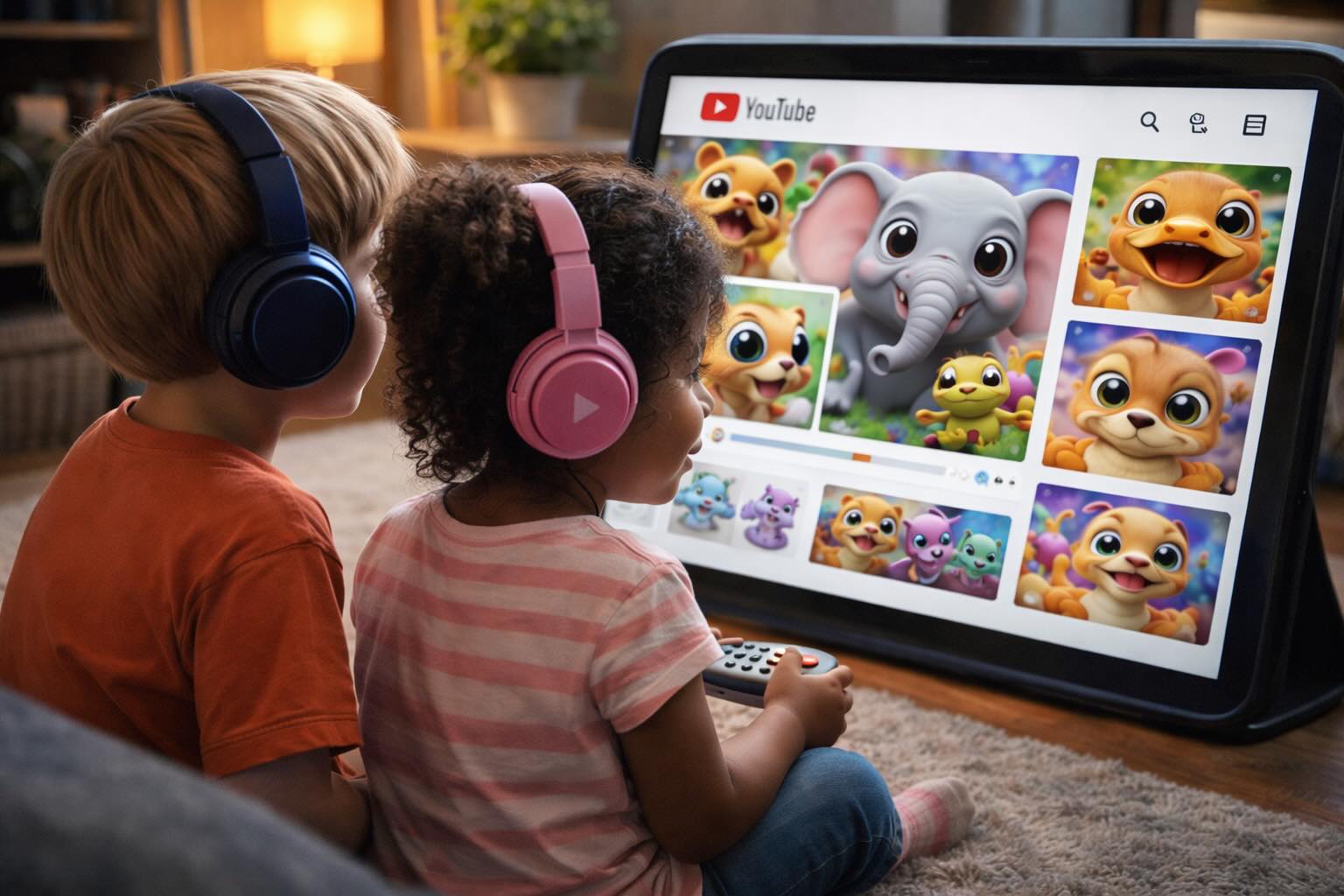
A new study has found that young children are being bombarded with AI-generated videos presented as educational materials, raising new questions about YouTube’s recommendation system. This issue appears to sit at the intersection of platform design, disclosure rules, and the growing economics of low-cost synthetic content.
New research by new york timesreported by The Vergefound that YouTube recommended a large amount of AI-generated videos to children who watched established children’s content such as CoComelon, Bluey, and Ms Rachel. According to the report, more than 40% of the short videos recommended after these viewing sessions appeared to include AI-generated visuals, suggesting that the synthetic material was not peripheral to children’s feeds, but rather was systematically surfaced by the platform’s recommendation engine.
The material in question is not presented as experimental AI media. Rather, they are often packaged as suitable for toddlers and preschoolers, with videos that claim to teach animals, colors, songs, and other basic concepts. Previous parallel report from wired We found that YouTube’s AI videos for kids frequently rely on bright animation, familiar nursery rhyme conventions, and child-friendly explanations, even if the underlying content is poorly created, disjointed, or outright misleading. The concern is not the existence of AI-generated clips, but rather their presentation as trustworthy educational content.
This is important because YouTube continues to market YouTube Kids as a more controlled environment for kids. The company says in its own documentation that the app is built for children 12 and under and offers parents a choice in content settings, including the option to manually approve content. YouTube also says parents can block searches, limit viewing time, remove individual videos or channels, and rely on age-based viewing categories. In theory, YouTube Kids is presented as a filtered alternative to the main platform, rather than just a simplified front end.
However, this controversy highlights the structural weaknesses of that model. That said, parental controls won’t necessarily solve the problem if extensive recommendation and classification systems already allow low-quality synthetic content to be treated as appropriate for children. wired In a previous report, we noted that many parents still use the main YouTube app rather than a separate children’s app, and that the platform has long faced criticism for hosting videos that appear to be aimed at children at first glance but turn out to be inappropriate upon closer inspection. The current wave of AI appears to be recreating that problem in a newer, cheaper form.
The central policy gap concerns labeling. YouTube’s official rules require creators to publish altered or synthetic content if it looks realistic, and the platform says it may add the label itself in some cases. However, the guidance published by the company also makes clear that unrealistic or animated content generally does not require disclosure to the public. This distinction is important because while many of the AI-made children’s materials currently attracting criticism are clearly artificial, they can still be mistaken for harmless educational entertainment. In fact, some of the content most likely to reach children may be exempt from disclosure systems designed for realistic deepfakes.
Nevertheless, YouTube is taking some enforcement action. Report the latest information new york times According to the findings, the five channels cited were suspended from the YouTube Partner Program after the cases were shared with the company. This is consistent with YouTube’s broader monetization rules, which exclude repetitive or mass-produced “inauthentic” content from being monetized. The platform strengthened its policy language in July 2025, saying the changes were aimed at clarifying long-standing restrictions on spam-like and low-effort uploads, rather than introducing entirely new rules.
The company also recognizes the broader “AI slop” problem. In a 2026 letter about the future of the platform, YouTube CEO Neil Mohan said the rise of AI has raised concerns about low-quality content and that the company is building on its existing anti-spam and anti-clickbait systems to reduce the spread of repetitive low-quality AI material. This statement shows that YouTube recognizes the scale of the problem, but it also highlights how reactive the platform remains. In other words, the recommendation mechanism is already distributing the content that the company currently wants to suppress.
The issue is also relevant in Europe, where child safety on large platforms is already under regulatory scrutiny. The European Commission is considering safeguards for minors on YouTube and other major services under the Digital Services Act, including issues around age verification and preventing harmful content from reaching children. This followed the EU’s request for information on the protection of minors from YouTube and TikTok in early 2023. Therefore, the latest coverage of AI-generated videos for children is likely to influence the existing regulatory debate.
For YouTube, the question is not simply whether individual videos violate its policies, but whether the platform’s incentives, labeling rules, and recommendation systems work together to create channels through which synthetic, low-quality material can be pushed to very young audiences under the guise of educational content. Parents have more control, such as setting only approved content, but the burden still appears to be on families to distinguish between reliable children’s programming and content produced quickly and cheaply at scale. The latest findings suggest that this is no longer a marginal moderation issue, but a test of whether YouTube’s child safety framework is keeping pace with generative AI.
Post views: 2,044