
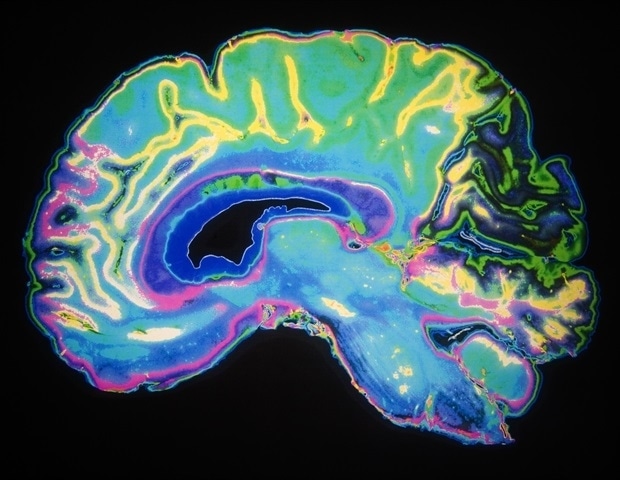
The Dartmouth study challenges the conventional view that the amygdala, a two-sided structure deep in the brain involved in emotion, learning, and decision-making, is simply the brain’s primitive “fear center,” reflexively driving us to avoid things we fear, from heights and confined spaces to spiders and large crowds.
The researchers report: nature communications The amygdala is much more complex, acting as a sophisticated mediator that helps the brain choose between competing strategies for learning and decision-making.
“Historically, the amygdala has been studied from the perspective of fear learning, but it has been generalized to reward learning,” says Jae Hyung Woo, a doctoral candidate in psychological and brain sciences and lead author of the study. “Our main hypothesis was that the brain must have other functions, given its extensive connections with other parts of the brain.”
Other functions of the amygdala appear to surface under uncertainty, when the brain is faced with two types of learning strategies in the pursuit of reward. In the study, the researchers used the example of making coffee with an unfamiliar machine.
An action-based approach lets you try what you did the last time you operated a similar machine and press a button that worked before. In contrast, stimulus-based approaches focus on and can select a critical feature, such as a flashing light on a machine.
“People classify the amygdala as an emotional fear system, but there’s nothing really primitive about the brain when we talk about this region,” says Alireza Soltani, lead author of the study and associate professor of psychology and brain sciences at Dartmouth College.
“The key difference is whether learning should be tied to the motor action or to the identity of the stimulus,” Soltani says. “Behavior-based learning involves considering specific motor actions that may lead to reward, whereas stimulus-based learning allows for more flexibility because it allows you to evaluate and select the desired stimulus without immediately considering the actions required to get there.”
Because these two learning modes occur simultaneously, the researchers hypothesized that there should be regions in the brain that mediate these two learning modes in order to select the path most likely to lead to better outcomes. The researchers found that damage to the amygdala appears to disrupt this mediating process, suggesting that the amygdala plays this important role.
The researchers developed a computational model based on reinforcement learning to track how the brain assigns weights to behavioral and stimulus-based learning strategies when it is unclear which strategy is best for a task. They found that the amygdala initially pivots between the two systems, but as it gathers more information, it chooses the system with a more reliable model.
But it turns out that when the amygdala is damaged, mediation becomes more random because the brain struggles to update its assessment of which learning systems are most useful. They also found that the brain is predisposed to action-based learning from the beginning, and its ability to mediate between the two systems is impaired. As a result, overall behavior has become stricter.
“A healthy amygdala facilitates exploration between alternative models, allowing us to choose things we wouldn’t otherwise choose and learn from them,” Soltani says.
“Ultimately, successful learning requires finding more reliable models,” he says. Their results may help explain why in previous studies, damage to the amygdala impaired stimulus learning in some cases and improved it in others.
One of the oldest regions of the brain, the amygdala is essential for survival by detecting threats in the environment and triggering an immediate response. As the brain evolved, other systems may have become connected to it, giving the amygdala a more subtle and purposeful role in decision-making.
“The fact that the amygdala controls so many systems in the brain and has so many connections suggests that it actually does something more important than simply communicating fear and emotion,” Dr. Wu says. “This is not to say that the amygdala is not responsible for fear. We are reframing the role of the amygdala as a mediator between multiple learning systems.”
The research team’s findings could have implications for how phobias and other anxiety disorders are treated. Some people cope with their fear of spiders by simply avoiding them, which indicates a bias toward stimulus learning. “Fear is tied to a stimulus, which stiffens the response and makes it difficult to overcome,” Soltani says.
This study suggests that shifting attention away from fear-inducing stimuli to an action-based mode of exploration may be more effective. For example, instead of focusing on a spider and trying to convince yourself that it’s not really a threat (a stimulus-based approach), consider reconstructing the situation through a series of repeated actions. For example, place a cup on top of a spider and then approach the spider.
“In this way, the amygdala, one of the brain’s mediators, can favor action-based learning, which is a more reliable predictor of outcome (no harm). This promotes exploration and flexibility, and helps overcome fear even when the stimulus initially carries strong negative associations,” says Soltani.
The research team is currently analyzing recordings of neural activity in the prefrontal cortex during different tasks to understand how neurons interact during the mediation process. In collaboration with researchers at UCLA, he is also conducting experiments in rats to examine specific neural pathways between the amygdala and the prefrontal cortex.
Wu and Soltani collaborated with researchers at the National Institute of Mental Health.
sauce:
Reference magazines:
DOI: 10.1038/s41467-025-66745-1


