
The Australian Institute of Business (AIB) has redesigned its MBA to make artificial intelligence literacy and responsible AI leadership core management competencies in response to the rapid changes already reshaping Australia’s workforce.
Backed by proprietary research on the use of ChatGPT in higher education, the primarily online provider has reimagined the way AI is taught, assessed, and supported across MBA programs. Central to the redesign is a new elective, Artificial Intelligence for Business, now available to all MBA students and positioned as a leadership competency rather than a technical specialization.
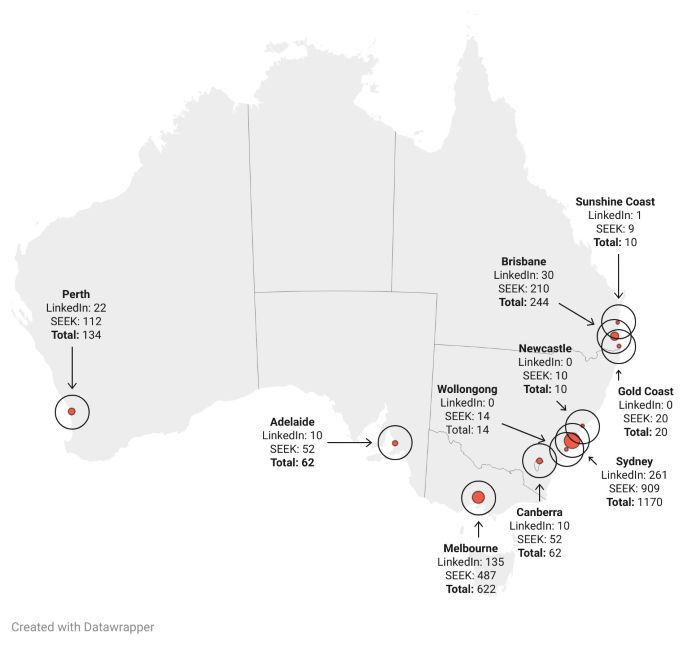
The move reflects growing evidence that AI is no longer limited to specialist roles. AIB’s analysis of LinkedIn and SEEK job postings identified 2,372 roles in Australia that mentioned AI either in the title or description. Titles such as “AI Evangelist,” “AI Enablement Lead,” and “AI and Automation Consultant” are becoming increasingly common and are responsible for defining how AI is managed, deployed, and incorporated into an organization’s decision-making.
AIB data shows demand is accelerating. In Sydney alone, the number of AI job ads posted on SEEK increased from 651 in March 2025 to 909 in December 2025, an increase of 40%. Brisbane experienced similar growth, with listings increasing from 151 in July 2025 to 210 by December, a 39% increase in just six months. Overall, Sydney accounted for 1,170 AI reference roles, Melbourne 622 and Brisbane 244.
Against this backdrop, AIB says traditional approaches to teaching AI as a purely technical or optional feature no longer reflect workplace realities. “AI has changed our practices both in academia and in the workplace,” said Associate Professor Sumesh Naar. “This requires a new managerial mindset with a strategic rather than a purely technical view of AI.”
The Artificial Intelligence for Business elective is designed to give future managers a practical understanding of how AI works within real-world organizations and how it can be used to support growth, decision-making, and competitive advantage, rather than being limited to cost reduction and automation. Students will learn the fundamentals of AI, including large-scale language models, before moving on to applied use cases, governance considerations, and ethical decision-making.
This course also addresses the risks associated with over-reliance on AI tools. AIB research found that students often place too much trust in AI output, even though the tools often overlook context and nuance. In response, the MBA now places greater emphasis on personal judgment, real-world application, and reflective analysis, requiring students to explain and defend their decisions with examples drawn from their own workplaces.
“Our research shows that students need clear rules and support to learn how to use AI correctly,” said Associate Professor Mulyadi Robin, Associate Dean of Teaching and Learning at AIB. “This applies not just to how you complete your assigned work, but also to how you check and question the AI’s output.”
By incorporating these expectations into assessment design, AIB aims to strengthen students’ ability to validate information, challenge AI-generated responses, and distinguish between what a machine can do and what human judgment still matters. The agency argues that this capability will become increasingly central to employability as AI replaces some roles or creates new roles focused on enablement, oversight and governance.
AIB’s analysis of employment data confirms that shift. Many of the AI-related roles identified were leadership and management roles responsible for shaping how AI is used across products, services, and internal processes, rather than technology development roles. In many cases, AI responsibilities now sit alongside broader management functions rather than within an independent technology team.
To illustrate the geographic spread and growth of these roles, AIB mapped the number of jobs with AI in the title or description across Australia.
AIB says the MBA redesign reflects broader changes in business education, with AI literacy becoming a fundamental expectation rather than a niche competency. “We strongly believe that our efforts have positioned AIB as a national institution at the intersection of AI, business education, and leadership development,” Robin said.
Founded more than 40 years ago, the Australian Institute of Business is Australia’s largest online MBA provider, offering fully online accredited graduate business degrees to more than 20,000 students and graduates from 95 countries. As competition for graduates who can provide responsible leadership in AI-enabled organizations increases, AIB’s approach signals a move to put governance, ethics, and strategic use at the center of management education.


