- Greenlight Capital has permanently exited its position in HP Inc. (NYSE:HPQ).
- The fund cited uncertainty around AI-driven growth and rising memory prices as key risks.
- The move reflects a change in institutional sentiment regarding HP’s ability to cope with evolving technology and cost pressures.
For context, HP stock is trading at $19.44, down 12.1% over the past month and down 37.5% over the past year. Over three and five years, NYSE:HPQ is down 28.7% and 11.9%, indicating Greenlight’s exit after multiple years of poor performance. This stock pressure, combined with new concerns about AI and component costs, helps explain why some institutional investors are reevaluating their exposure.
The important questions for you as an investor now are: How does HP intend to position its PC and printing businesses around AI-related demand, and how can it effectively manage rising memory and component costs? Greenlight’s decisions do not determine your own decisions. However, this is a signal to pay more attention to HP’s capital allocation, product roadmap, and management’s comments on AI opportunities and input cost risks.
Stay up to date with HP’s most important news stories by adding HP to your Watchlist or Portfolio. Or explore our community and discover new perspectives on HP.
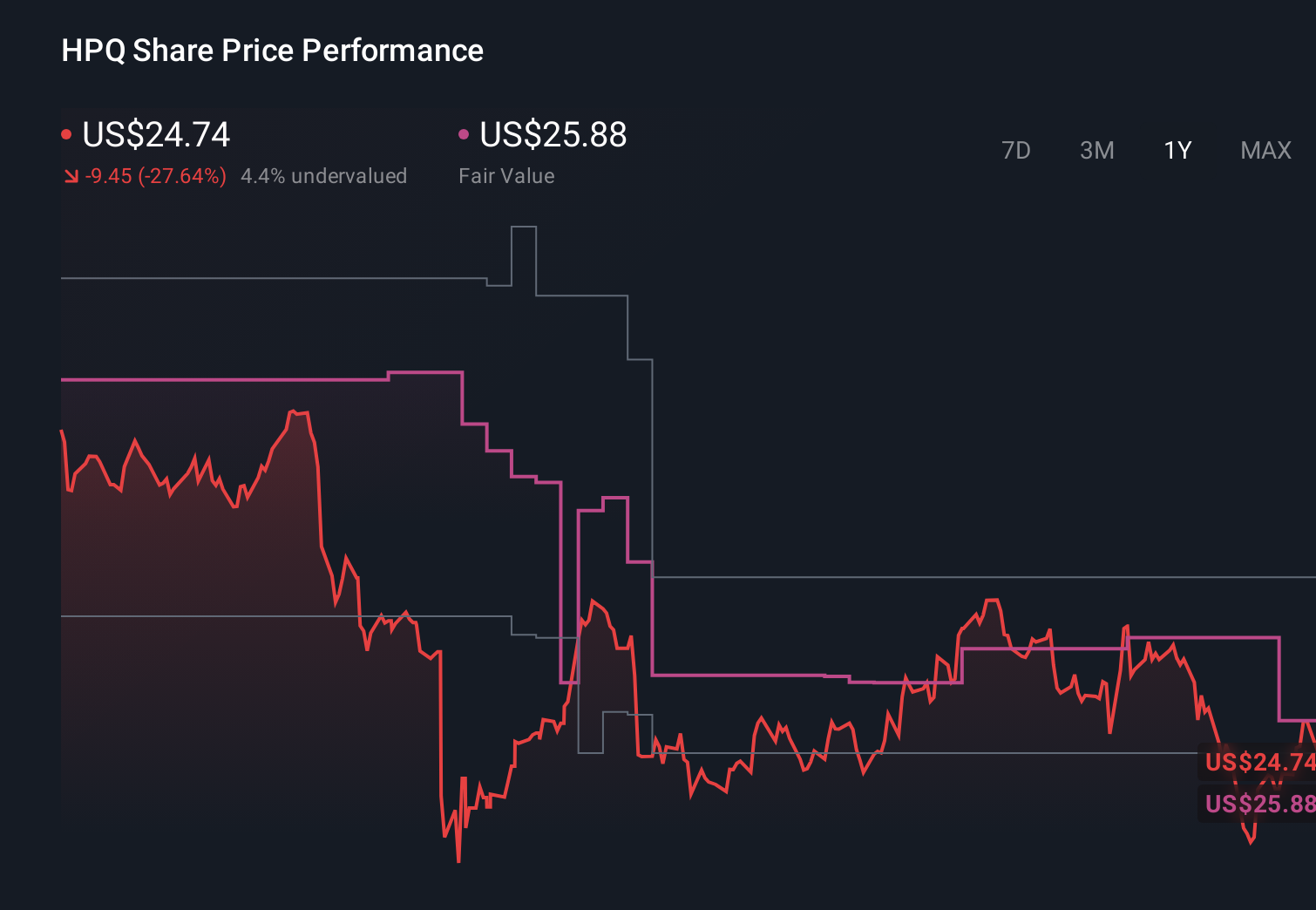
Why HP offers great value
Greenlight Capital’s exit from HP looks like a deliberate vote on two fronts: AI-driven demand and component costs. The company effectively claims that recent Windows refreshes have helped, but AI PCs haven’t yet delivered enough revenue and margin gains to offset the risks from rising memory prices, which could weigh on HP’s profitability in an area where it already competes closely with companies like Dell and Lenovo.
How does this match up with the HP description you saw?
This exit contrasts with the existing narrative that emphasizes AI-powered PCs, premium devices, and cost reductions as potentially supporting HP’s long-term earnings profile. While previous discussions have pointed to AI devices and recurring services as ways to offset pressures in traditional print and PC markets, Greenlight’s move highlights that these benefits may take time to emerge or be partially offset by higher input costs.
HPQ: Weighing risks and benefits after exiting an institution
- ⚠️ Rising memory prices are a core risk as they can squeeze hardware margins and force PC pricing that impacts unit sales.
- ⚠️ Structural headwinds in the printing industry and intense price competition in PCs raise questions about how much flexibility HP has if costs remain high.
- 🎁 HP continues to return cash through a dividend of $0.30 per share, which may be attractive if you value stability of income.
- 🎁 Continued AI PC launches and managed print or device services give HP a path to higher value and recurring revenue growth once adoption improves.
What to watch next
The key things to follow from here are how HP talks about memory cost pressures on its upcoming conference call, whether its AI-focused PCs and services gain traction against rivals like Dell and Lenovo, and how committed the company remains to its dividend and cost plans if the going gets tough. If you want to know how different investors think about that trade-off, check out Simply Wall St’s company description page for more insight into the community description and HP description.
This article by Simply Wall St is general in nature. We provide commentary using only unbiased methodologies, based on historical data and analyst forecasts, and articles are not intended to be financial advice. This is not a recommendation to buy or sell any stock, and does not take into account your objectives or financial situation. We aim to provide long-term, focused analysis based on fundamental data. Note that our analysis may not factor in the latest announcements or qualitative material from price-sensitive companies. Simply Wall St has no position in any stocks mentioned.
Evaluation is complex, but we will simplify it here.
Discover whether HP is undervalued or overvalued with our in-depth analysis. Fair value estimates, potential risks, dividends, insider transactions, and financial condition.
Access free analysis
Do you have feedback on this article? Interested in its content? Please contact us directly. Alternatively, email editorial-team@simplywallst.com.