Investors have long been concerned about whether the company’s business will be able to reap meaningful returns from its massive AI investment.
issued Thursday, January 29, 2026 · 10:04 am
[SAN FRANCISCO] Meta Platforms’ better-than-expected revenue outlook helped ease Wall Street’s concerns about its unprecedented spending plans on artificial intelligence (AI) this year.
The social networking giant beat revenue expectations for the holiday quarter and gave a strong outlook for the current period in its earnings report on Wednesday (January 28). Improvements in the online advertising business will allow Meta to spend hundreds of billions of US dollars on AI infrastructure over the next few years.
Meta’s stock price rose more than 11% in after-hours trading.
Meta has predicted record spending in 2026, driven by CEO Mark Zuckerberg’s aggressive campaign to accumulate the infrastructure, computing power and talent it believes is needed to win the competitive AI race.
Zuckerberg said his company’s strategy focuses on “frontloading” computing power in preparation for achieving the company’s goal of superintelligence. Superintelligence is a theoretical milestone that would allow AI to match or even surpass humans in many tasks.
To get there, Meta is spending aggressively. The company expects full-year capital spending to be between $115 billion and $135 billion, higher than analysts’ average estimate of $110.6 billion, according to data compiled by Bloomberg. If Meta reaches the high end of its range, it would represent an increase of about 87 percent from 2025, a record year in which capital spending exceeded US$72 billion.
navigating asia
new world order
Get insights delivered to your inbox.
Zuckerberg said on a call with investors that he is looking forward to the “massive acceleration of AI” that has been brewing within the technology industry for more than a year. After overhauling Meta’s AI program in 2025, Zuckerberg said Meta would soon release new models and products, but the Facebook founder’s short-term expectations were unusually muted: “We expect the first model to be good, but more importantly, it shows the rapid trajectory we’re on.”
He reiterated on the conference call that Meta’s future models may not surprise at launch, but will improve meaningfully over time.
To fund these big-ticket projects, Meta relies heavily on its advertising business. The owner of Facebook, Instagram and WhatsApp said first-quarter revenue would be between $53.5 billion and $56.5 billion, beating the average analyst estimate of $51.3 billion.
Related items
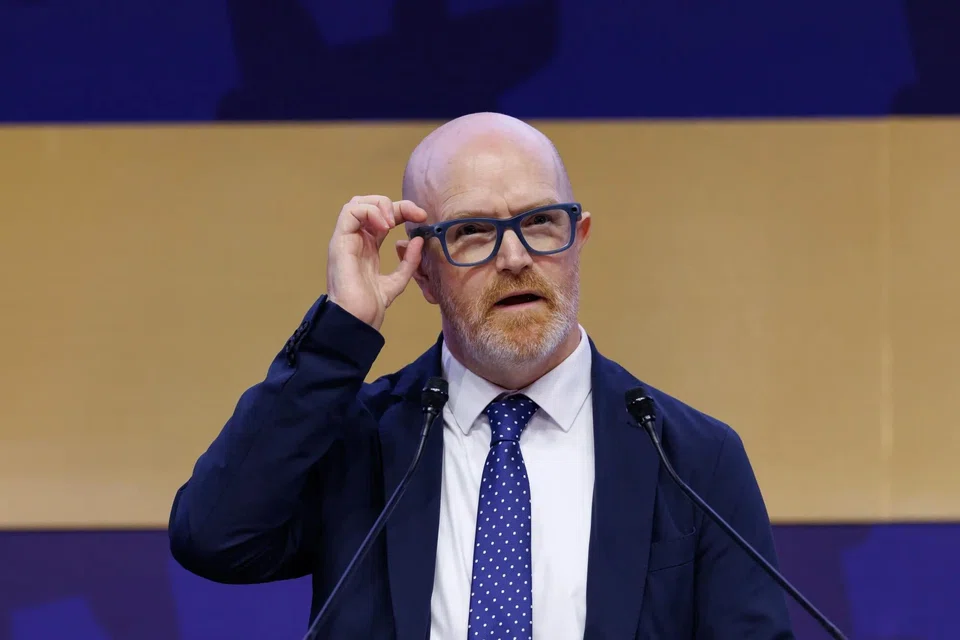
Chief Financial Officer Susan Lee spent much of the call talking about how Meta’s investments in AI are helping the company better target its ads, provide more personalized content recommendations to users and keep them scrolling.
Investors have long been concerned about whether Meta’s business will be able to reap meaningful returns from its massive AI investment. “Meta’s lack of model capabilities relative to Frontier’s large-scale language models leaves uncertainty about monetizing AI investments relative to hyperscale cloud peers,” Bloomberg Intelligence analyst Mandeep Singh said last week.
However, those concerns were allayed on Wednesday. The social media giant reported fourth-quarter revenue of $59.9 billion, beating Wall Street’s average estimate of $58.4 billion. That was a sign that while spending was rising, the core business supporting those investments was also growing faster than expected.
Investors were less patient with Microsoft, as its stock price plummeted after it announced similarly ambitious 2026 spending forecasts on Wednesday.
AI investment
Meta’s AI investment strategy hasn’t always been well-received. Back in October, when Li warned investors that capital spending in 2026 was expected to be “significantly higher” than in 2025, some investors were spooked and the stock price fell by as much as 14%. Concerns remain that Meta’s spending won’t lead to meaningful new lines of business.
During Wednesday’s conference call, Zuckerberg was asked multiple times to talk about his vision for the AI business, but his answers were vague and promised to share more as the year progresses.
Despite the lukewarm reaction from Wall Street, Zuckerberg’s momentum continued. At a high-profile White House dinner and other appearances, Meta’s CEO pledged to spend $600 billion in the U.S. by 2028 to support the expansion of AI technology, infrastructure and workforce.
Mr. Lee added in Wednesday’s earnings call that Meta will continue to seek external financing for some of its infrastructure projects.
Zuckerberg said these investments are being made for long-term goals. “We have one of the most talented research operations in the industry, and some early indicators look positive,” he told investors. “But I think this is a long-term commitment.”
Despite Meta’s strong quarterly results on Wednesday, Hargreaves Lansdown analyst Matt Blitzman said, “The real headline is the relentless increase in capital spending.” “As investors absorb these aggressive investment plans, it would not be surprising to see stock price reactions dampen,” he said.
Meta’s advertising business will help it weather some of the AI uncertainty, but another division continued to suffer heavy losses. Reality Labs, a division of Meta focused on virtual reality and AI-enabled hardware, had fourth-quarter sales of $955 million and a fourth-quarter operating loss of more than $6 billion. This brings total losses in 2025 to more than US$19 billion.
Zuckerberg told investors that these losses won’t last forever. “We expect Reality Lab’s losses this year to be similar to last year, but this will probably be the peak as we start to gradually reduce our losses,” he said.
Earlier this month, Meta cut staff across Reality Labs by about 10% as part of a move to shift resources away from some virtual reality products and toward more AI-focused businesses, including AI wearables like Ray-Ban Metaglasses. bloomberg
Decoding Asia Newsletter: A guide to navigating Asia in the new world order. Sign up here to get the Decoding Asia newsletter. Delivered to your inbox. free.