
This voice is automatically generated. Please let us know if you have any feedback.
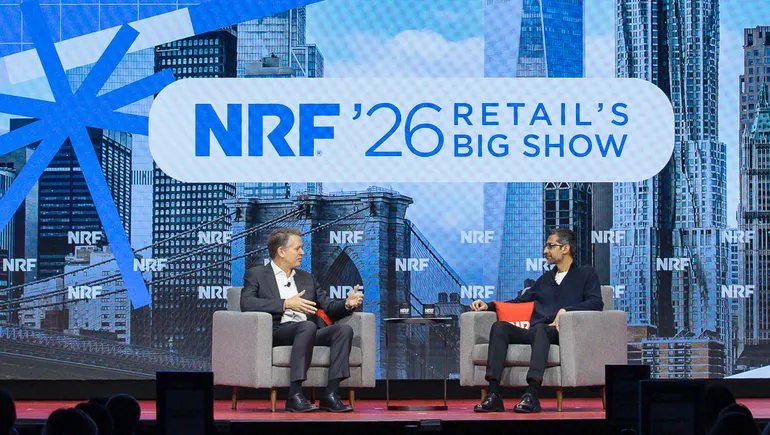
NEW YORK — Retailers at the National Retail Federation’s 2026 Big Show in New York City this week sought to balance endless conversations about AI with an emphasis on human intelligence.
“Right now, we’re really looking at AI as a productivity tool rather than a replacement for human resources,” Ed Stack, executive chairman of Dick’s Sporting Goods, told the audience at a conference on Sunday.
“I don’t think anyone should be afraid of AI,” Stack said, but added that the world will change.
In another session Monday, Ashley Kramer, OpenAI’s vice president of enterprise, sat alongside Pratt Vemana, Target’s chief information and product officer, and outlined how the two companies have been working together in recent months.
November goals We debuted our own app within ChatGPT This allows users to checkout multi-basket carts without leaving the AI platform. Vemana said the concept went from idea to launch within a few weeks.
“AI exists to amplify human intelligence,” Kramer said. “I truly believe that.”
But make no mistake, AI is changing the work required of human employees to keep retailers open.
At REI, Despite the rapid adoption of AI, employees remain the central focus.
outdoor retail store CEO Mary Beth Lawton attended the NRF conference. The company emphasized on Sunday that its “Green Vest” employees are a key differentiator both in-store and online, especially considering that AI doesn’t have the real-world ability to test outdoor gear like its employees.
“We’re thinking a lot about, ‘How can we leverage green vests in this AI world?'” Lawton said. “AI is very fast, it’s very effective, it’s very smart. But what it can’t do is actually experience the outdoors.”
AI is already changing some jobs at Walmart.
Incoming CEO John Furner told an audience on Sunday that the technology is helping reduce the amount of manual labor required within the supply chain through automation.
“They used to do very physical jobs, and now they’re bot technicians,” Furner said. “So it really helps people work with their heads more than their hips.”


