
digiLab has been working with the UK Atomic Energy Agency (UKAEA) on an artificial intelligence model to reduce simulation time and computational workload for fusion research reactor design studies. digiLab’s uncertainty engine provided UKAEA researchers with step-changes in velocity for plasma turbulence simulations of spherical tokamak designs as part of UKAEA’s STEP program focused on spherical tokamaks for energy production.
Fusion developers face the persistent challenge of predicting the turbulence of superheated plasma, which can reach temperatures in excess of 150 million degrees Celsius. Turbulence can rob energy from the plasma and impair sustained reactions. Researchers use large computational models to simulate these effects, consuming millions of CPU hours.
digiLab’s approach focuses on quantifying uncertainty to model the “known unknowns” in complex systems. This reduces the need for iterative simulation efforts and makes it clear where the model takes more risk. The model enables UKAEA to explore reactor designs for the relevant workloads approximately 100,000 times faster than traditional methods, reducing research cycles from months to hours in some cases, saving hundreds of thousands of CPU hours, and reducing redundant simulations by a factor of 4.
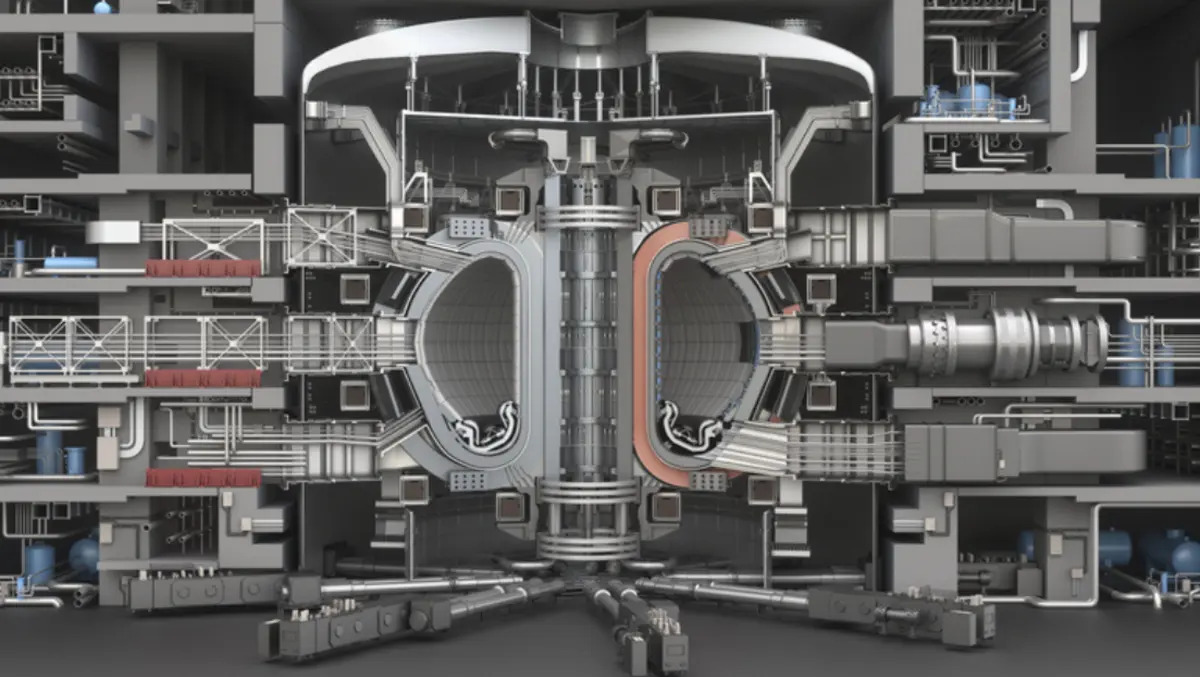
The study involved turbulent flow simulations in a spherical tokamak, one of the least understood areas of plasma physics. Machine learning models can now add quantified uncertainty to their outputs to predict behavior in these configurations, allowing researchers to assess reliability even when data is sparse or incomplete. The model is still explainable.
The collaboration also includes diagnostic and sensing designs. Probabilistic AI was applied to sensor placement in fusion devices by identifying configurations using genetic algorithms and Bayesian optimization. Improved sensor placement reduces the likelihood of costly late-stage redesigns and increases the resilience of “multi-billion pound fusion assets”. Sensor configuration impacts how operators observe plasma conditions and how control systems respond, and delayed changes can impact engineering, procurement, and construction schedules.
UKAEA framed the study as part of a broader push for digital tools. Dr Rob Akers, Computing Program Director and Senior Fellow at UKAEA, said: “Achieving the convergence roadmap will require significant investment in digital technologies, and at the heart of those technologies is the solution digiLab is working on.”
digiLab has identified uncertainty as a major driver of cost and delay in complex engineering programs. Amanda, head of business development at digiLab Niedfeldt said, “Fusion research has a high cost of uncertainty in computing, time, and design decisions. Using digiLab’s uncertainty engine, UKAEA not only makes predictions, but also provides uncertainty even when data is sparse.” “We have helped create fast, explainable models that quantify and make practical use of data. Examples of the powerful implications this can unleash include significantly faster simulations and a much smaller number of simulations.” Redundant execution and smarter diagnostic decisions accelerate design programs and prevent costly late-stage redesigns. ”
UKAEA highlighted digiLab’s practical tools approach. Adam Stephen, Head of Advanced Control Unit at UKAEA, said: “digiLab understood our design challenges and focused on finding ways to create a practical and accessible tool. We had access to senior technical staff and ideas from our discussions were quickly translated into new features through their product team, effectively maximizing the benefits and impact of the project.”
Commercial terms of the partnership and speed improvement benchmarks were not disclosed. STEP remains one of the UK’s hottest fusion initiatives, aiming to progress from research to operational plant concepts. digiLab’s research demonstrates the broader role of uncertainty-aware AI in energy, aerospace, and infrastructure programs where modeling and design decisions are costly.


