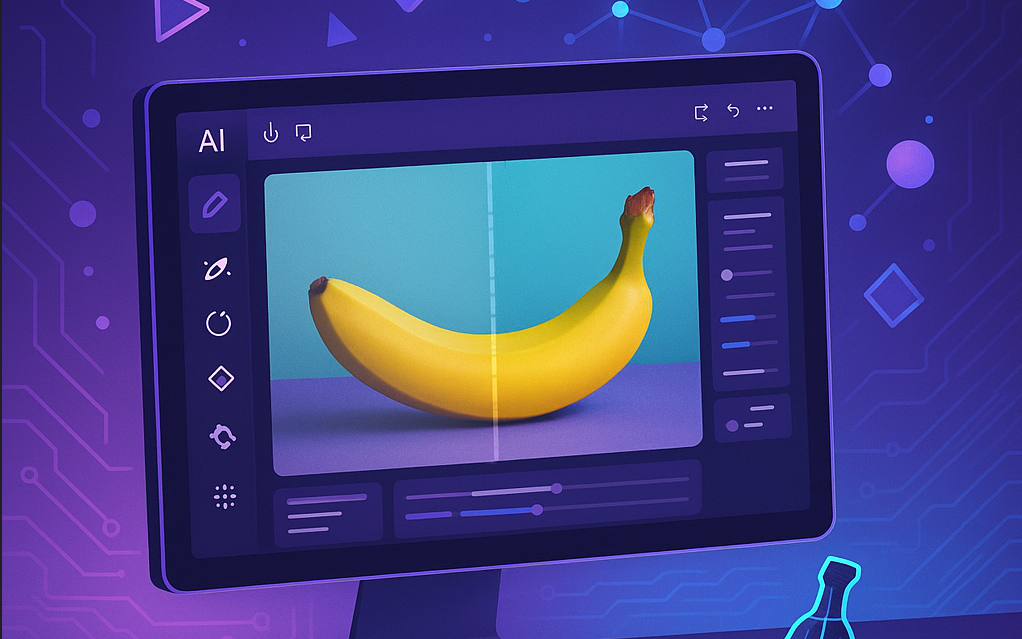
Artificial intelligence has rapidly reshaped the way digital visuals are created. From marketing teams to independent creators, AI-generated images are now a practical part of everyday workflows. Among the tools specialized in images, nano banana pro is an AI model designed specifically and purposefully for image creation. I support text to image and image to image It does not extend to extraneous functionality, only generates it. This simplicity is especially effective for professionals who want accurate visual output without unnecessary complexity.
Below are key application scenarios that demonstrate how images generated by AI are used in both practical and creative situations.
Visual content for digital marketing
Marketing relies heavily on visuals to convey ideas quickly and consistently. AI image generation allows marketing teams to create campaign-specific visuals without waiting for long design cycles. Using text prompts, your team can generate images that align with your brand tone, seasonal messages, and promotional themes.
Image-to-image generation further enhances this process by allowing you to refine existing visuals. A single image can be adapted to multiple styles and formats for different platforms such as websites, social media, email banners, presentations, and more. This flexibility reduces production time while maintaining visual consistency across campaigns.

Editorial and blog images
Content-driven websites often struggle to find images that perfectly match their articles. Stock photos can feel generic and disconnected from your message. AI-generated images offer a solution by allowing publishers to create visuals that directly reflect their subject matter.
Technology blogs can generate abstract or futuristic illustrations, business publications can generate conceptual corporate images, and educational platforms can visualize difficult-to-photograph ideas. Image-to-image workflows also make it easy to resize and restyle featured images, in-article graphics, and social preview visuals without sacrificing consistency.
Product visualization and e-commerce concept
While physical product photography remains essential, AI-generated images are increasingly being used in early-stage product planning and marketing. Companies use AI visuals to create concept images, lifestyle scenes, and promotional banners before the final photo shoot is completed.
Image-to-image generation allows existing product photos to be placed in different environments, seasons, and moods. This is especially useful for online stores that require a variety of visual content without the cost of repeat shoots. It also helps brands test visual ideas before investing in physical production.
creative designs and ideas
Designers often need to consider multiple creative directions before deciding on a final concept. AI image generation accelerates this ideation process by turning descriptive ideas into visual references almost instantly.
You can experiment with color schemes, artistic style, and composition using text prompts. Image-to-image generation allows designers to enhance sketches, mood boards, or rough drafts into clearer visual concepts. These outputs are valuable during brainstorming sessions, client presentations, or early-stage project discussions.
Rather than replacing design expertise, AI-generated images support creative exploration and speed decision-making.
social media visual storytelling
Social media platforms reward consistency and originality. AI-generated images help creators and brands maintain a recognizable visual identity while producing content at scale. Visuals can be tailored to a specific campaign, theme, or storytelling narrative using a repeatable prompt structure.
This model focuses solely on image generation, allowing creators to quickly generate backgrounds, conceptual visuals, or stylized scenes that complement captions and messages. Image-to-image tools allow you to easily adapt your visuals between formats while maintaining a consistent aesthetic.
Education and training materials
In education and professional training, visuals play an important role in aiding understanding. Images generated by AI can illustrate abstract concepts, simulate environments, and provide visual context for complex ideas.
Educators and trainers can use text-to-image generation to create diagrams, scenario-based illustrations, or conceptual visuals to support lessons. Image-to-image workflows allow you to customize materials for different audiences and difficulty levels without having to redesign everything from scratch.
This approach improves clarity while maintaining the visual appeal of your content.
Artistic and experimental use cases
Artists and creative professionals are increasingly using AI image generation as a tool for exploration rather than automation. Visuals generated by AI can serve as inspiration, references, or starting points for digital artwork, storytelling, or conceptual projects.
By adjusting the prompts and adjusting the output, creators can experiment with styles, structures, and themes that would be difficult or time-consuming to create manually. The controlled scope of the model ensures that the creative focus is solely on the visual output.
conclusion
Nano Banana's image-only design reflects the growing demand for focused and reliable AI tools. By supporting text to image and image to image It can be generated without additional functionality, making it a natural fit for workflows that rely on visual clarity and creative control.
From marketing and publishing to education and artistic exploration, AI-generated images are no longer experimental. They are practical, scalable, and increasingly essential. Tools like Nano Banana demonstrate how a clear purpose and limited scope can provide powerful value in a wide range of real-world applications.