“The Middle East's oil and gas sector remains the market anchor, but the pace of technology adoption and expansion of export infrastructure, especially LNG, will determine competitiveness through 2026,” said Swayam Dash, managing director at Grandview Research.
Oil and gas will remain central, technology will decide the winner
The UAE and Saudi Arabia remain major suppliers to the global energy market, and Grandview Research expects the region to continue investing heavily in upstream capacity and export infrastructure as the energy transition progresses.
Changes within the sector are increasing. The national oil company is rolling out a digitization program using AI, IoT, drones and robotics to shorten inspection times, improve maintenance plans and reduce costs. Carbon capture and storage projects are progressing in parallel with early hydrogen efforts.
On the demand side, gas appears to be stronger than oil. Grand View Research expects gas demand to continue increasing through 2026, supported by power generation, industrial growth and LNG exports.
Renewable energy expands and batteries will no longer be an option
Solar and wind power additions across the Gulf are accelerating, supported by auctions, long-term contracts and national targets. As costs continue to fall, solar remains competitive even in markets where low-cost gas is available.
Battery storage has moved from a pilot technology to standard grid planning. Especially in the UAE and Saudi Arabia, storage is increasingly being used in parallel with new solar and wind power projects, as grid stability and peak demand management drive procurement.
“The breadth of investment in renewable energy and storage across the UAE reflects a strategic shift towards a balanced and resilient energy mix, rather than away from hydrocarbons,” Dash said.
Batteries extend value into peak periods, reduce power cuts, and improve reliability. This changes the economics of new capacity and strengthens the energy security narrative that resonates with policymakers and industry.
Data centers and cloud will be the next big capital investment story
Digital infrastructure has emerged as one of the most capital-intensive growth themes across the GCC, driven by cloud migration, AI workloads, government digitization, and new enterprise demands.
According to data, the Middle East and Africa data center market is expected to grow at a CAGR of 11.7% from 2025 to 2030. Cloud growth is even faster. Grand View Research forecasts the Middle East and Africa cloud computing market to grow at a CAGR of 18.3% from 2025 to 2030.
The UAE and Saudi Arabia are positioned as two major magnets for capacity expansion, supported by partnerships with hyperscalers, public sector cloud mandates, growth in fintech, and AI programs that require high-availability computing closer to end users.
Dash said the bet runs beyond connectivity. “The growth of cloud and data centers in the UAE is not just about connectivity, but also about enabling digital government services, the fintech ecosystem, and the adoption of AI that will redefine competitiveness,” he said.
A second issue has come up in procurement conversations: energy use. New data center capacity raises questions about power supply, cooling, water usage, and grid constraints. The region's AI ambitions have made sustainable data center infrastructure a commercial necessity rather than a branding objective. Power costs and reliability directly impact operating profits and uptime.
Healthcare becomes an investment theme
In the UAE and Saudi Arabia in particular, health care is moving from a public expenditure item to an economic development sector, with policy frameworks increasingly supporting private participation, professional services and technology-enabled care delivery.
Dubai's medical tourism figures highlight the economic knock-on effect. The city hosted more than 690,000 medical tourists in 2023, contributing more than AED 1 billion in medical revenue and supporting travel, hospitality and related services.
Digital health is also becoming infrastructure. The UAE program, which links national and emirate-level medical records systems, is driving interoperability across thousands of facilities and large datasets. As procurement expands, demand for AI-enabled diagnostics, virtual care platforms, and integrated patient journeys will increase to reduce cost per episode and improve capacity utilization.
Manufacturing and materials move towards value and circularity
While hydrocarbon dominance continues to underpin chemicals and bulk feedstocks, global overcapacity and tightening standards are forcing regional producers to upgrade. Future directions include higher value derivatives, integrated refining and petrochemical complexes, and sustainability-related materials such as low carbon steel, advanced composites and circular plastic initiatives.
The UAE and Saudi Arabia's industrial strategies also continue to draw capital into localization, advanced manufacturing and supply chain resilience. Automation, digital twins, predictive maintenance and robotics continue to be central themes across new industrial parks and special economic zones.
What this means for consumers
Energy investments shape the pace of utility costs, reliability, and electric mobility infrastructure. Renewable energy and storage will impact long-term power costs and how quickly the power grid can absorb higher demand from cooling, industry, and AI. Data center and cloud spending impacts the digital services consumers use every day, from payments and government portals to banking apps and healthcare access.
Investments in healthcare shape waiting times, specialty availability, insurance product design, and cross-border healthcare options. Industrial investment affects job creation, wages, and price stability for essential goods.
The study's central thesis is that the region enters 2026 with a diverse capital pipeline centered on hydrocarbons, but increasingly characterized by clean power, digital infrastructure, and the creation of an investable healthcare ecosystem.
Projects that manage costs, schedules, regulations, and workforce capabilities will attract the next wave of capital. Companies that don't will struggle, even in ambitious markets.
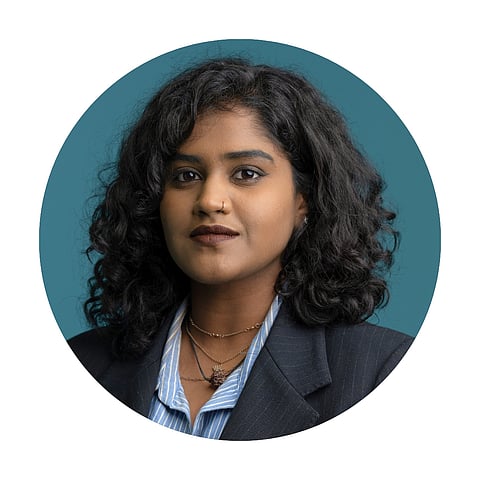
Niveta Dayanand is an assistant business editor at Gulf News, where she spends her days uncovering the big changes shaping money, markets, aviation and life in the Gulf. Before returning to Gulf News, she launched Finance Middle East with a podcast and video series. Her reporting ranges from spot-on news reports to long-form features and high-profile interviews. Niveta interviewed Prince Khalid bin Alwaleed Al Saud, Indian Ministers Hardeep Singh Puri and N. Chandrababu Naidu, IMF's Jihad Azul, and a long list of CEOs, regulators, and founders who are rebuilding regional economies. Nivesa, an Erasmus Mundus journalism graduate, has shared classrooms and newsrooms with journalists from more than 40 countries, which probably explains her weakness for data, context, and good follow-up questions. When she's away from the keyboard (AFK), you're most likely to find her at the gym listening to an Eminem playlist, binge-reading One Piece, or exploring games on her PS5.