
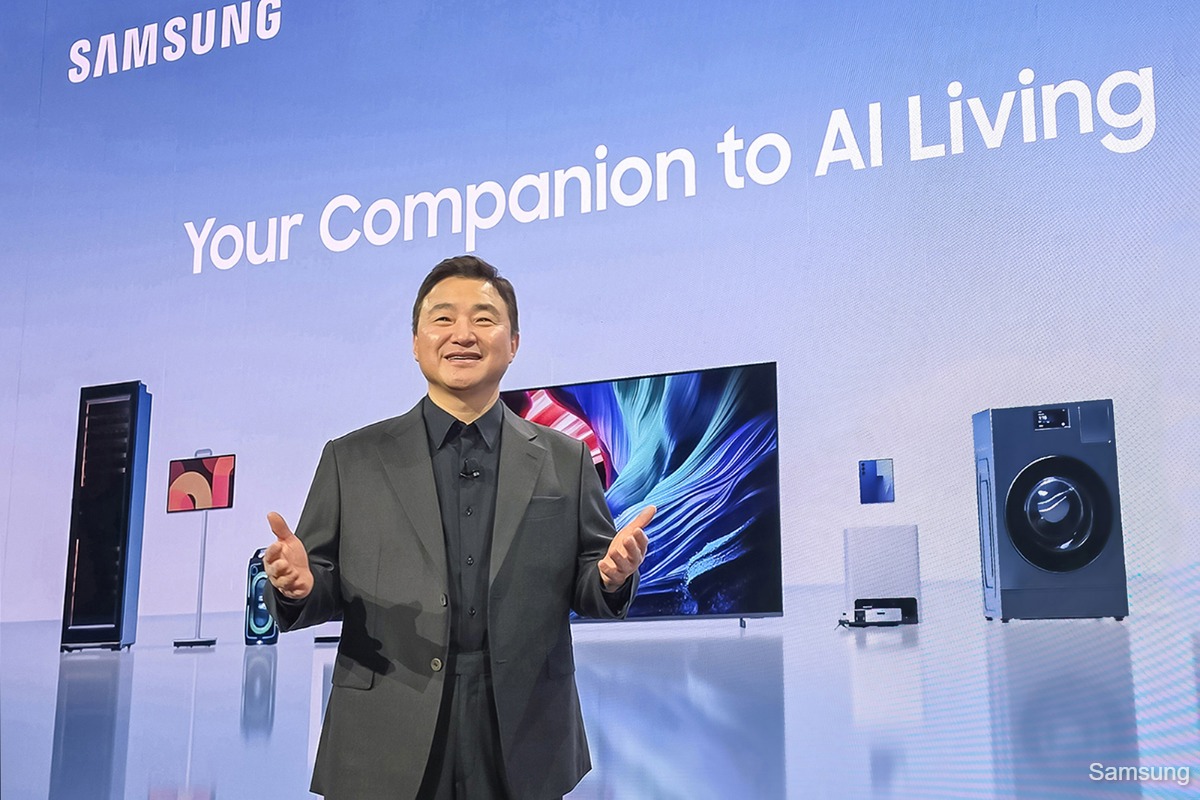
LAS VEGAS (January 5): Samsung Electronics, which ships approximately 500 million devices annually including mobile, visual displays, consumer electronics, and services, plans to incorporate artificial intelligence (AI) into all of its product categories, products, and services.
TM Roh, Samsung's chief executive officer and head of device experience, said this is to provide users with a more unified, personal and trustworthy experience. He was speaking at Samsung's first look presentation at CES 2026 in Las Vegas, one of the world's largest technology events.
“We will leverage Samsung's full scale to create technologies and experiences that truly matter to people. We will embed AI in every category, every product, and every service to deliver one seamless, unified AI experience,” he said.
“Our device portfolio puts us in every mode of daily life and gives us a unique understanding of consumers. No other company can do what we do.”
For example, Samsung's displays have evolved with AI to provide richer, smarter, and more personal experiences in daily life, said SW Yong, president and head of visual display business at Samsung, adding that the company is evolving from superior hardware to visual intelligence.
During his presentation, he unveiled the 130-inch Micro RGB, which features the widest and most detailed color spectrum ever on a Samsung TV. A micro-sized RGB light source improves image quality, with each microscopic red, green, and blue diode working independently to produce more accurate and natural colors.
Samsung's Micro RGB AI Engine Pro gives you precise control over red, green, and blue colors, delivering stunningly vivid image quality in every scene.
On top of that, Vision AI Companion (VAC) uses AI to work with you as a complete entertainment companion. Users can receive guidance on what to watch, what to eat, and what music to listen to.
Since its launch last September, VAC's adoption rate has exceeded 25% in just three months, which is nearly seven times faster than the company's previously deployed AI services, Yong said. “No service we've ever launched has been integrated into people's lives so quickly,” he added.
That's not all. Phones, appliances, wearables and other connected devices will use AI to help users proactively prevent potential health concerns, said Praveen Raja, vice president and head of digital health at Samsung Research America.
For example, Samsung aims to provide personalized health, effective exercise, and sleep coaching to reduce the risk of major chronic diseases. Praveen said the company will work on visualizing heart health indicators such as vascular load and blood oxygen.
It also suggests suitable recipes based on the ingredients you have in your connected refrigerator. In this regard, Samsung's refrigerator can track what is placed in the refrigerator and what is taken out, thanks to AI vision built with Google Gemini 4.
Samsung is also expanding its dementia detection capabilities through research partnerships, with wearable devices recording subtle changes in mobility, voice, and engagement that can indicate long-term cognitive changes.
Ultimately, Roh Moo-hyun said, trust and privacy are essential for AI to become a true partner for users. He said the company is committed to prioritizing governance, protecting user privacy and ensuring the safety of its AI services. Samsung Knox and Knox Matrix serve as the foundation for protecting user data.
“We must uphold the highest ethical standards. As a global leader in technology, our responsibility goes far beyond creating powerful tools. Performance alone does not define progress, so we must use our tools responsibly. Trust is important. Ethics and security must be built into the design of AI,” he said.


