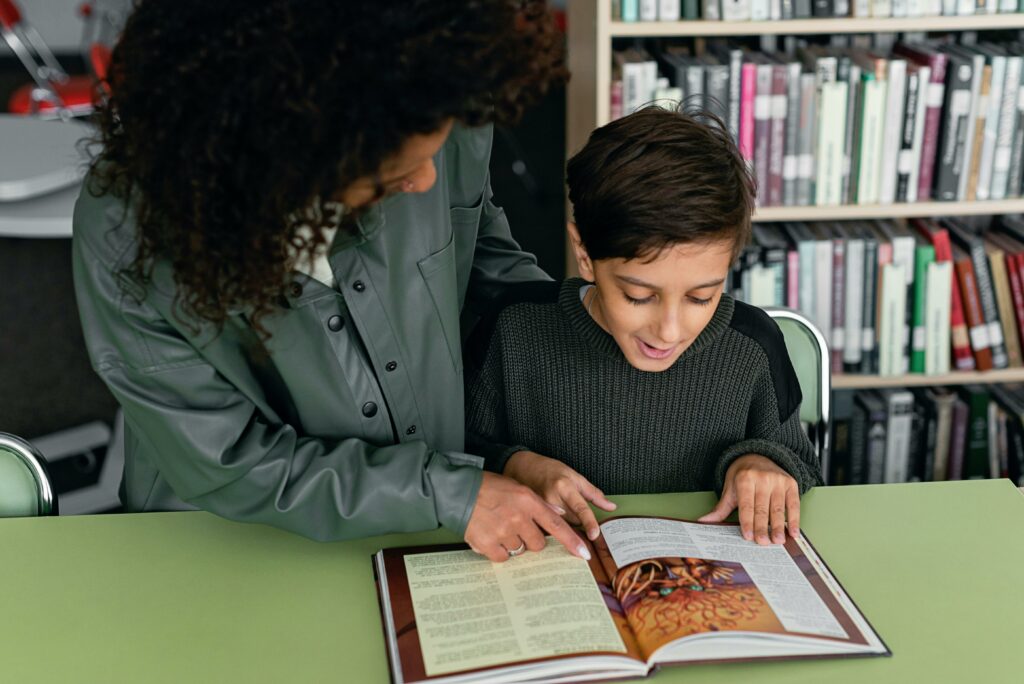

Credit: Pexels / Mikhail Nilov
AI is finally here and will change the landscape of education in classrooms around the world.
Students will be able to engage with technology in a way that would have made Socrates rattle his sandals.
AI is everything teachers have been waiting for. But that's not what they were saying about the introduction of computers into classrooms for the first time in the 80s, and isn't AI going to change education forever?Then the Internet provided access to education worldwide. There were classrooms connected by broadband, then every child had a laptop, and now every child has an AI bot agent. All of this will ensure that the digital divide is bridged.
However, even after all this, Johnny still can't seem to read.
AI is seen as a game changer, a kind of personalized tutor, a digital intellectual. That's special, but Johnny still can't seem to read. If Johnny can't read, he probably can't spell correctly and may still have trouble writing. In some cases, Johnny might have trouble staying focused or just be hungry, but teachers are being told by tech companies that AI is here to solve all of Johnny's problems.
AI is everything teachers have been waiting for. But isn't that what they were saying about the first computers being introduced into classrooms in the 80s, and AI is going to change education forever?
I am an early adopter and researcher in all things educational technology, and have been implementing digital tools into the classroom throughout my 27 years of teaching. So it turns out that Johnny is tired of sitting in front of a keyboard, wearing smaller headphones and talking into a screen. And after weeks or months in a digital classroom, Johnny, just like anyone who sits in front of a screen all day, will miss sitting with his teacher and having human interaction.
Remember, kids are resilient and creative, but when Johnny gets a little bored he might actually come up with a way to use AI to entertain kids in ways that aren't in the teacher's lesson plan. But what if Johnny doesn't have any visible problems? What if Johnny is simply a slow reader, or gets nervous when taking a highly stressful standardized test before he can understand the lesson or have the material taught to him?
I also wonder if the AI's text-to-image or video generator will rob Johnny of his belief that he is the next Picasso or the world's greatest artist after comparing the AI's images to stick-figure families, squiggle houses, and three-color Crayola Quickdraws that are gifted to most teachers in lower grades. Why not think of a way to give Johnny more time to work?
Currently, AI has great potential to address teachers' administrative tasks, and over time it will bring educational benefits to all students, but it should not replace human interaction and conversation. At the moment, developers, programmers, and AI companies are telling us, or better yet, selling us that AI will do everything that teachers don't have time for. It's the greatest thing since sliced bread. If Johnny were a peg that fit in a box, maybe so.
Early adopters tell us how ChatGPT is great for engaging students and how it prompts students by asking them tough questions. The audio dictation is amazing, except when Johnny pronounces “axe” instead of “ask,” or “deer” and “there,” or when the AI gives an incorrect response that the students take as fact. Meanwhile, Johnny is so engaged that his teacher smiles like a ray of light from across the room.
You know, if Johnny doesn't have any special requirements and can pronounce all the words phonetically correctly or comes from a family with modern technology and access, then maybe, just maybe, Johnny will have a better experience interacting with AI. However, this is generally not the case.
Anything is possible with AI, except when teachers allow AI to be used as more than a digital tool in the classroom, allowing AI to provide instruction rather than students learning how to control it to suit their needs, or when teachers remain in the background for too long.
Because at the end of the day, despite all the artificial intelligence, generative AI access, laptops, bot agents, tablets, and iPads, Johnny is still hungry, tired, and stressed, he might still not be able to read, and he might miss his teacher's compassion, empathy, support, and warm smile when he gets the right answer.
The age of AI has arrived, but it doesn't have to come at the expense of experienced educators who know how to bring vibrancy, excitement, and camaraderie to the classroom.
•••
Dwight D. McBrideEd.D. is an educator, researcher, and educational consultant whose work focuses on knowledge exchange in digital spaces, generative AI adoption, evaluation, and leadership decision-making in higher education. He taught for 27 years in the Los Angeles Unified School District.
The opinions expressed in this commentary represent those of the author. EdSource welcomes comments representing diverse perspectives. If you would like to post a comment, please review our guidelines and contact us.